He Xiaoyuan, Kim Jung-Sik, Diaz-Martinez Laura A, Han Cecil, Lane William S, Budnik Bogdan, Waldman Todd
Departments of Oncology, Biochemistry & Molecular Biology, Lombardi Comprehensive Cancer Center, Georgetown University School of Medicine, Washington, District of Columbia, USA.
Department of Biology, Gonzaga University, Spokane, Washington, USA.
J Biol Chem. 2021 Jan-Jun;296:100194. doi: 10.1074/jbc.RA120.015762. Epub 2020 Dec 20.
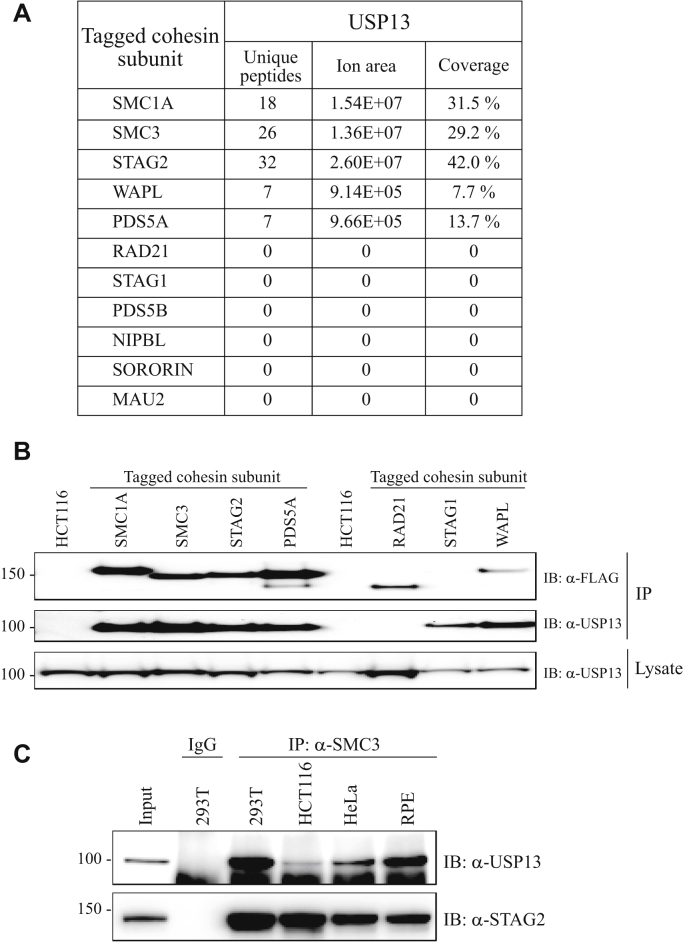
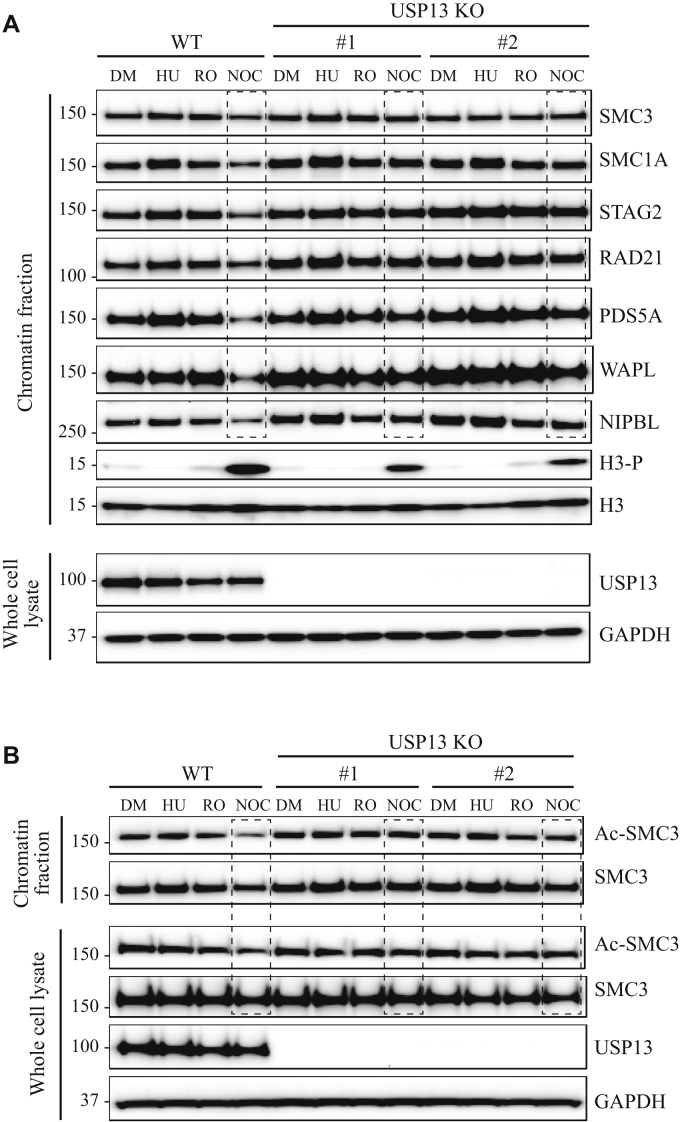
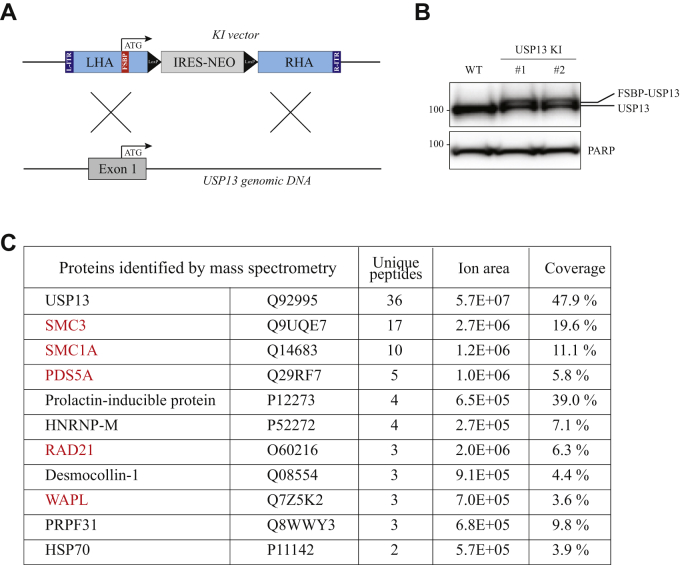
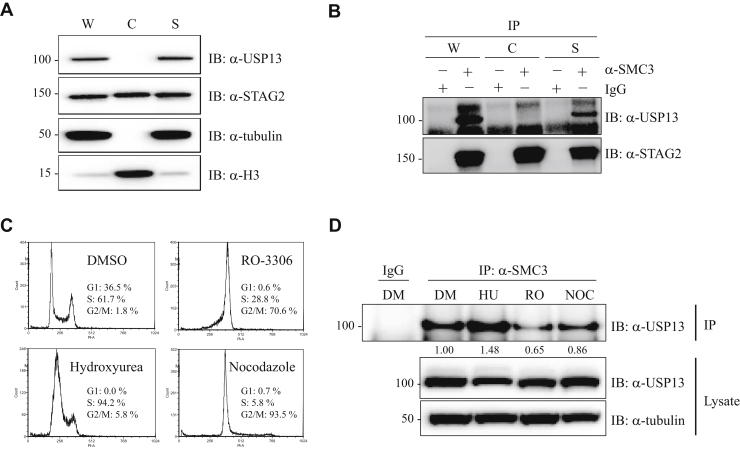
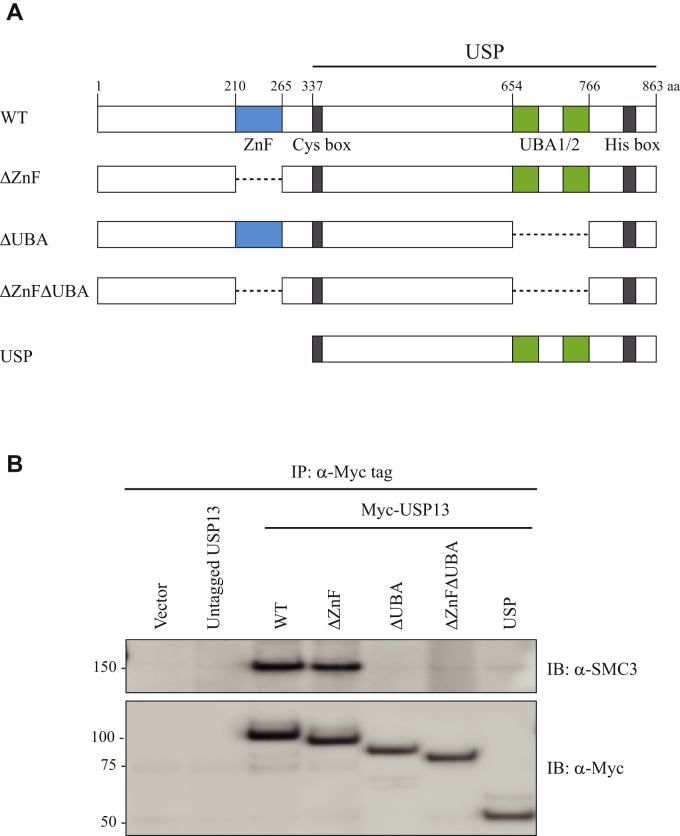
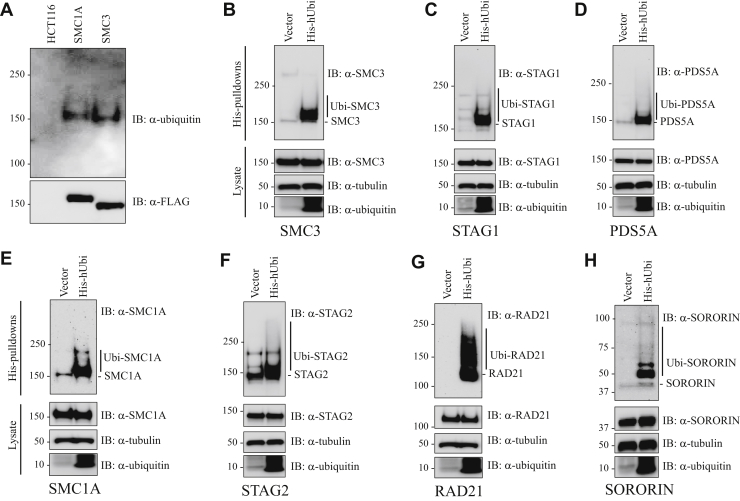
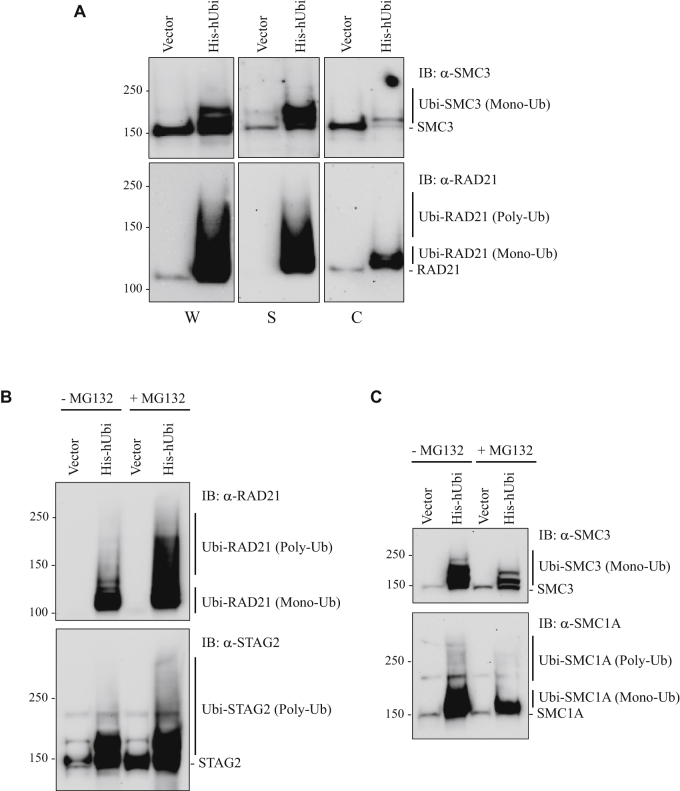
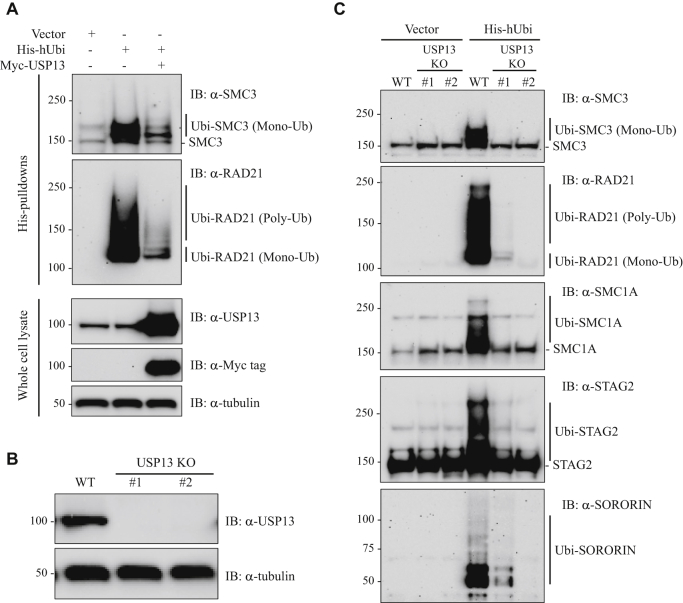
Cohesin is a multiprotein ring complex that regulates 3D genome organization, sister chromatid cohesion, gene expression, and DNA repair. Cohesin is known to be ubiquitinated, although the mechanism, regulation, and effects of cohesin ubiquitination remain poorly defined. We previously used gene editing to introduce a dual epitope tag into the endogenous allele of each of 11 known components of cohesin in human HCT116 cells. Here we report that mass spectrometry analysis of dual-affinity purifications identified the USP13 deubiquitinase as a novel cohesin-interacting protein. Subsequent immunoprecipitation/Western blots confirmed the endogenous interaction in HCT116, 293T, HeLa, and RPE-hTERT cells; demonstrated that the interaction occurs specifically in the soluble nuclear fraction (not in the chromatin); requires the ubiquitin-binding domains (UBA1/2) of USP13; and occurs preferentially during DNA replication. Reciprocal dual-affinity purification of endogenous USP13 followed by mass spectrometry demonstrated that cohesin is its primary interactor in the nucleus. Ectopic expression and CRISPR knockout of USP13 showed that USP13 is paradoxically required for both deubiquitination and ubiquitination of cohesin subunits in human cells. USP13 was dispensable for sister chromatid cohesion in HCT116 and HeLa cells, whereas it was required for the dissociation of cohesin from chromatin as cells transit through mitosis. Together these results identify USP13 as a new cohesin-interacting protein that regulates the ubiquitination of cohesin and its cell cycle regulated interaction with chromatin.
黏连蛋白是一种多蛋白环状复合物,可调节三维基因组组织、姐妹染色单体黏连、基因表达和DNA修复。虽然黏连蛋白已知会被泛素化,但其泛素化的机制、调控和影响仍不清楚。我们之前利用基因编辑技术,在人HCT116细胞中,将双表位标签引入黏连蛋白11个已知组分的内源性等位基因中。在此我们报告,双亲和纯化的质谱分析鉴定出泛素特异性蛋白酶13(USP13)去泛素化酶是一种新型的与黏连蛋白相互作用的蛋白。随后的免疫沉淀/蛋白质免疫印迹证实了在HCT116、293T、HeLa和RPE-hTERT细胞中的内源性相互作用;表明这种相互作用特异性发生在可溶性核组分中(而非染色质中);需要USP13的泛素结合结构域(UBA1/2);并且优先发生在DNA复制期间。对内源性USP13进行反向双亲和纯化,随后进行质谱分析,结果表明黏连蛋白是其在细胞核中的主要相互作用蛋白。USP13的异位表达和CRISPR基因敲除表明,在人类细胞中,USP13对于黏连蛋白亚基的去泛素化和泛素化都是矛盾地必需的。在HCT116和HeLa细胞中,USP13对于姐妹染色单体黏连并非必需,而当细胞通过有丝分裂时,它对于黏连蛋白从染色质上的解离是必需的。这些结果共同确定USP13是一种新的与黏连蛋白相互作用的蛋白,它调节黏连蛋白的泛素化及其与染色质的细胞周期调控相互作用。