Justus Liebig University Giessen, Experimental Psychology, Otto-Behaghel-Str. 10F, 35394, Gießen, Germany.
Center for Mind, Brain and Behavior (CMBB), University of Marburgand Justus Liebig University, Giessen, Germany.
Sci Rep. 2020 Dec 17;10(1):22141. doi: 10.1038/s41598-020-79072-w.
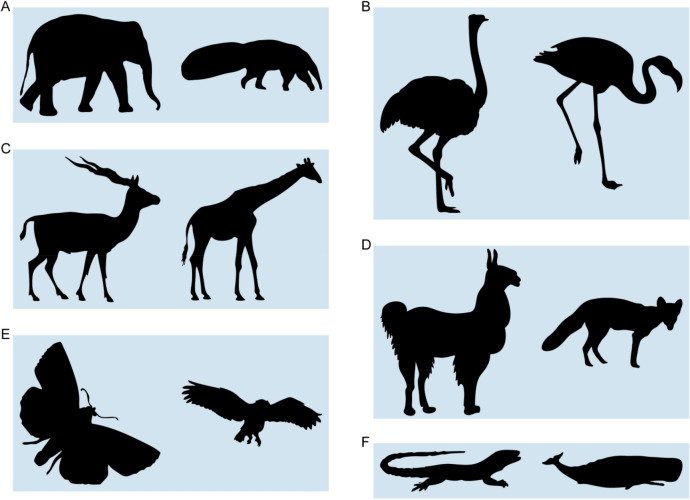
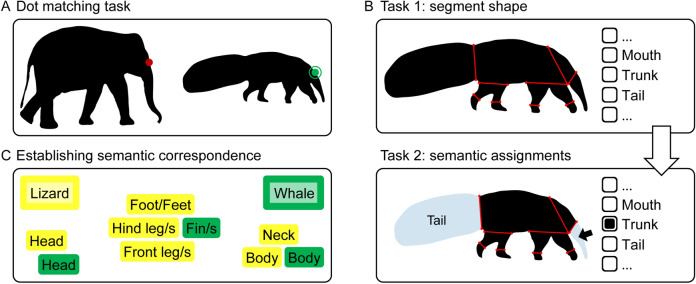
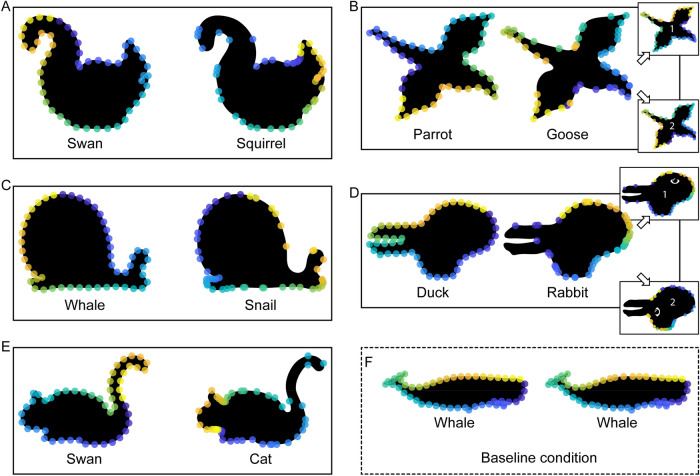
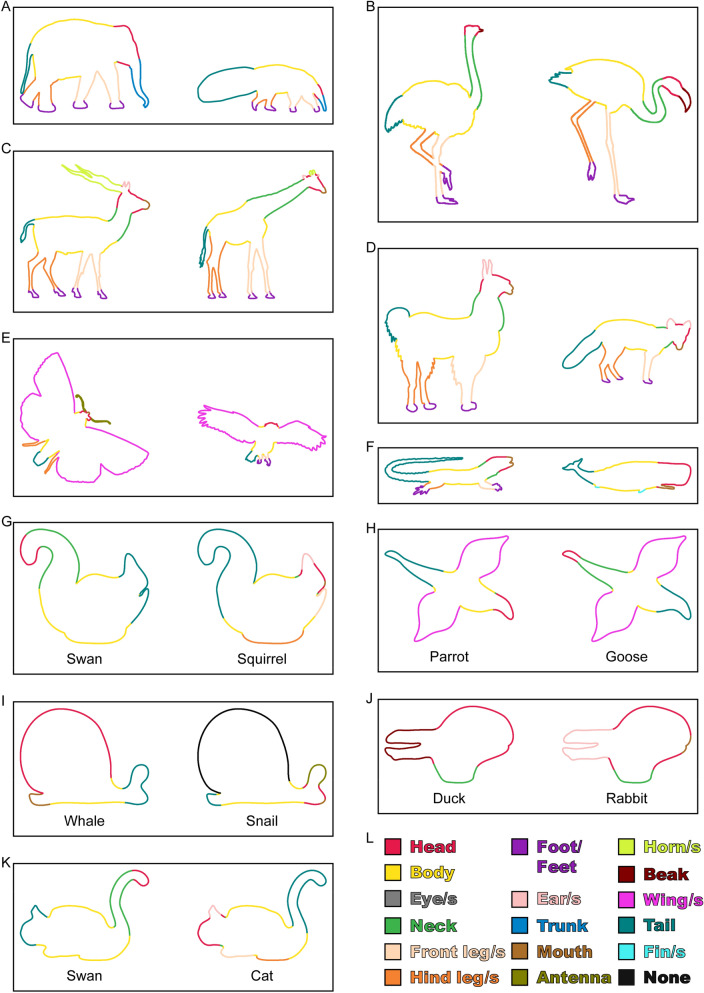
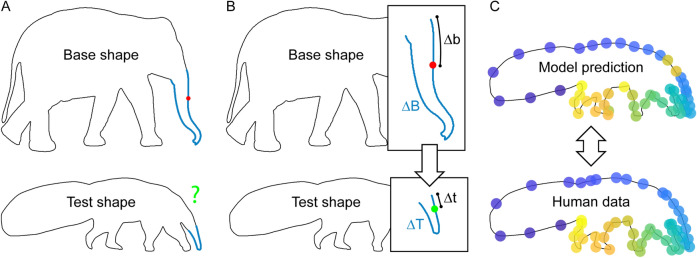
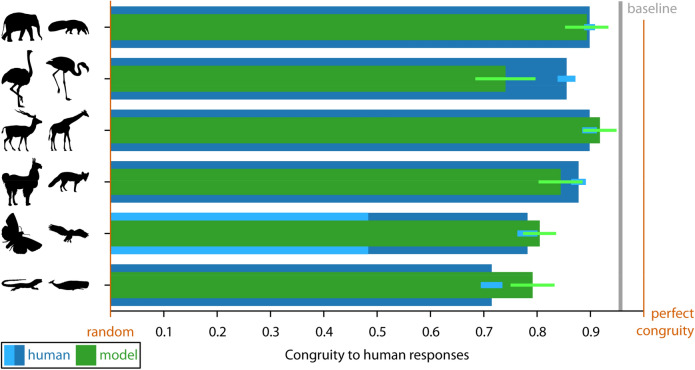
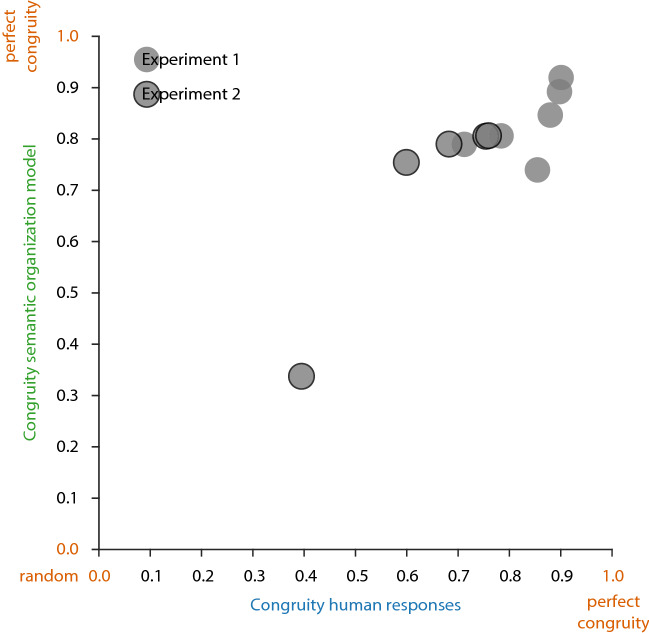
Establishing correspondence between objects is fundamental for object constancy, similarity perception and identifying transformations. Previous studies measured point-to-point correspondence between objects before and after rigid and non-rigid shape transformations. However, we can also identify 'similar parts' on extremely different objects, such as butterflies and owls or lizards and whales. We measured point-to-point correspondence between such object pairs. In each trial, a dot was placed on the contour of one object, and participants had to place a dot on 'the corresponding location' of the other object. Responses show correspondence is established based on similarities between semantic parts (such as head, wings, or legs). We then measured correspondence between ambiguous objects with different labels (e.g., between 'duck' and 'rabbit' interpretations of the classic ambiguous figure). Despite identical geometries, correspondences were different across the interpretations, based on semantics (e.g., matching 'Head' to 'Head', 'Tail' to 'Tail'). We present a zero-parameter model based on labeled semantic part data (obtained from a different group of participants) that well explains our data and outperforms an alternative model based on contour curvature. This demonstrates how we establish correspondence between very different objects by evaluating similarity between semantic parts, combining perceptual organization and cognitive processes.
建立物体之间的对应关系是物体恒常性、相似性感知和识别变换的基础。以前的研究在刚体和非刚体形状变换前后测量了物体之间的点对点对应关系。然而,我们也可以在非常不同的物体之间识别“相似部分”,例如蝴蝶和猫头鹰或蜥蜴和鲸鱼。我们测量了这样的物体对之间的点对点对应关系。在每次试验中,在一个物体的轮廓上放置一个点,参与者必须在另一个物体的“对应位置”上放置一个点。响应表明,对应关系是基于语义部分(例如头、翅膀或腿)之间的相似性建立的。然后,我们测量了具有不同标签的模糊物体之间的对应关系(例如,经典模糊图形的“鸭子”和“兔子”解释之间)。尽管具有相同的几何形状,但基于语义(例如,将“头”与“头”、“尾”与“尾”相匹配),对应关系在不同的解释之间有所不同。我们提出了一个基于标记语义部分数据的零参数模型(从另一组参与者获得),该模型很好地解释了我们的数据,并优于基于轮廓曲率的替代模型。这表明我们如何通过评估语义部分之间的相似性、结合感知组织和认知过程,在非常不同的物体之间建立对应关系。