Abdel-Maboud Mohamed, Menshawy Amr, Menshawy Esraa, Emara Amany, Alshandidy Mohamed, Eid Muhammad
Al-Azhar Medical School, Al- Hussein University Hospitals, Cairo, 11651, Egypt.
Faculty of Medicine, Al-Azhar University, Cairo, Egypt.
Therap Adv Gastroenterol. 2020 Dec 7;13:1756284820974917. doi: 10.1177/1756284820974917. eCollection 2020.
Non-alcoholic fatty liver disease (NAFLD) affects up to 30% of the population. Clinical trials have questioned the role of vitamin E in the treatment of NAFLD with or without other interventions, with still no firm conclusion reached. This study aims to examine the efficiency of vitamin E alone or combined in the management of NAFLD.
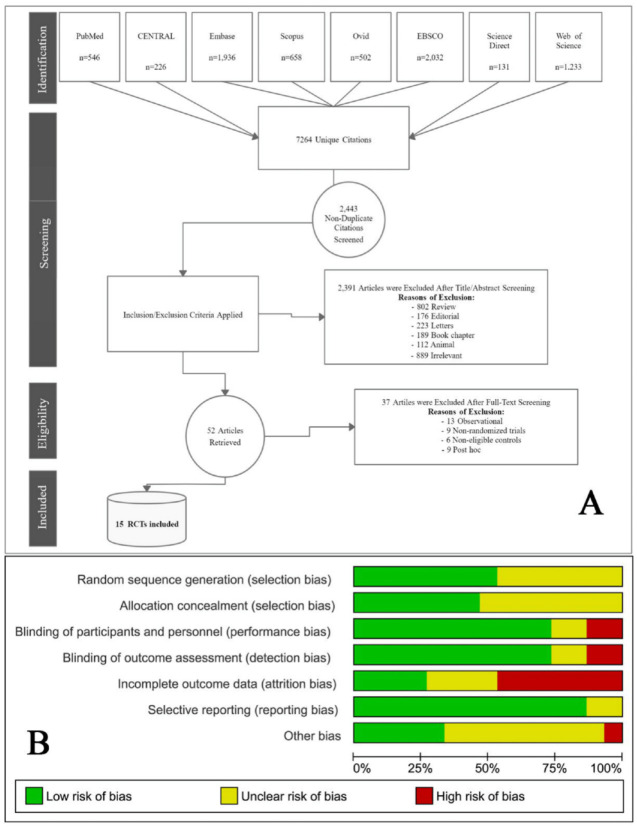
We performed a systematic literature search on PubMed, Scopus, Embase, Ovid, EBSCO host, Science Direct, Web of Science, and Cochrane CENTRAL for randomized controlled trials (RCTs) of the role of vitamin E alone or combined in NAFLD patients. Extracted manuscripts reported data on biochemical, histological, anthropometric, and metabolic outcomes. Baseline characteristics, settings, dosage, and frequency were also collected.
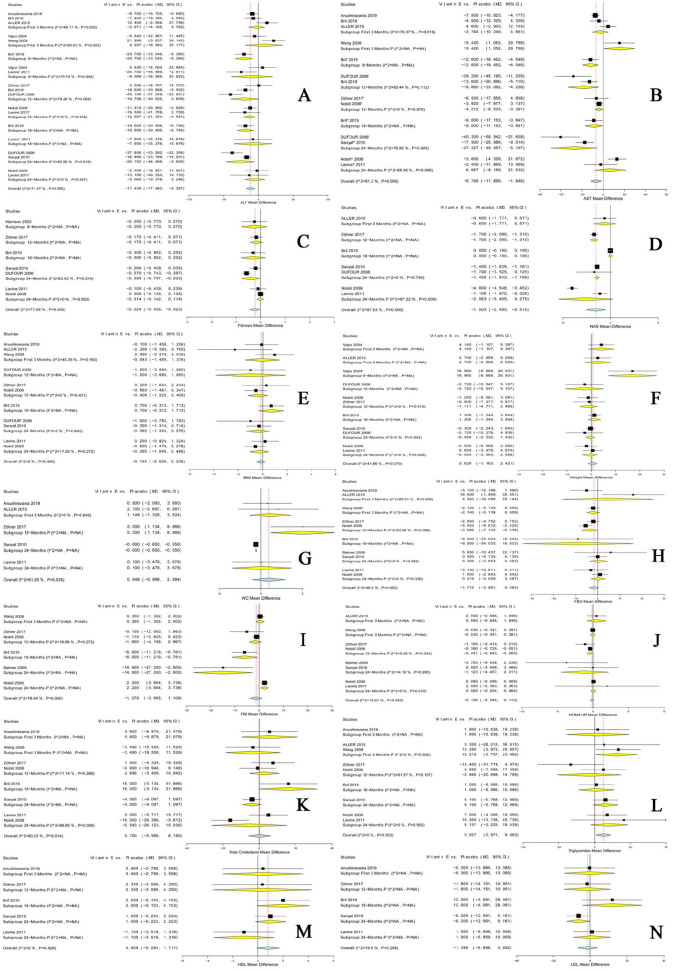
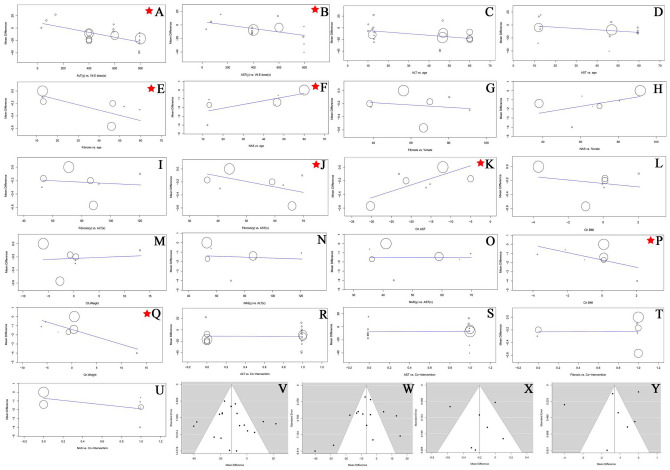
A total of 1317 patients from 15 RCTs were included in our systematic review and meta-analysis. Vitamin E was superior at improving alanine aminotransferase (ALT), aspartate aminotransferase (AST), NAFLD activity score (NAS), and fibrosis in short- and long-term follow up in the adult population, and long-term follow up in the pediatric population. Improvements in metabolic outcomes were best noticed in pediatric patients. Results from multiple regression models showed a significant association between ALT-AST levels and vitamin E dose. AST levels had a significant effect on NAS, and patients with a baseline AST > 50 IU/l showed more promising results. Changes in weight and body mass index (BMI) were strongly associated with changes in NAS.
Current evidence affirms that vitamin E - whether alone or combined - improves biochemical and histological outcomes in adults and pediatric patients.
非酒精性脂肪性肝病(NAFLD)影响着高达30%的人群。临床试验对维生素E在有无其他干预措施情况下治疗NAFLD的作用提出了质疑,目前仍未得出确凿结论。本研究旨在探讨单独使用维生素E或联合使用维生素E治疗NAFLD的效果。
我们在PubMed、Scopus、Embase、Ovid、EBSCO主机、Science Direct、Web of Science和Cochrane CENTRAL上进行了系统的文献检索,以查找关于单独使用或联合使用维生素E对NAFLD患者作用的随机对照试验(RCT)。提取的手稿报告了生化、组织学、人体测量学和代谢结果的数据。还收集了基线特征、研究背景、剂量和用药频率。
我们的系统评价和荟萃分析纳入了15项RCT中的1317例患者。在成人短期和长期随访以及儿童长期随访中,维生素E在改善丙氨酸氨基转移酶(ALT)、天冬氨酸氨基转移酶(AST)、NAFLD活动评分(NAS)和纤维化方面表现更优。在儿童患者中,代谢结果的改善最为明显。多元回归模型的结果显示,ALT - AST水平与维生素E剂量之间存在显著关联。AST水平对NAS有显著影响,基线AST>50 IU/L的患者显示出更有前景的结果。体重和体重指数(BMI)的变化与NAS的变化密切相关。
目前的证据证实,无论单独使用还是联合使用,维生素E均可改善成人和儿童患者的生化和组织学结果。