Feng Kaixiang, Ma Runsheng, Zhang Lele, Li Hongqiang, Tang Yifeng, Du Gongbo, Niu Dongpeng, Yin Detao
Department of Thyroid Surgery, The First Affiliated Hospital of Zhengzhou University, Zhengzhou, China.
Department of Thyroid Surgery, Key Discipline Laboratory of Clinical Medicine of Henan, Zhengzhou, China.
Front Oncol. 2020 Dec 1;10:596132. doi: 10.3389/fonc.2020.596132. eCollection 2020.
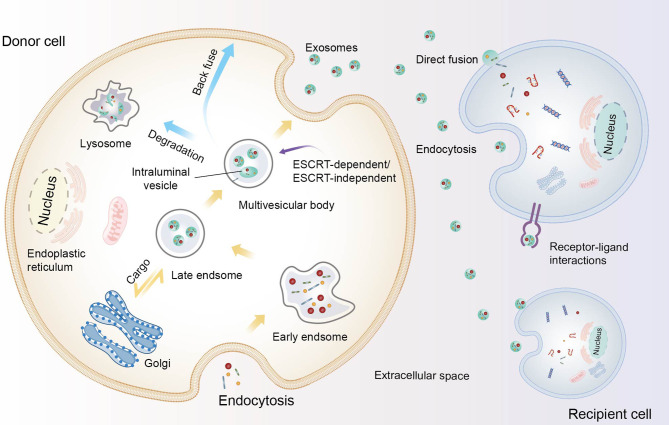
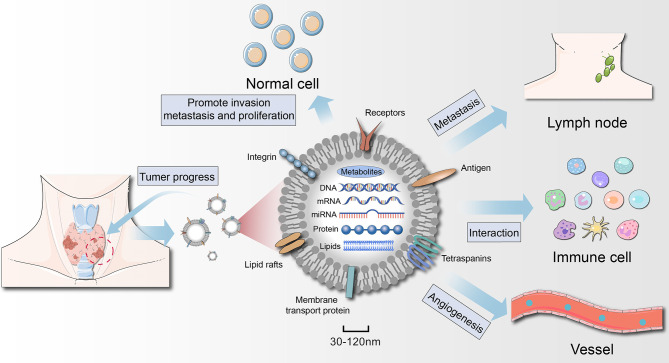
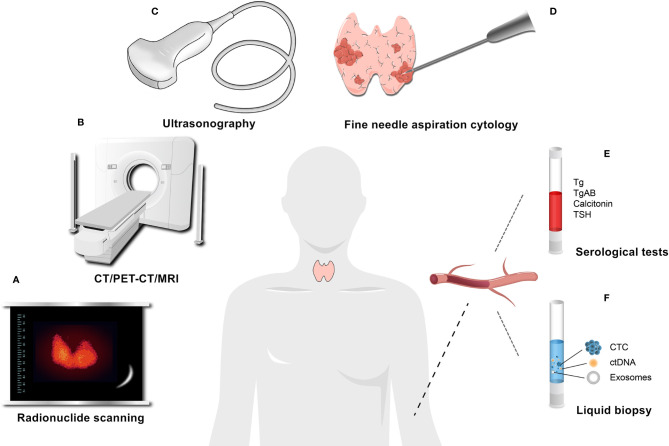
The incidence of thyroid cancer (TC) is rapidly increasing worldwide. The diagnostic accuracy and dynamics of TC need to be improved, and traditional treatments are not effective enough for patients with poorly differentiated thyroid cancer. Exosomes are membrane vesicles secreted specifically by various cells and are involved in intercellular communication. Recent studies have shown that exosomes secreted by TC cells contribute to tumor progression, angiogenesis and metastasis. Exosomes in liquid biopsies can reflect the overall molecular information of tumors, and have natural advantages in diagnosing TC. Exosomes also play an important role in tumor therapy due to their special physicochemical properties. TC patients will benefit as more exosome patterns are discovered. In this review, we discuss the role of TC-derived exosomes in tumorigenesis and development, and describe the application of exosomes in the diagnosis and treatment of TC.
甲状腺癌(TC)的发病率在全球范围内正在迅速上升。TC的诊断准确性和动态变化需要提高,并且传统治疗方法对低分化甲状腺癌患者的效果不够显著。外泌体是由各种细胞特异性分泌的膜泡,参与细胞间通讯。最近的研究表明,TC细胞分泌的外泌体促进肿瘤进展、血管生成和转移。液体活检中的外泌体可以反映肿瘤的整体分子信息,在TC诊断方面具有天然优势。外泌体因其特殊的物理化学性质在肿瘤治疗中也发挥着重要作用。随着更多外泌体模式的发现,TC患者将从中受益。在这篇综述中,我们讨论了TC来源的外泌体在肿瘤发生和发展中的作用,并描述了外泌体在TC诊断和治疗中的应用。