Chauhan Dilan, Jackson Emily, Harper Joyce C
Institute for Women's Health, University College London, London, UK.
Department of Law, London School of Economics, London, UK.
Reprod Biomed Soc Online. 2020 Nov 4;12:44-55. doi: 10.1016/j.rbms.2020.09.006. eCollection 2021 Mar.
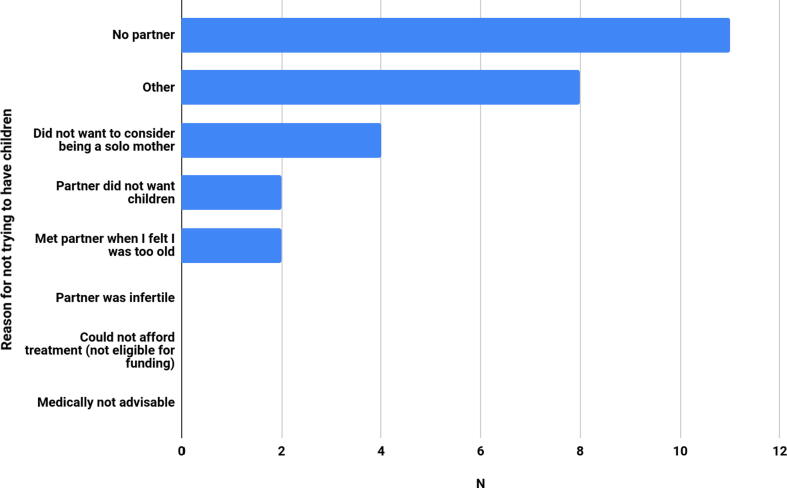
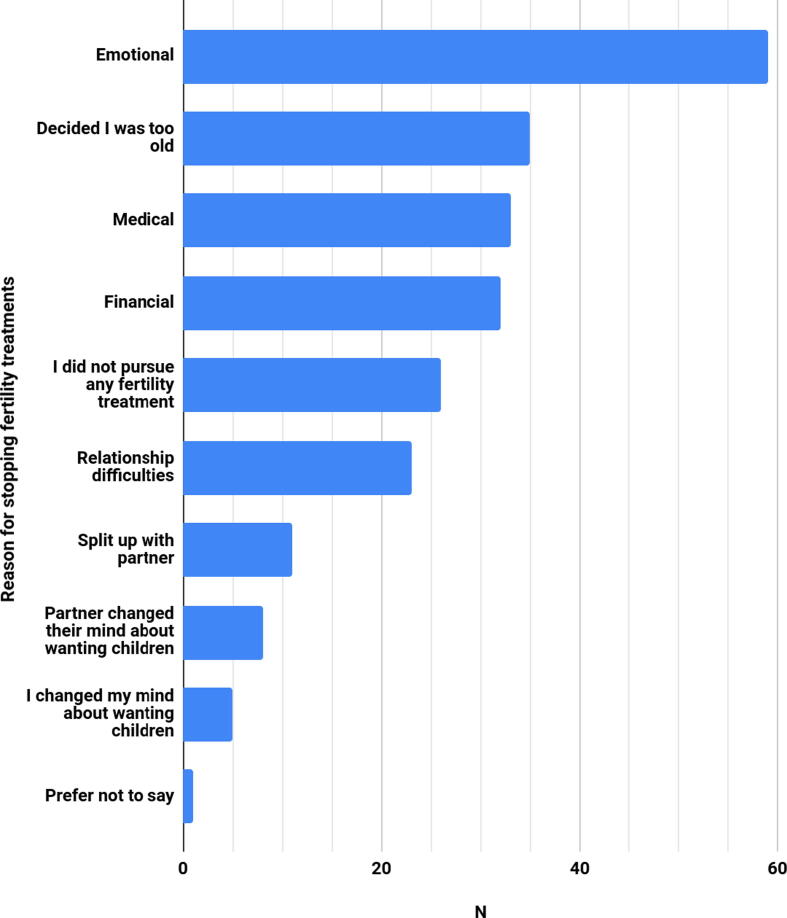
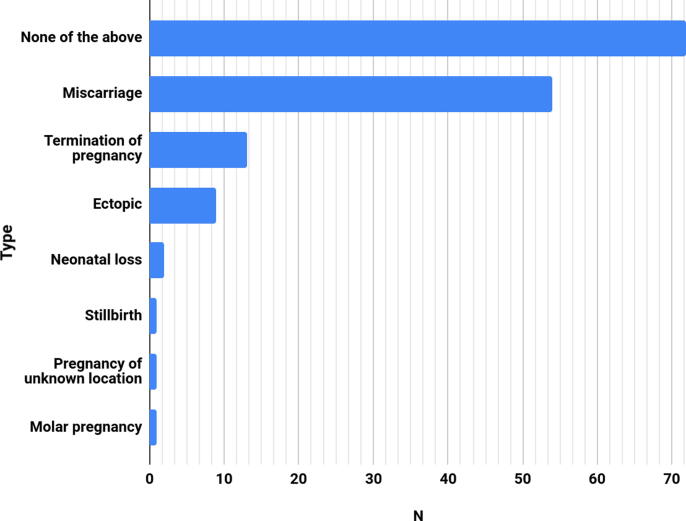
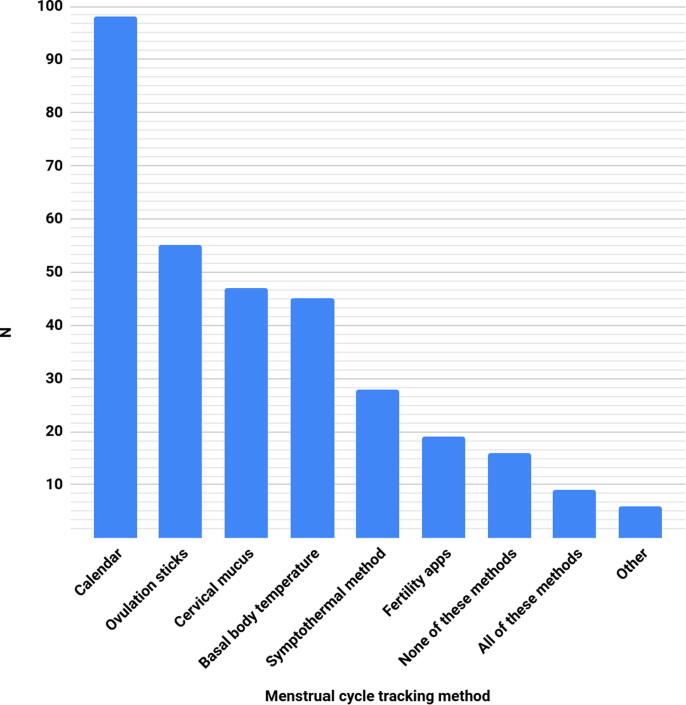
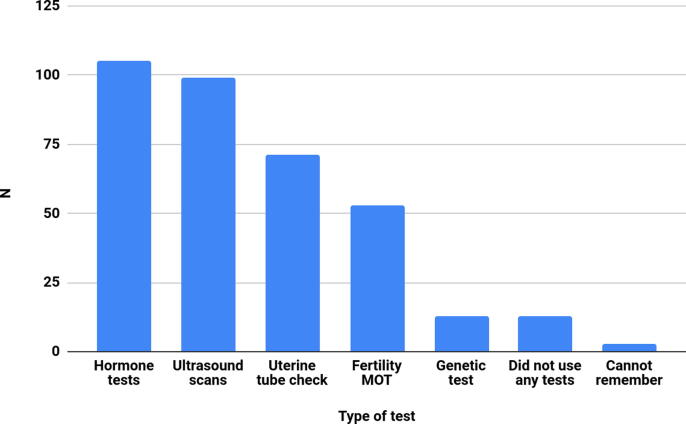
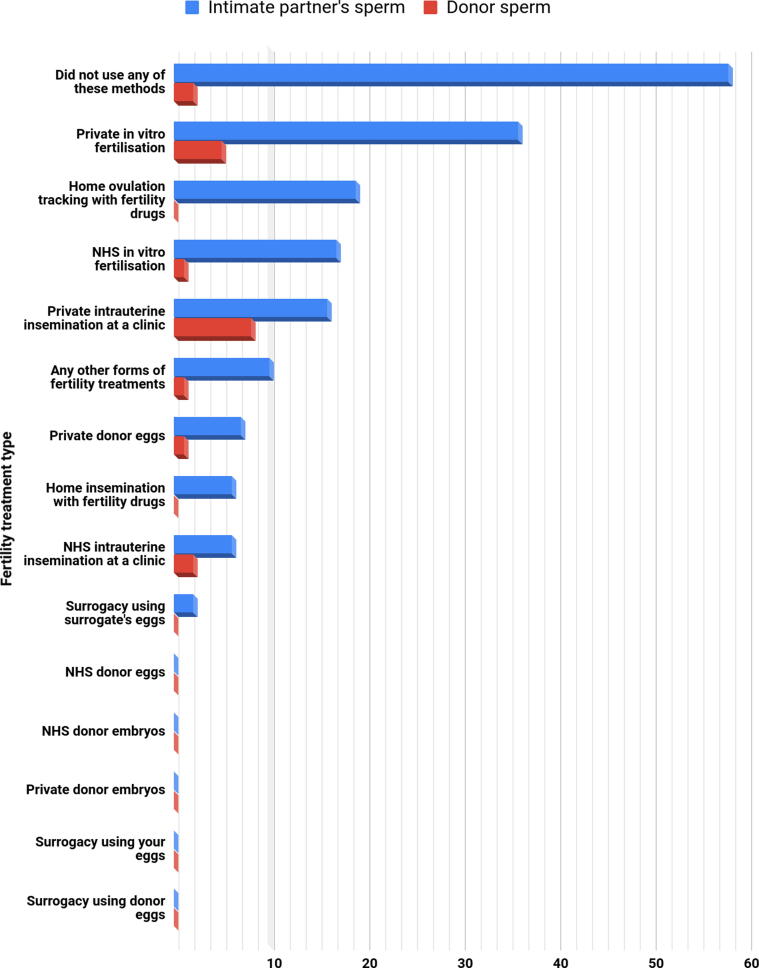
Childlessness is increasing globally. This study aimed to explore the experiences of childless women who had wanted children. An online survey study was promoted through social media to recruit women aged ≥46 years who were childless by circumstance. The survey remained open for 15 days. In total, 303 survey responses were collected, 176 of which were complete surveys. In total, 15.3% (27/176) of women who had wanted children reported that they had not tried to have children, most commonly due to the lack of a partner (40.7%, 11/27). Of the 139 women who had tried to have children, 70.5% (98/139) had used calendar-based menstrual cycle tracking methods to identify their fertile window, and many had undergone fertility checks including hormone tests (75.5%, 105/139) and ultrasound scans (71.2%, 99/139). A significant proportion of women had experienced a miscarriage (40.2%, 56/139). Many women had decided not to have any fertility treatment (43.2%, 60/139). For those who did, the majority had tried in-vitro fertilization (74.6%, 59/79). The most common reason that women gave for stopping fertility treatment was due to emotional reasons (74.7%, 59/79). When asked how women felt now about their childlessness, the most common issues identified were unhappiness (85/158, 54%), acceptance (43/158, 27%) and happiness (30/158, 19%). There should be more support for unsuccessful fertility patients and other childless women, and more emphasis should be placed upon fertility education in order to ensure that women are better informed about fertility issues.
全球范围内无子女的情况正在增加。本研究旨在探索那些想要孩子的无子女女性的经历。通过社交媒体推广了一项在线调查研究,以招募因各种情况而无子女的46岁及以上女性。该调查持续开放了15天。总共收集到303份调查回复,其中176份是完整的调查。在想要孩子的女性中,总计15.3%(27/176)报告称她们未曾尝试要孩子,最常见的原因是缺少伴侣(40.7%,11/27)。在139名尝试要孩子的女性中,70.5%(98/139)使用基于日历的月经周期追踪方法来确定她们的排卵期,并且许多人接受了生育检查,包括激素测试(75.5%,105/139)和超声扫描(71.2%,99/139)。相当一部分女性经历过流产(40.2%,56/139)。许多女性决定不接受任何生育治疗(43.2%,60/139)。对于那些接受治疗的女性,大多数尝试了体外受精(74.6%,59/79)。女性停止生育治疗最常见的原因是情感方面的原因(74.7%,59/79)。当被问及女性现在对自己无子女的感受时,最常见的问题是不开心(85/158,54%)、接受(43/158,27%)和开心(30/158,19%)。应该为生育未成功的患者和其他无子女女性提供更多支持,并且应该更加重视生育教育,以确保女性更好地了解生育问题。