Li Jia-Wun, Huang Chen-Yang, Chen Kuan-Yu, Chen Jian-Xun, Hsu Xiao-Yong, Chen Yan-Feng, Kuo Chung-Feng Jeffrey, Cheng Chih-Chia, Suen Maw-Cherng, Chiu Chih-Wei
Department of Materials Science and Engineering, National Taiwan University of Science and Technology, Taipei 10607, Taiwan.
Graduate Institute of Applied Science and Technology, National Taiwan University of Science and Technology, Taipei 10607, Taiwan.
Polymers (Basel). 2020 Dec 16;12(12):2999. doi: 10.3390/polym12122999.
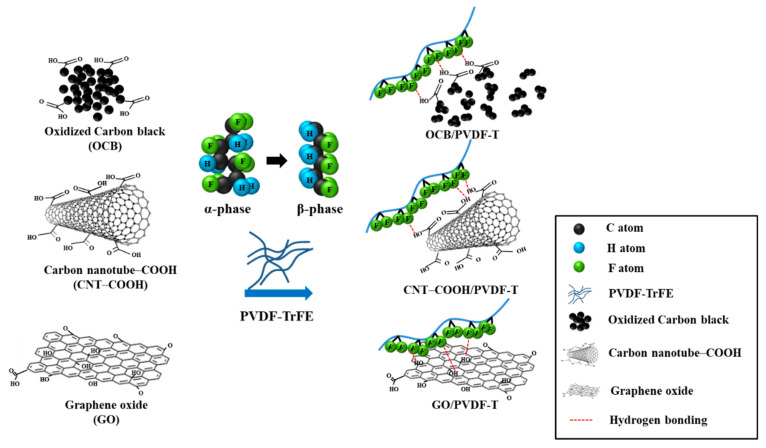
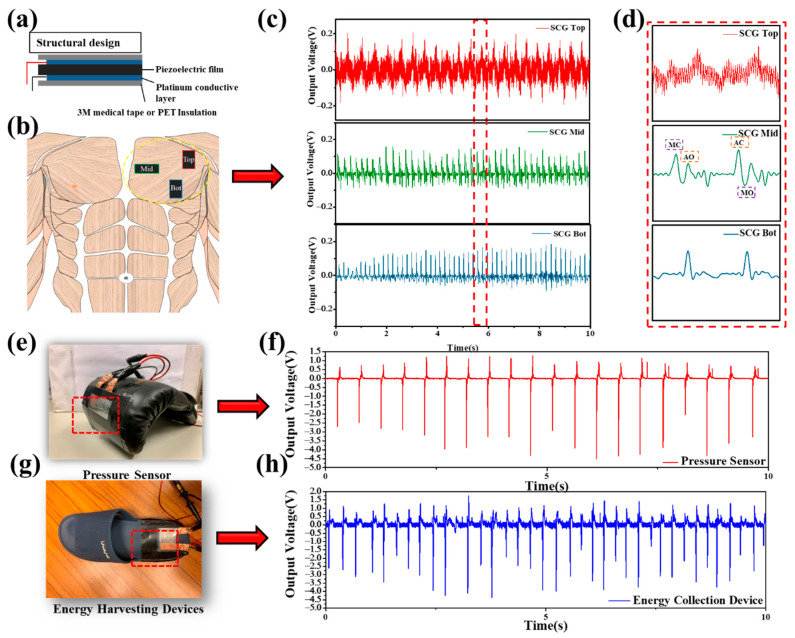
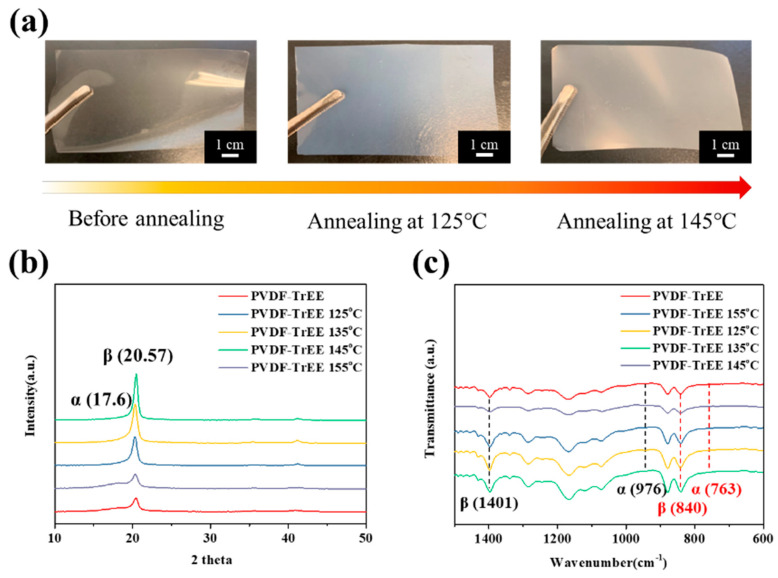
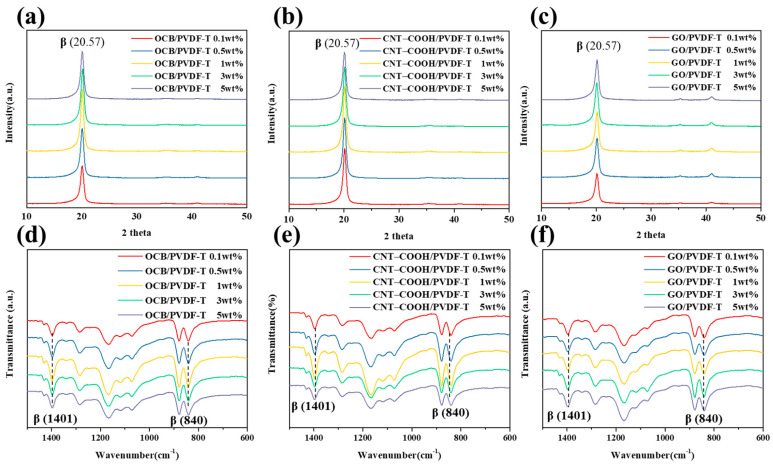
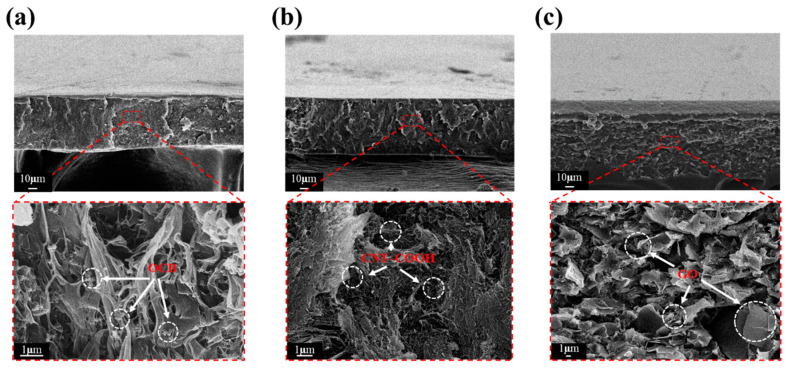
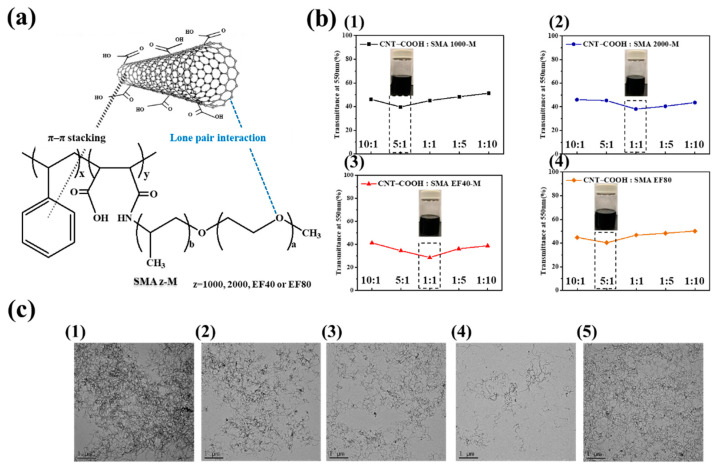
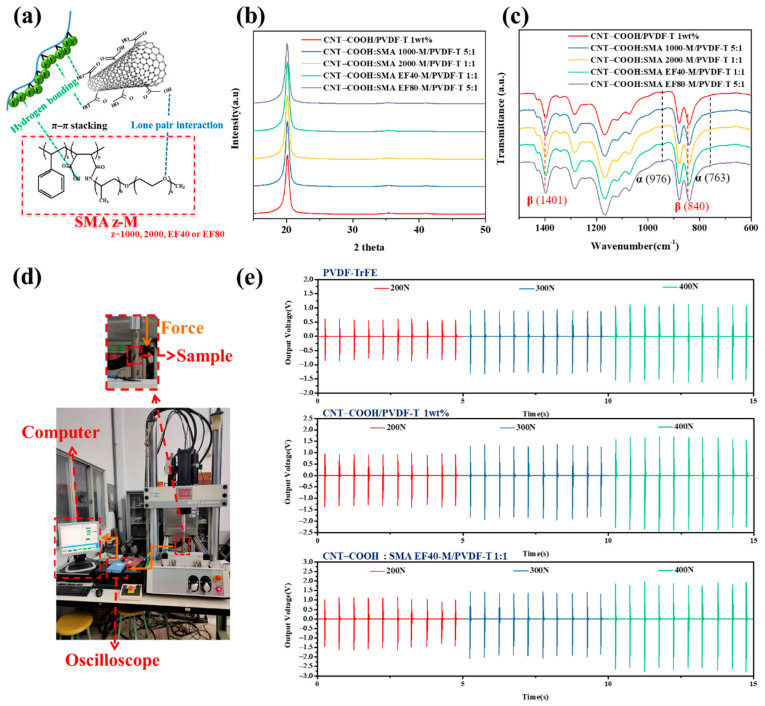
In this study, heat and polarization treatments were applied to poly(vinylidenefluoride-co-trifluoroethylene (PVDF-TrFE) films to improve their crystallinity and piezoelectric effect. Carbon-based nanomaterials (CBNs) of multiple dimensions (i.e., modified zero-dimensional (0D) carbon black (OCB), one-dimensional (1D) modified carbon nanotubes (CNT-COOH) and two-dimensional (2D) graphene oxide (GO)) were added to the copolymer to study the effects of different CBN dimensions on the crystallinity and piezoelectric effect of PVDF-TrFE films. Additionally, amphiphilic polymeric dispersants were added to improve the dispersibility of CBNs; the dispersant was synthesized by the amidation, and imidization reactions of styrene-maleic anhydride copolymer (SMAz) and polyoxyalkylene amine (M1000). Polymer solutions with different ratios of CBN to dispersant (z = 10:1, 5:1, 1:1, 1:5, 1:10) were prepared. The enhanced dispersibility enabled the fluorine atoms in the PVDF-TrFE molecular chain to more efficiently form hydrogen bonds with the -COOH group in the CBN, thereby increasing the content of the β crystal phase (the origin of the piezoelectric effect) of the film. Therefore, the resulting film exhibited a higher output voltage on the application side and better sensitivity on the sensing element. The addition of CNT-COOH and polymeric dispersants increased the β-phase content in PVDF-TrFE from 73.6% to 86.4%, which in turn raised the piezoelectric coefficient from 19.8 ± 1.0 to 26.4 ± 1.3 pC/N. The composite film-based pressure sensor also exhibited a high degree of sensitivity, which is expected to have commercial potential in the future.
在本研究中,对聚(偏二氟乙烯 - 三氟乙烯)(PVDF-TrFE)薄膜进行了热和极化处理,以提高其结晶度和压电效应。将多维碳基纳米材料(CBNs)(即改性零维(0D)炭黑(OCB)、一维(1D)改性碳纳米管(CNT-COOH)和二维(2D)氧化石墨烯(GO))添加到共聚物中,研究不同CBN维度对PVDF-TrFE薄膜结晶度和压电效应的影响。此外,添加两亲性聚合物分散剂以改善CBNs的分散性;该分散剂通过苯乙烯 - 马来酸酐共聚物(SMAz)和聚氧化烯胺(M1000)的酰胺化和亚胺化反应合成。制备了具有不同CBN与分散剂比例(z = 10:1、5:1、1:1、1:5、1:10)的聚合物溶液。增强的分散性使PVDF-TrFE分子链中的氟原子能够更有效地与CBN中的 -COOH基团形成氢键,从而增加了薄膜中β晶相(压电效应的起源)的含量。因此,所得薄膜在施加侧表现出更高的输出电压,在传感元件上具有更好的灵敏度。添加CNT-COOH和聚合物分散剂使PVDF-TrFE中的β相含量从73.6%增加到86.4%,进而使压电系数从19.8±1.0提高到26.4±1.3 pC/N。基于复合薄膜的压力传感器也表现出高度的灵敏度,有望在未来具有商业潜力。