Clinical Unit Primary Care Pharmacy Sevilla, Aljarafe-Sevilla Norte Primary Health Area, Andalusian Health Service, Seville, Spain.
Service of Pharmacy, Ouest Primary Health Care Area, Madrid Health Service, Madrid, Spain.
Pharmacol Res Perspect. 2021 Feb;9(1):e00692. doi: 10.1002/prp2.692.
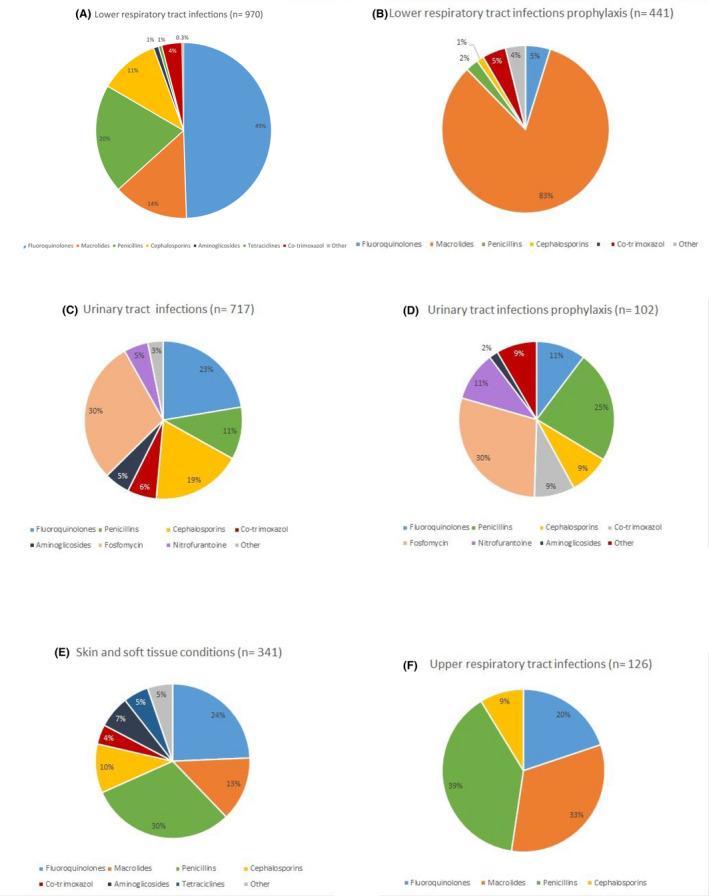
Some patients in the community receive a high burden of antibiotics. We aimed at describing the characteristics of these patients, antibiotics used, and conditions for which they received antibiotics. We carried out a cross-sectional study. Setting: Thirty Health Primary Care Areas from 12 regions in Spain, covering 5,960,191 inhabitants. Patients having at least 30 packages of antibacterials for systemic use dispensed in 2017 were considered. Main outcome measures: Prevalence of antibiotic use, conditions for which antibiotics were prescribed, clinical characteristics of patients, comorbidities, concomitant treatments, and microbiological isolates. Patient's average age was 70 years; 52% were men; 60% smokers/ex-smokers; 54% obese. Overall, 93% of patients had, at least, one chronic condition, and four comorbidities on average. Most common comorbidities were cardiovascular and/or hypertension (67%), respiratory diseases (62%), neurological/mental conditions (32%), diabetes (23%), and urological diseases (21%); 29% were immunosuppressed, 10% were dead at the time of data collection. Patients received three antibiotic treatments per year, mainly fluoroquinolones (28%), macrolides (21%), penicillins (19%), or cephalosporins (12%). Most frequently treated conditions were lower respiratory tract (infections or prophylaxis) (48%), urinary (27%), and skin/soft tissue infections (11%). Thirty-five percent have been guided by a microbiological diagnosis, being Pseudomonas aeruginosa (30%) and Escherichia coli (16%) the most frequent isolates. In conclusion, high antibiotic consumers in the community were basically elder, with multimorbidity and polymedication. They frequently received broad-spectrum antibiotics for long periods of time. The approach to infections in high consumers should be differentiated from healthy patients receiving antibiotics occasionally.
一些社区患者接受了高负荷的抗生素治疗。我们旨在描述这些患者的特征、使用的抗生素以及使用抗生素的情况。我们进行了一项横断面研究。地点:西班牙 12 个地区的 30 个初级保健区,覆盖了 5960191 名居民。我们将 2017 年至少接受 30 个疗程全身性抗生素治疗的患者视为研究对象。主要观察指标:抗生素使用的患病率、开出处方抗生素的情况、患者的临床特征、合并症、同时进行的治疗以及微生物分离物。患者的平均年龄为 70 岁;52%为男性;60%为吸烟者/戒烟者;54%为肥胖者。总体而言,93%的患者至少有一种慢性疾病,平均有四种合并症。最常见的合并症是心血管疾病和/或高血压(67%)、呼吸系统疾病(62%)、神经/精神疾病(32%)、糖尿病(23%)和泌尿系统疾病(21%);29%的患者存在免疫抑制,10%的患者在数据收集时已经死亡。患者每年接受三种抗生素治疗,主要是氟喹诺酮类(28%)、大环内酯类(21%)、青霉素类(19%)或头孢菌素类(12%)。最常治疗的疾病是下呼吸道(感染或预防)(48%)、泌尿系统(27%)和皮肤/软组织感染(11%)。35%的患者接受了微生物诊断指导,其中铜绿假单胞菌(30%)和大肠埃希菌(16%)是最常见的分离物。总之,社区中高抗生素消费者基本上是老年人,患有多种疾病和多种药物。他们经常长期接受广谱抗生素治疗。对高消费人群的感染处理方法应与偶尔接受抗生素治疗的健康患者有所区别。