Katz Family Division of Nephrology and Hypertension, Drug Discovery center, Department of Medicine, University of Miami Miller School of Medicine, 1580 NW 10th Ave, Miami, FL 33136, United States.
Katz Family Division of Nephrology and Hypertension, Drug Discovery center, Department of Medicine, University of Miami Miller School of Medicine, 1580 NW 10th Ave, Miami, FL 33136, United States.
EBioMedicine. 2021 Jan;63:103162. doi: 10.1016/j.ebiom.2020.103162. Epub 2020 Dec 16.
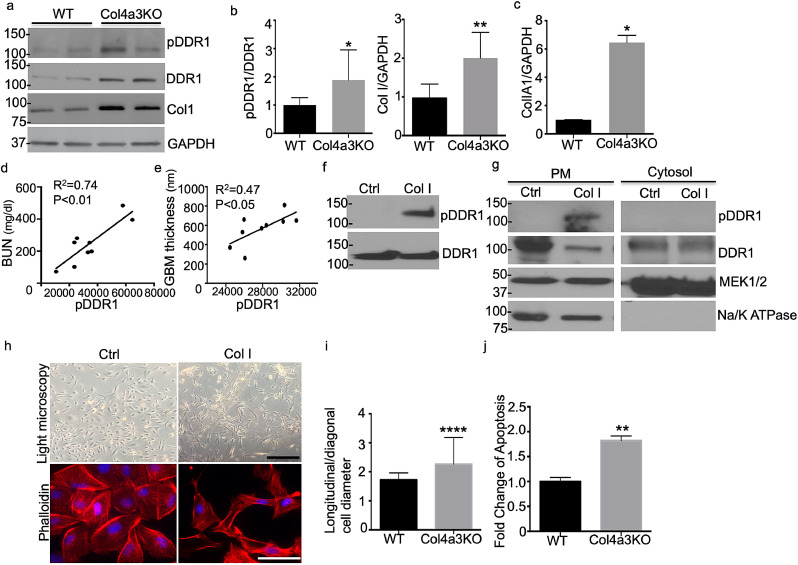
Discoidin domain receptor 1 (DDR1) is a receptor tyrosine kinase that is activated by collagens that is involved in the pathogenesis of fibrotic disorders. Interestingly, de novo production of the collagen type I (Col I) has been observed in Col4a3 knockout mice, a mouse model of Alport Syndrome (AS mice). Deletion of the DDR1 in AS mice was shown to improve survival and renal function. However, the mechanisms driving DDR1-dependent fibrosis remain largely unknown.
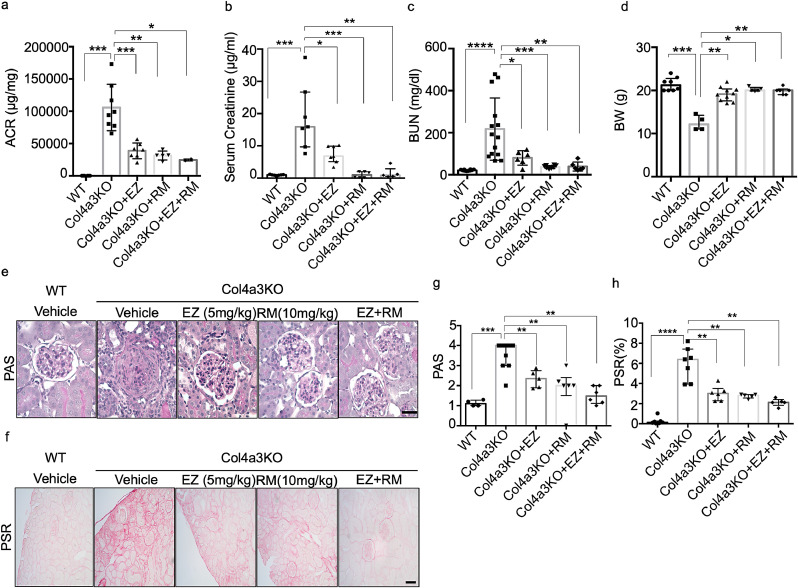
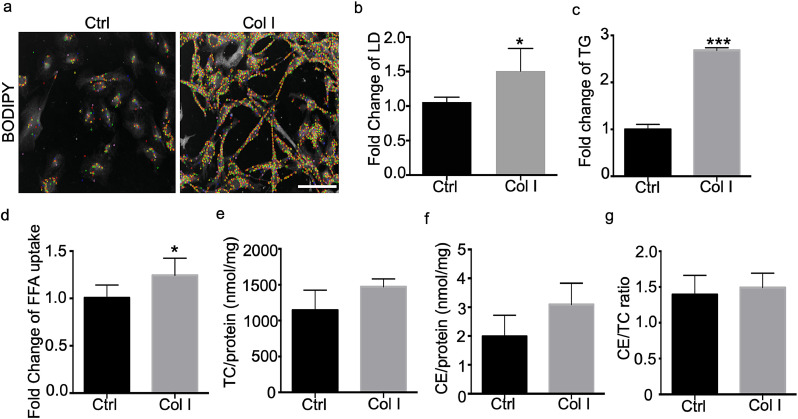
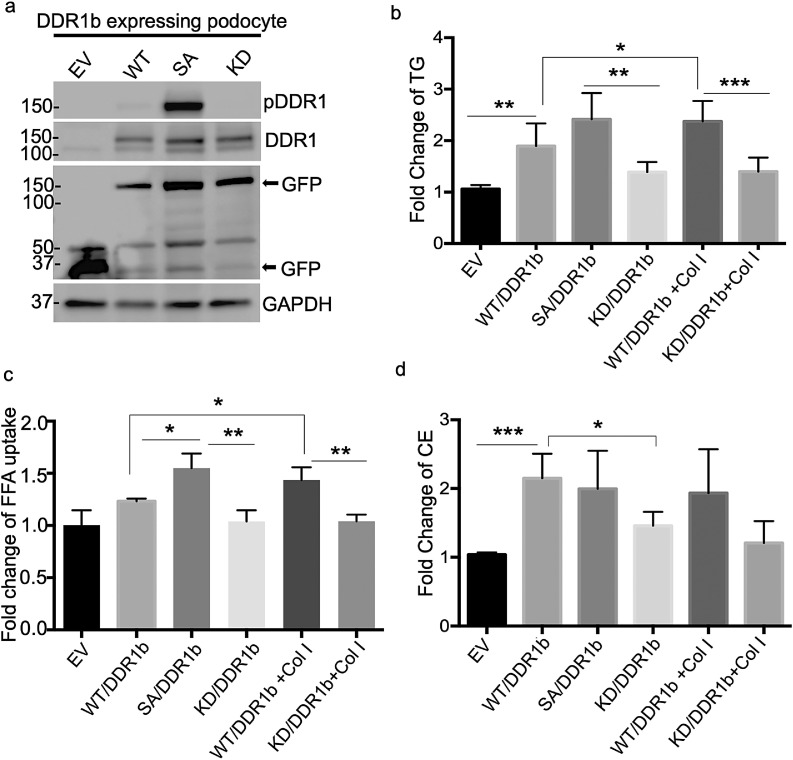
Podocyte pDDR1 levels, Collagen and cluster of differentiation 36 (CD36) expression was analyzed by Real-time PCR and Western blot. Lipid droplet accumulation and content was determined using Bodipy staining and enzymatic analysis. CD36 and DDR1 interaction was determined by co-immunoprecipitation. Creatinine, BUN, albuminuria, lipid content, and histological and morphological assessment of kidneys harvested from AS mice treated with Ezetimibe and/or Ramipril or vehicle was performed.
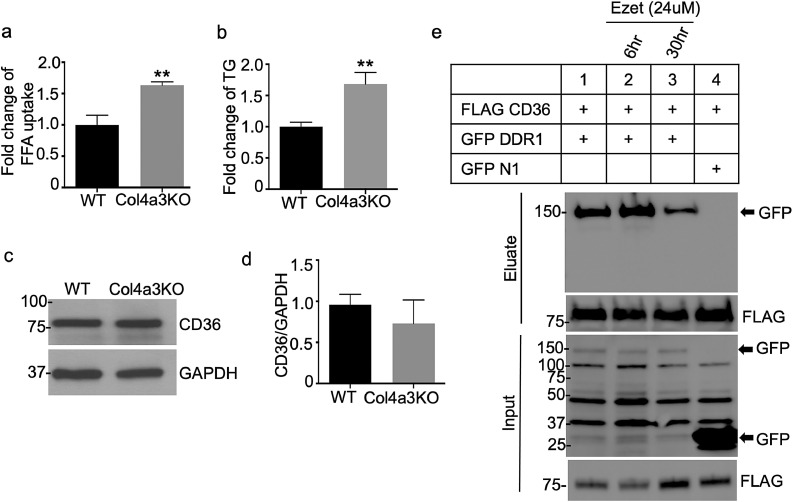
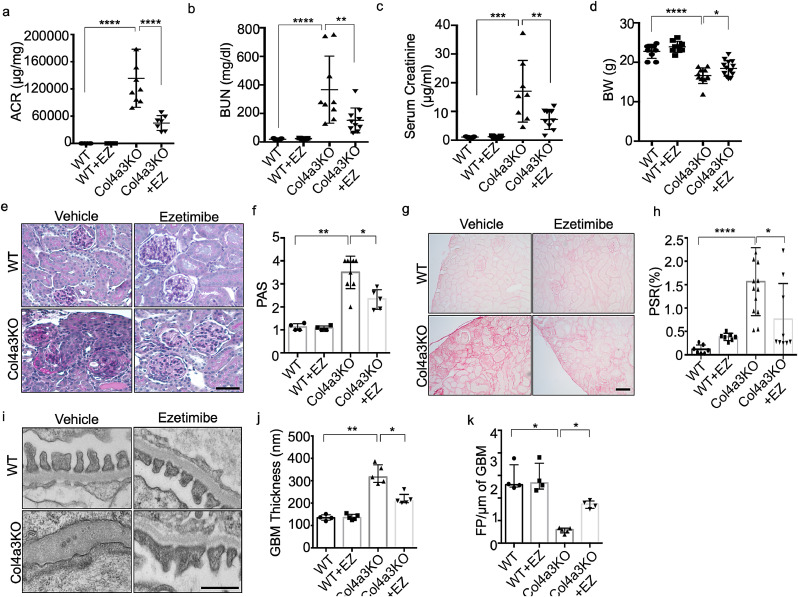
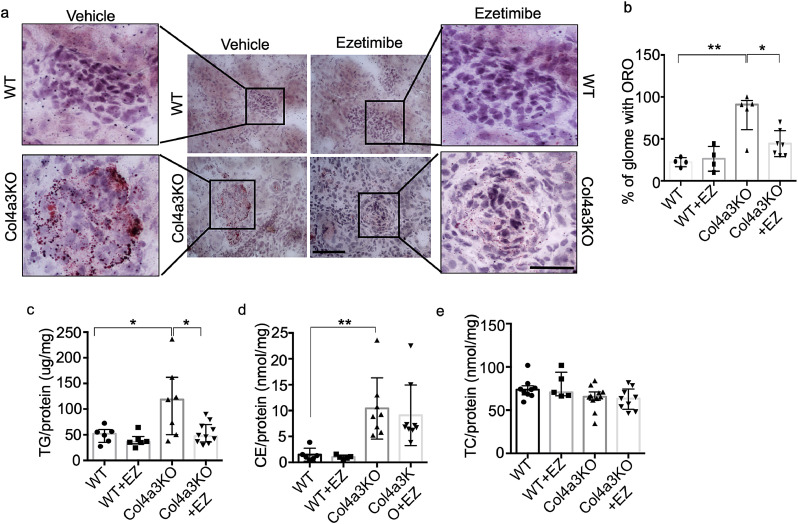
We demonstrate that Col I-mediated DDR1 activation induces CD36-mediated podocyte lipotoxic injury. We show that Ezetimibe interferes with the CD36/DDR1 interaction in vitro and prevents lipotoxicity in AS mice thus preserving renal function similarly to ramipril.
Our study suggests that Col I/DDR1-mediated lipotoxicity contributes to renal failure in AS and that targeting this pathway may represent a new therapeutic strategy for patients with AS and with chronic kidney diseases (CKD) associated with Col4 mutations.
This study is supported by the NIH grants R01DK117599, R01DK104753, R01CA227493, U54DK083912, UM1DK100846, U01DK116101, UL1TR000460 (Miami Clinical Translational Science Institute, National Center for Advancing Translational Sciences and the National Institute on Minority Health and Health Disparities), F32DK115109, Hoffmann-La Roche and Alport Syndrome Foundation.
Discoidin domain receptor 1(DDR1)是一种受体酪氨酸激酶,可被胶原蛋白激活,参与纤维性疾病的发病机制。有趣的是,在 Alport 综合征(AS)小鼠的模型中,已经观察到胶原 I(Col I)的从头产生。AS 小鼠中 DDR1 的缺失被证明可以改善存活率和肾功能。然而,驱动 DDR1 依赖性纤维化的机制在很大程度上仍然未知。
通过实时 PCR 和 Western blot 分析足细胞 pDDR1 水平、胶原蛋白和分化群 36(CD36)的表达。使用 Bodipy 染色和酶分析确定脂滴积累和含量。通过共免疫沉淀确定 CD36 和 DDR1 之间的相互作用。对用依泽替米贝和/或雷米普利或载体治疗的 AS 小鼠的肾脏进行肌酐、BUN、蛋白尿、脂质含量以及组织学和形态学评估。
我们证明 Col I 介导的 DDR1 激活诱导 CD36 介导的足细胞脂肪毒性损伤。我们表明,依泽替米贝在体外干扰 CD36/DDR1 相互作用,并防止 AS 小鼠的脂肪毒性,从而与雷米普利相似地保护肾功能。
我们的研究表明,Col I/DDR1 介导的脂肪毒性导致 AS 中的肾功能衰竭,并且靶向该途径可能代表 AS 患者和与 Col4 突变相关的慢性肾脏病(CKD)患者的新治疗策略。
本研究由 NIH 资助 R01DK117599、R01DK104753、R01DK116101、U54DK083912、UM1DK100846、U01DK115109、UL1TR000460(迈阿密临床转化科学研究所、国家转化医学中心和国家少数民族健康与健康差异研究所)、F32DK115109、Hoffmann-La Roche 和 Alport 综合征基金会。