School of Sport, Health and Community, University of Winchester, UK.
School of Sport, Exercise and Nutrition, Massey University, New Zealand.
J Sci Med Sport. 2021 Apr;24(4):320-326. doi: 10.1016/j.jsams.2020.11.016. Epub 2020 Dec 3.
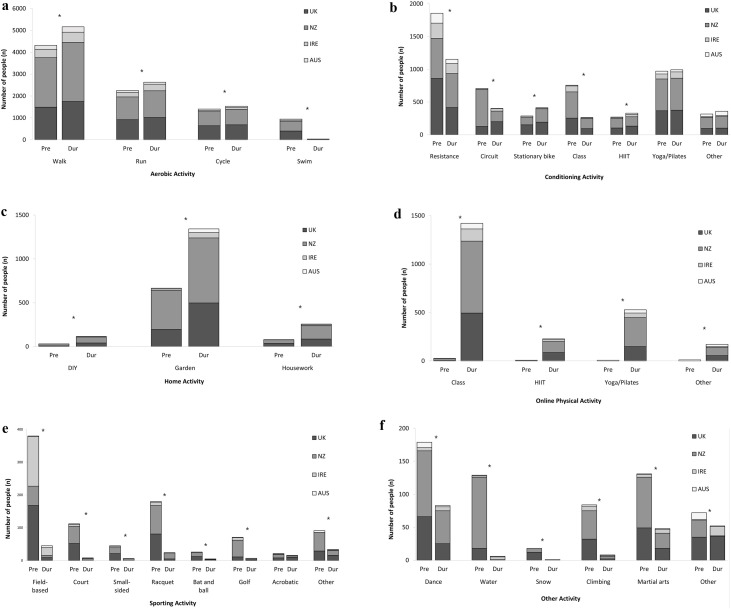
To assess physical activity (PA), mental health and well-being of adults in the United Kingdom (UK), Ireland, New Zealand and Australia during the initial stages of National governments' Coronavirus disease (COVID-19) containment responses.
Observational, cross-sectional.
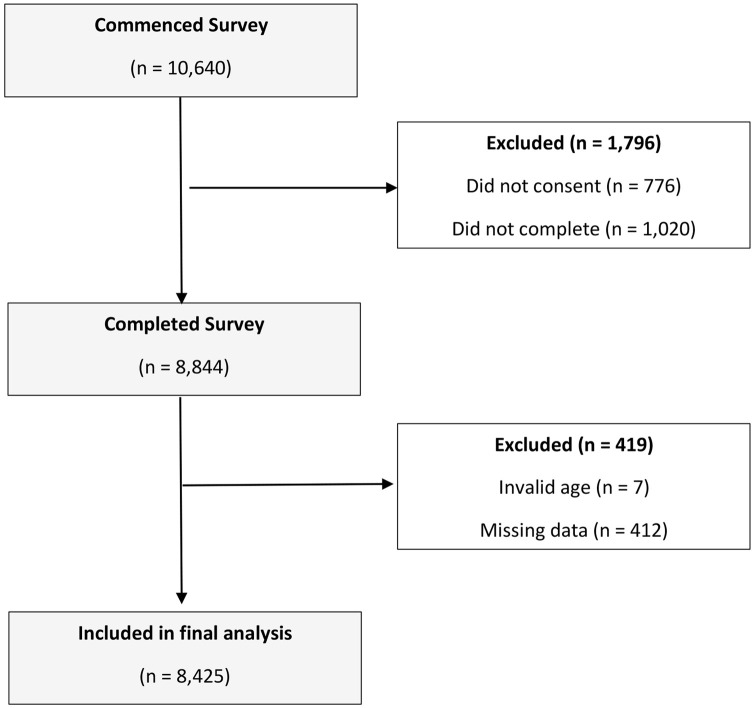
An online survey was disseminated to adults (n=8,425; 44.5±14.8y) residing in the UK, Ireland, New Zealand and Australia within the first 2-6 weeks of government-mandated COVID-19 restrictions. Main outcome measures included: Stages of Change scale for exercise behaviour change; International Physical Activity Questionnaire (short-form); World Health Organisation-5 Well-being Index; and the Depression Anxiety and Stress Scale-9.
Participants who reported a negative change in exercise behaviour from before initial COVID-19 restrictions to during the initial COVID-19 restrictions demonstrated poorer mental health and well-being compared to those demonstrating either a positive-or no change in their exercise behaviour (p<0.001). Whilst women reported more positive changes in exercise behaviour, young people (18-29y) reported more negative changes (both p<0.001). Individuals who had more positive exercise behaviours reported better mental health and well-being (p<0.001). Although there were no differences in PA between countries, individuals in New Zealand reported better mental health and well-being (p<0.001).
The initial COVID-19 restrictions have differentially impacted upon PA habits of individuals based upon their age and sex, and therefore have important implications for international policy and guideline recommendations. Public health interventions that encourage PA should target specific groups (e.g., men, young adults) who are most vulnerable to the negative effects of physical distancing and/or self-isolation.
评估英国、爱尔兰、新西兰和澳大利亚在政府采取新冠病毒病(COVID-19)遏制措施的初始阶段,成年人的身体活动(PA)、心理健康和幸福感。
观察性、横断面研究。
在政府强制实施 COVID-19 限制措施的头 2-6 周内,向居住在英国、爱尔兰、新西兰和澳大利亚的成年人(n=8425;44.5±14.8 岁)在线分发调查问卷。主要结局指标包括:锻炼行为改变的阶段变化量表;国际体力活动问卷(短式);世界卫生组织-5 幸福指数;和抑郁焦虑压力量表-9。
与报告锻炼行为从初始 COVID-19 限制前到初始 COVID-19 限制期间发生积极或无变化的参与者相比,报告锻炼行为发生负向变化的参与者表现出较差的心理健康和幸福感(p<0.001)。虽然女性报告了更多积极的锻炼行为变化,但年轻人(18-29 岁)报告了更多的负向变化(均 p<0.001)。具有更多积极锻炼行为的个体报告了更好的心理健康和幸福感(p<0.001)。尽管各国之间的 PA 没有差异,但新西兰的个体报告了更好的心理健康和幸福感(p<0.001)。
初始 COVID-19 限制根据年龄和性别对个体的 PA 习惯产生了不同的影响,因此对国际政策和指南建议具有重要意义。鼓励 PA 的公共卫生干预措施应针对最容易受到身体距离和/或自我隔离负面影响的特定群体(例如,男性、年轻成年人)。