Department of Biostatistics, School of Public Health, Brown University, Providence, RI, United States.
Department of Epidemiology, School of Public Health, Brown University, Providence, RI, United States.
Epidemics. 2021 Mar;34:100426. doi: 10.1016/j.epidem.2020.100426. Epub 2020 Dec 14.
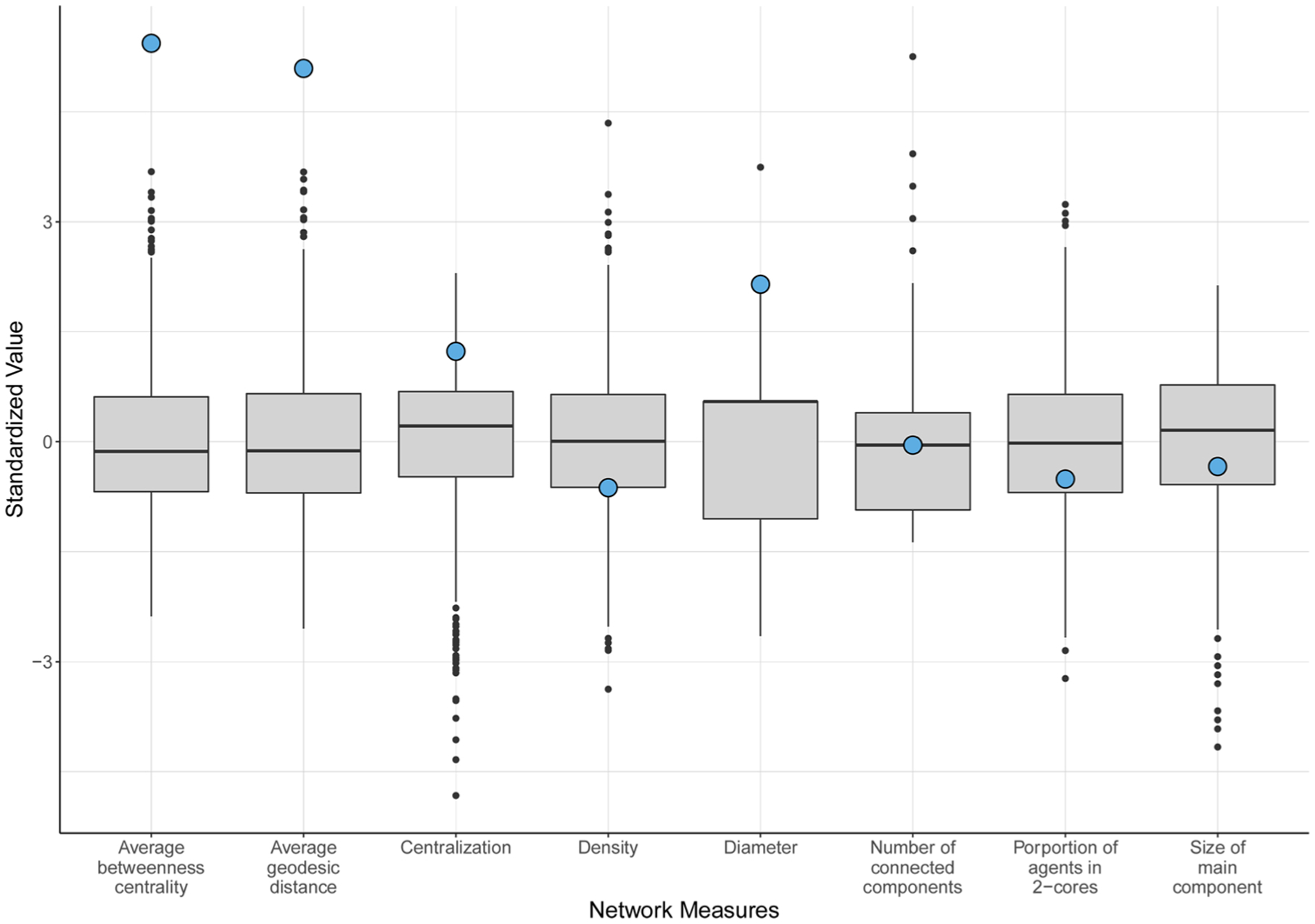
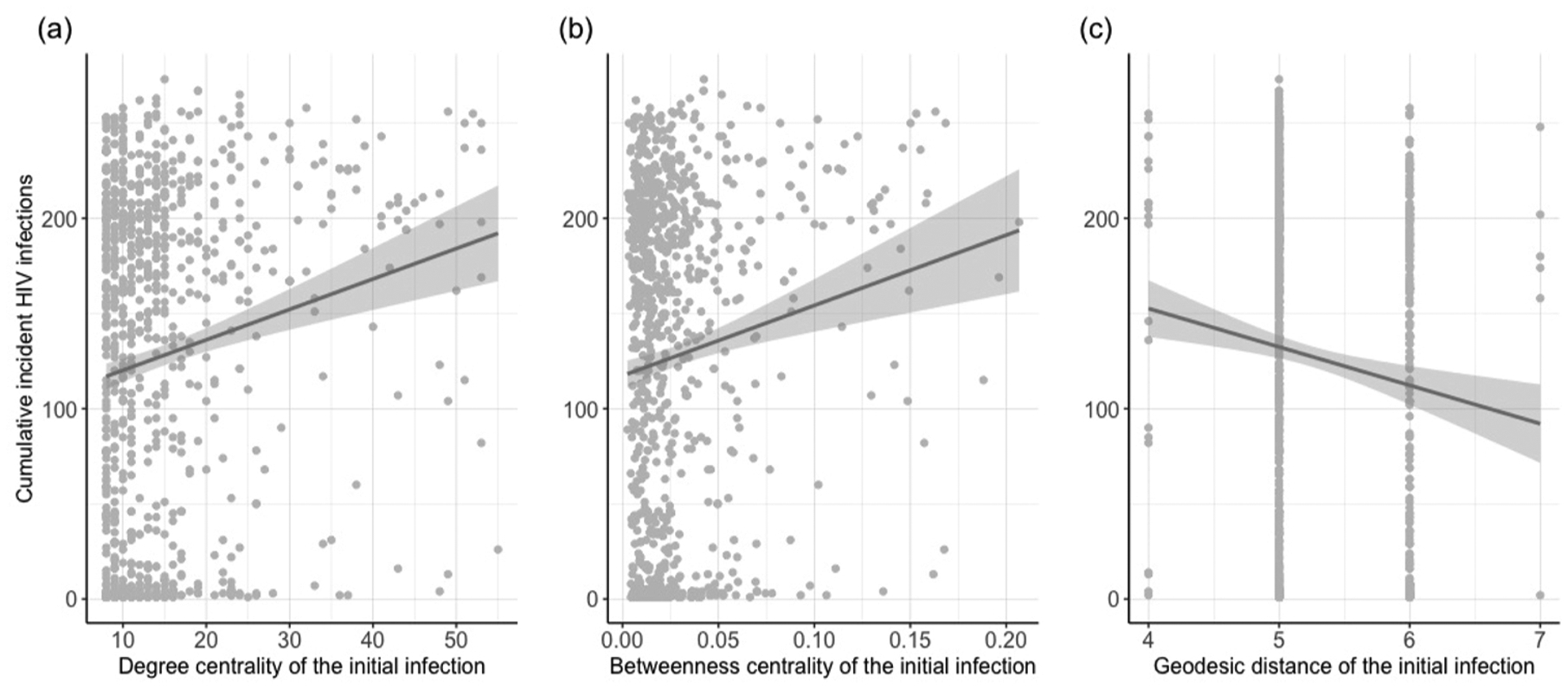
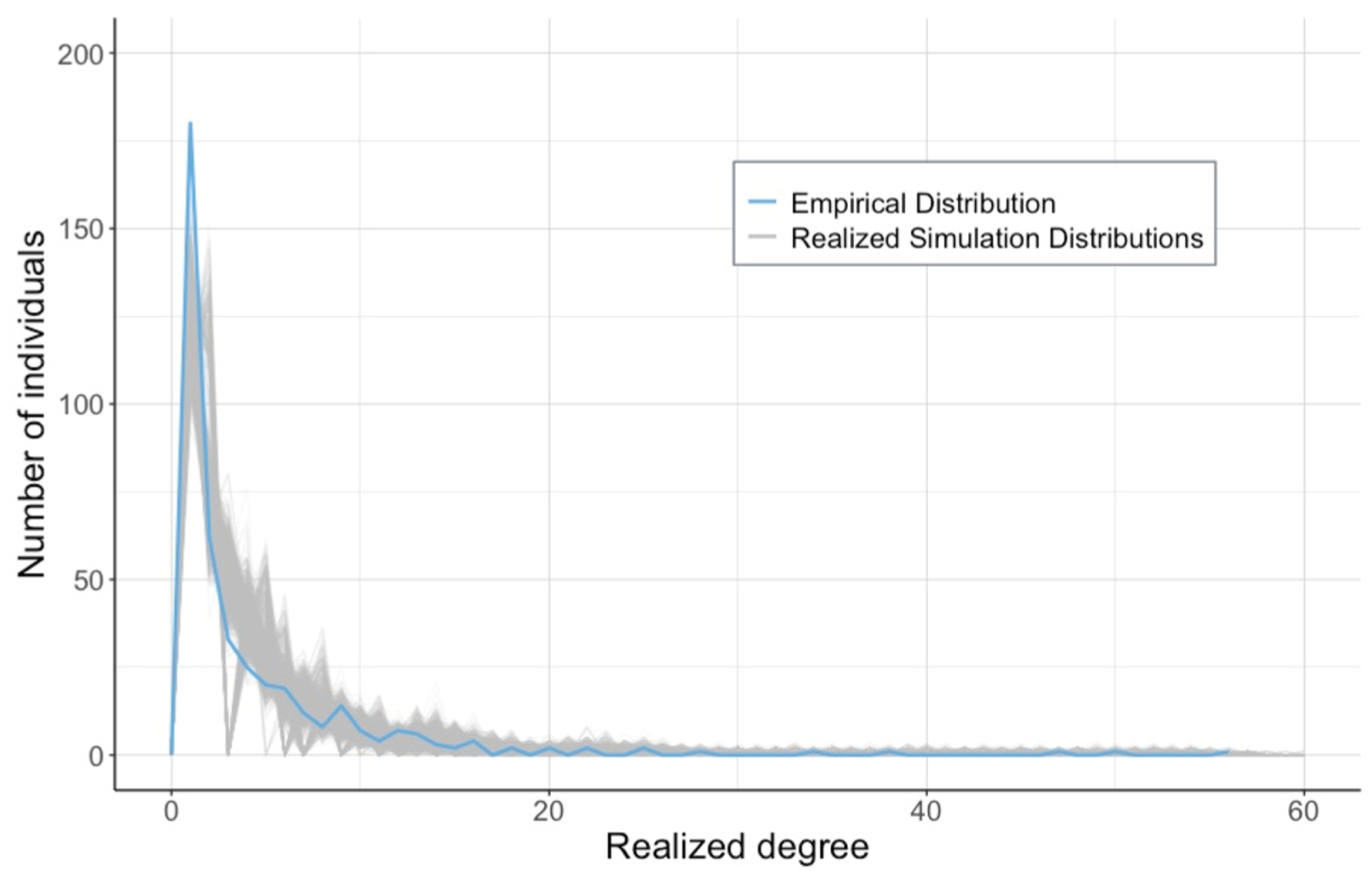
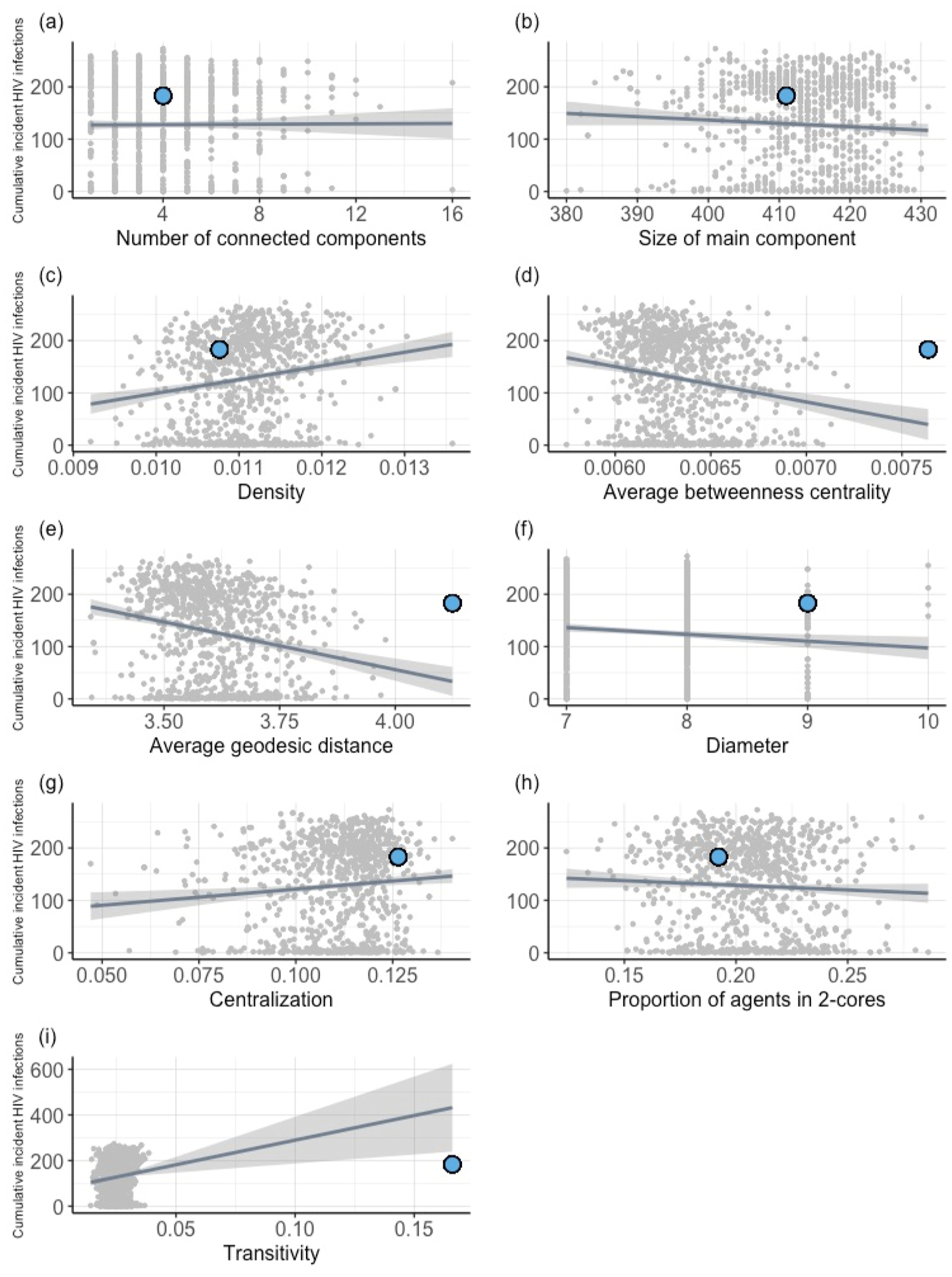
As HIV incidence among people who inject drugs grows in the context of an escalating drug overdose epidemic in North America, investigating how network structure may affect vulnerability to rapid HIV transmission is necessary for preventing outbreaks. We compared the characteristics of the observed contact tracing network from the 2015 outbreak in rural Indiana with 1000 networks generated by an agent-based network model with approximately the same number of individuals (n = 420) and ties between them (n = 913). We introduced an initial HIV infection into the simulated networks and compared the subsequent epidemic behavior (e.g., cumulative HIV infections over 5 years). The model was able to produce networks with largely comparable characteristics and total numbers of incident HIV infections. Although the model was unable to produce networks with comparable cohesiveness (where the observed network had a transitivity value 35.7 standard deviations from the mean of the simulated networks), the structural variability of the simulated networks allowed for investigation into their potential facilitation of HIV transmission. These findings emphasize the need for continued development of injection network simulation studies in tandem with empirical data collection to further investigate how network characteristics played a role in this and future outbreaks.
随着北美地区药物过量流行导致注射吸毒者中艾滋病毒感染率不断上升,研究网络结构如何影响快速艾滋病毒传播的易感性对于预防疫情爆发是必要的。我们比较了 2015 年印第安纳州农村疫情中观察到的接触者追踪网络的特征,以及通过具有大致相同数量的个体(n=420)和它们之间的联系(n=913)的基于代理的网络模型生成的 1000 个网络。我们在模拟网络中引入了初始艾滋病毒感染,并比较了随后的疫情行为(例如,5 年内累积的艾滋病毒感染人数)。该模型能够生成具有很大可比性特征和总感染艾滋病毒人数的网络。尽管该模型无法生成具有可比内聚性的网络(观察到的网络的传递值比模拟网络的平均值高出 35.7 个标准差),但模拟网络的结构可变性允许研究它们在促进艾滋病毒传播方面的潜在作用。这些发现强调了需要继续开发注射网络模拟研究,并与经验数据收集并行进行,以进一步研究网络特征在这一疫情和未来疫情中所起的作用。