Sajiki Yamato, Konnai Satoru, Goto Shinya, Okagawa Tomohiro, Ohira Kosuke, Shimakura Honami, Maekawa Naoya, Gondaira Satoshi, Higuchi Hidetoshi, Tajima Motoshi, Hirano Yuki, Kohara Junko, Murata Shiro, Ohashi Kazuhiko
Department of Disease Control, Faculty of Veterinary Medicine, Hokkaido University, Sapporo, Japan.
Department of Advanced Pharmaceutics, Faculty of Veterinary Medicine, Hokkaido University, Sapporo, Japan.
Front Vet Sci. 2020 Dec 2;7:609443. doi: 10.3389/fvets.2020.609443. eCollection 2020.
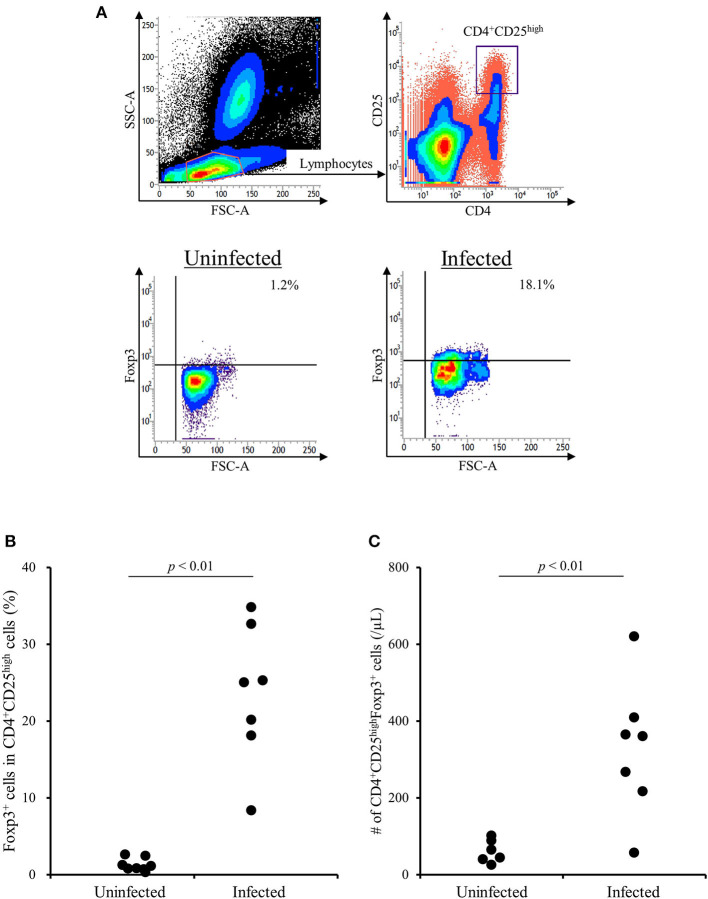
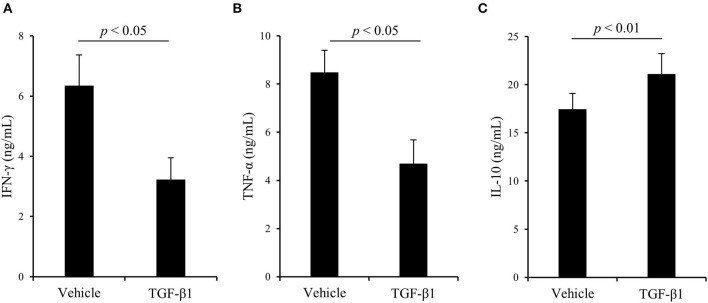
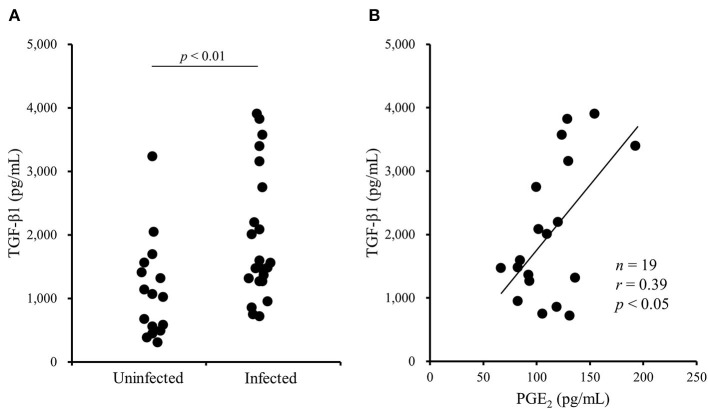
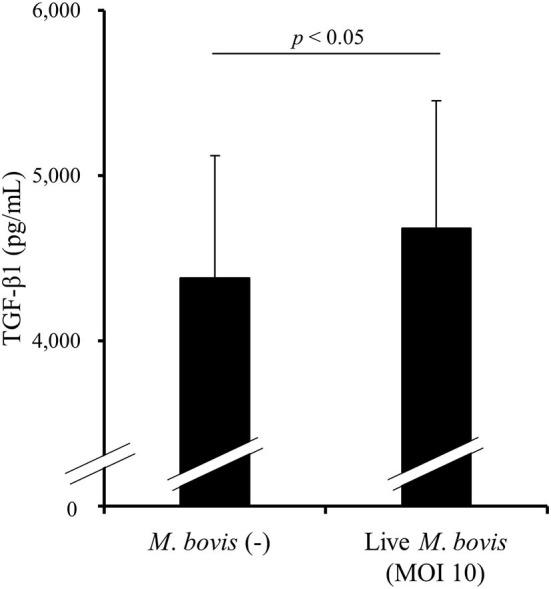
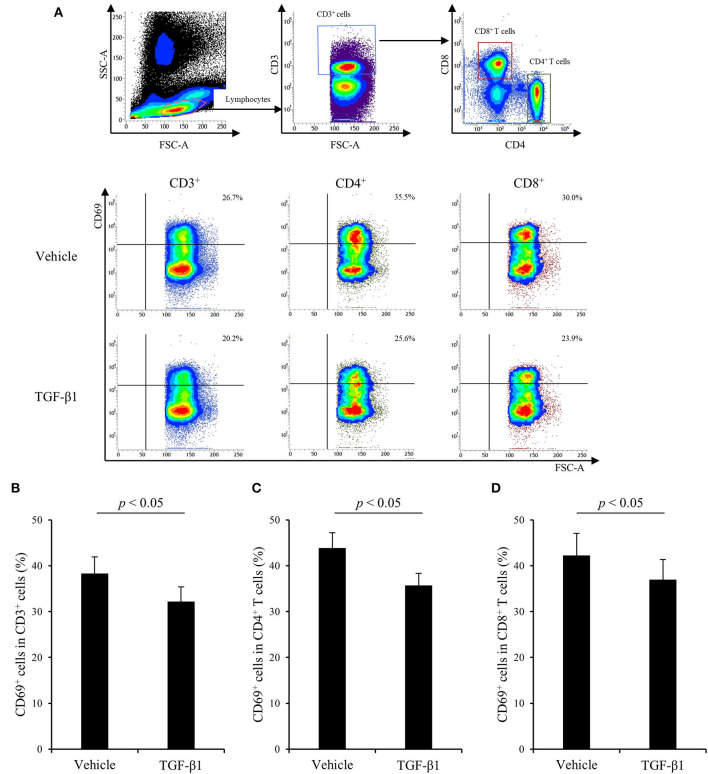
Regulatory T cells (Tregs) regulate immune responses and maintain host immune homeostasis. Tregs contribute to the disease progression of several chronic infections by oversuppressing immune responses via the secretion of immunosuppressive cytokines, such as transforming growth factor (TGF)-β and interleukin-10. In the present study, we examined the association of Tregs with infection, in which immunosuppression is frequently observed. Compared with uninfected cattle, the percentage of Tregs, CD4CD25Foxp3 T cells, was increased in . -infected cattle. Additionally, the plasma of . -infected cattle contained the high concentrations of TGF-β1, and . infection induced TGF-β1 production from bovine immune cells in cultures. Finally, we analyzed the immunosuppressive effects of TGF-β1 on bovine immune cells. Treatment with TGF-β1 significantly decreased the expression of CD69, an activation marker, in T cells, and Th1 cytokine production . These results suggest that the increase in Tregs and TGF-β1 secretion could be one of the immunosuppressive mechanisms and that lead to increased susceptibility to other infections in terms of exacerbation of disease during . infection.
调节性T细胞(Tregs)调节免疫反应并维持宿主免疫稳态。Tregs通过分泌免疫抑制细胞因子(如转化生长因子(TGF)-β和白细胞介素-10)过度抑制免疫反应,从而促进几种慢性感染的疾病进展。在本研究中,我们研究了Tregs与经常观察到免疫抑制的感染之间的关联。与未感染的牛相比,感染牛体内Tregs(CD4CD25Foxp3 T细胞)的百分比增加。此外,感染牛的血浆中含有高浓度的TGF-β1,并且感染诱导牛免疫细胞在培养物中产生TGF-β1。最后,我们分析了TGF-β1对牛免疫细胞的免疫抑制作用。用TGF-β1处理显著降低了T细胞中活化标志物CD69的表达以及Th1细胞因子的产生。这些结果表明,Tregs增加和TGF-β1分泌可能是免疫抑制机制之一,并且在感染期间会导致疾病恶化,从而增加对其他感染的易感性。