Institute of Health Insurance Research, National Health Insurance Service, Wonju, Korea.
Department of Communication and Media, Ewha Womans University, Seoul, Korea.
J Korean Med Sci. 2020 Dec 21;35(49):e429. doi: 10.3346/jkms.2020.35.e429.
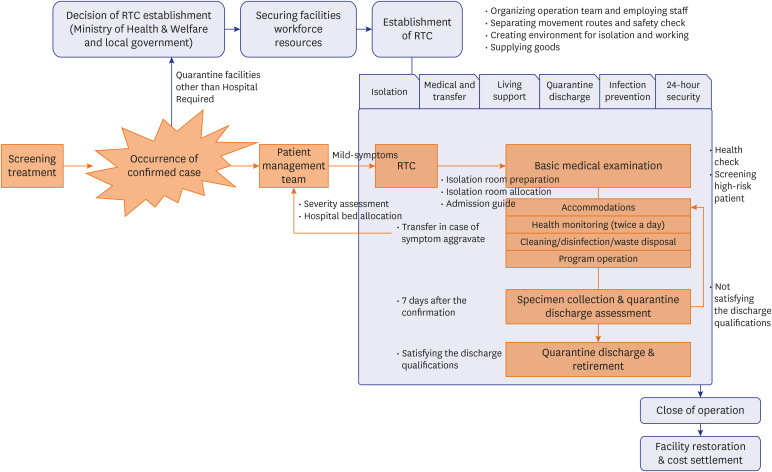
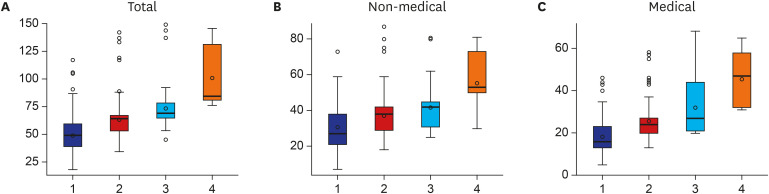
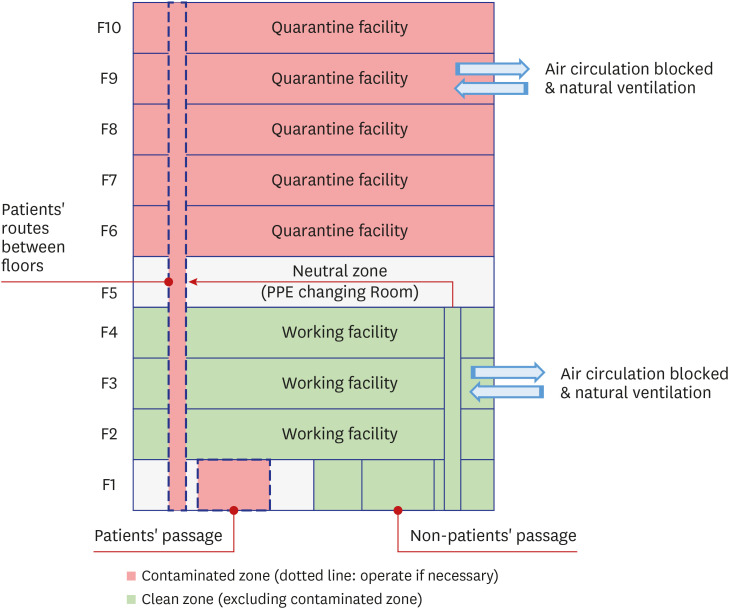
With the rapid spread of coronavirus disease 2019 (COVID-19), a particularly sharp increase in the number of confirmed cases in Daegu and Gyeongbuk regions at the end of February, Korea faced an unprecedented shortage of medical resources, including hospital beds. To cope with this shortage, the government introduced a severity scoring system for patients with COVID-19 and designed a new type of quarantine facility for treating and isolating patients with mild symptoms out of the hospital, namely, the Residential Treatment Center (RTC). A patient with mild symptoms was immediately isolated in the RTC and continuously monitored to detect changes in symptoms. If the symptoms aggravate, the patient was transferred to a hospital. RTCs were designed by creating a quarantine environment in existing lodging facilities capable of accommodating > 100 individuals. The facilities were entirely divided into a clean zone (working area) and contaminated zone (patient zone), separating the space, air, and movement routes, and the staff wore level D personal protective equipment (PPE) in the contaminated zone. The staffs consisted of medical personnel, police officers, soldiers, and operation personnel, and worked in two or three shifts per day. Their duty was mainly to monitor the health conditions of quarantined patients, provide accommodations, and regularly collect specimens to determine if they can be released. For the past two months, RTCs secured approximately 4,000 isolation rooms and treated approximately 3,000 patients with mild symptoms and operated stably without additional spread of the disease in and out of the centers. Based on these experience, we would like to suggest the utilization of RTCs as strategic quarantine facilities in pandemic situations.
随着 2019 年冠状病毒病(COVID-19)的迅速传播,2 月底大邱和庆尚北道地区确诊病例数量特别急剧增加,韩国面临着前所未有的医疗资源短缺,包括医院床位。为了应对这种短缺,政府为 COVID-19 患者引入了严重程度评分系统,并设计了一种新型的隔离设施,用于治疗和隔离轻症患者,即居住治疗中心(RTC)。轻症患者立即被隔离在 RTC 中,并进行持续监测,以检测症状变化。如果症状加重,患者将被转至医院。RTC 是通过在能够容纳>100 人的现有住宿设施中创建隔离环境来设计的。这些设施完全分为清洁区(工作区)和污染区(患者区),隔离空间、空气和运动路线,工作人员在污染区穿戴 D 级个人防护装备(PPE)。工作人员由医务人员、警察、士兵和操作人员组成,每天工作两到三班。他们的职责主要是监测隔离患者的健康状况,提供住宿,并定期采集样本以确定是否可以放行。在过去的两个月里,RTC 确保了大约 4000 个隔离室,并治疗了大约 3000 名轻症患者,在中心内外稳定运作,没有疾病的进一步传播。基于这些经验,我们建议在大流行情况下将 RTC 用作战略隔离设施。