Department of Molecular, Cellular, and Developmental Biology, University of Michigan, Ann Arbor, MI.
J Cell Biol. 2021 Jan 4;220(1). doi: 10.1083/jcb.202001116.
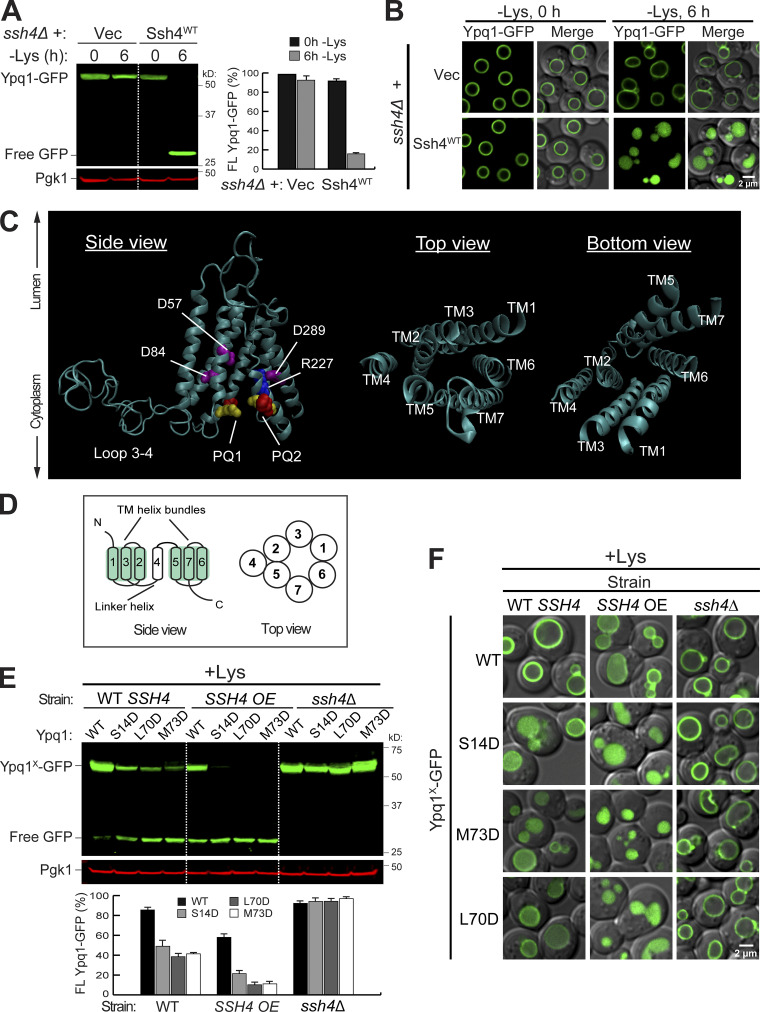
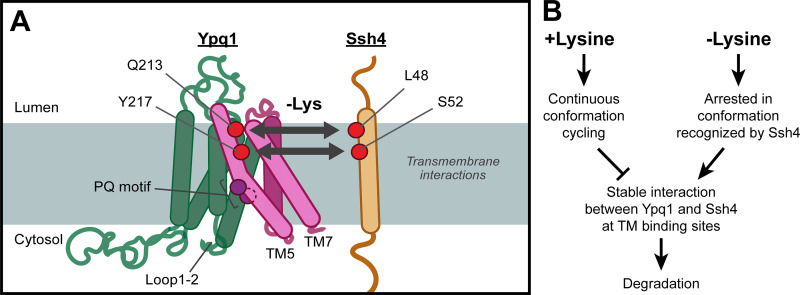
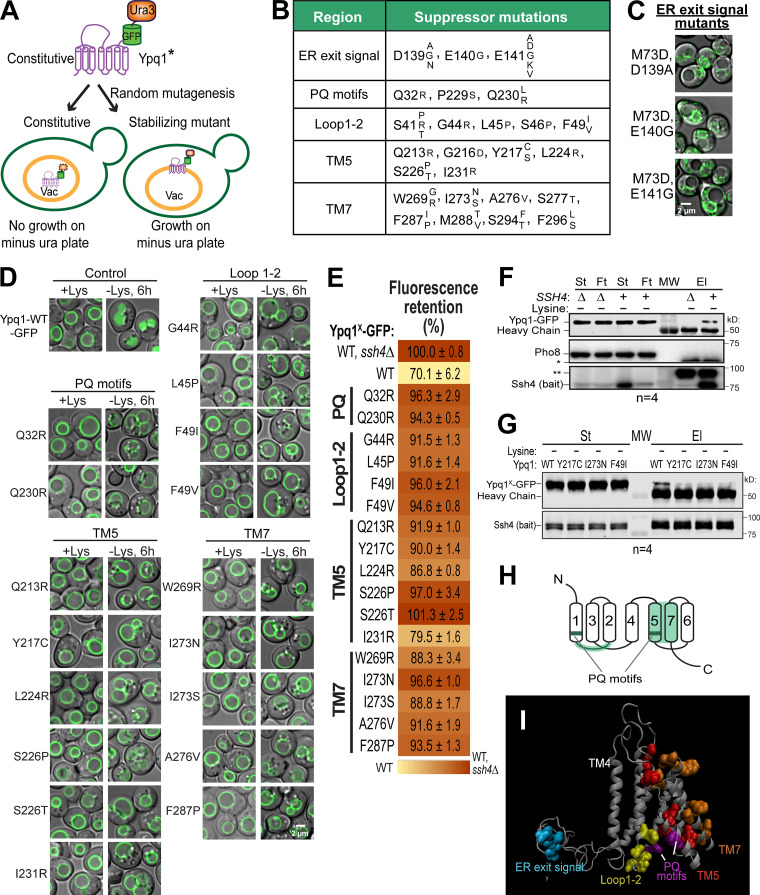
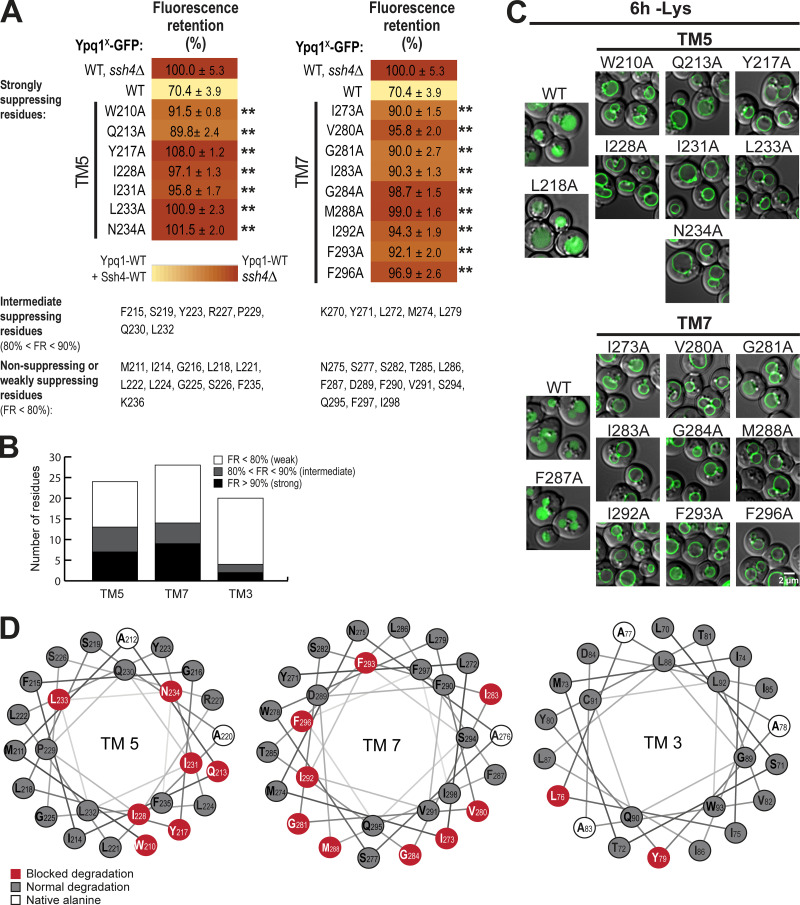
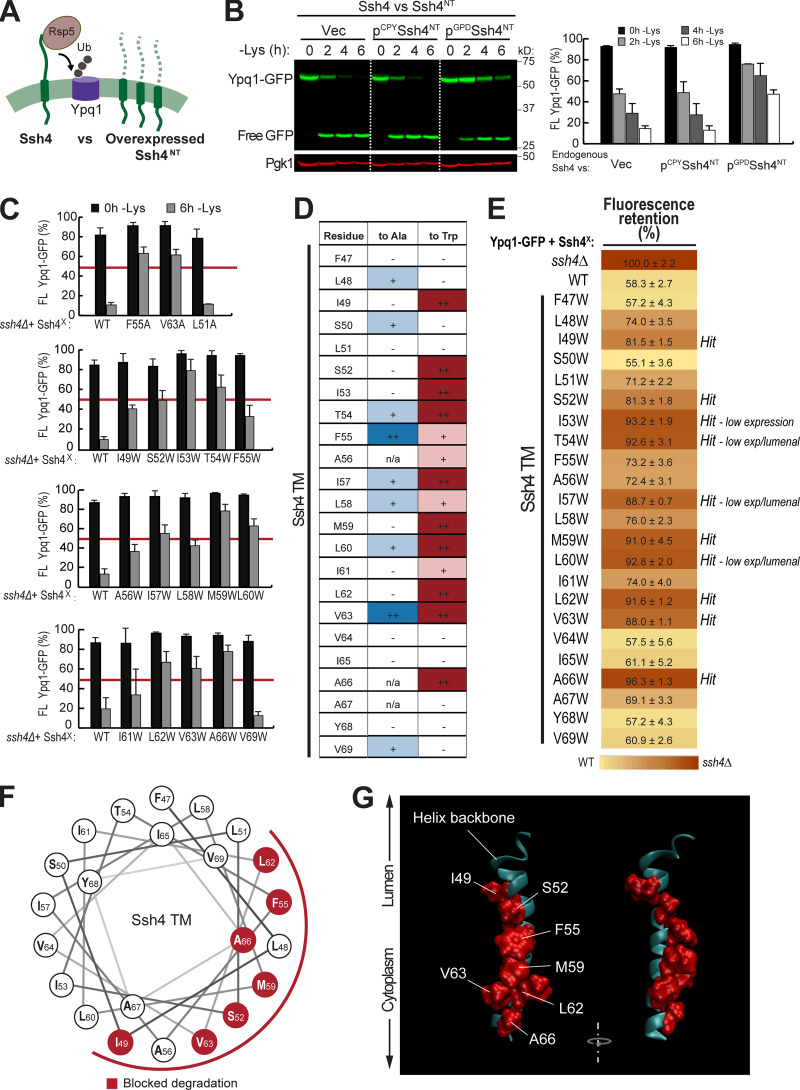
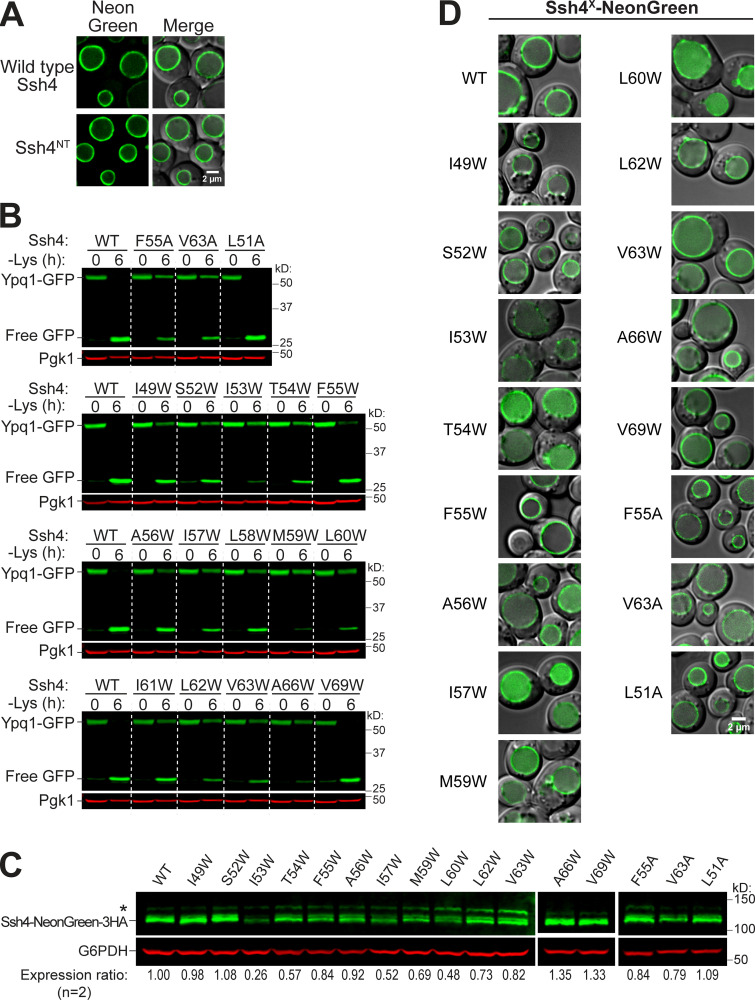
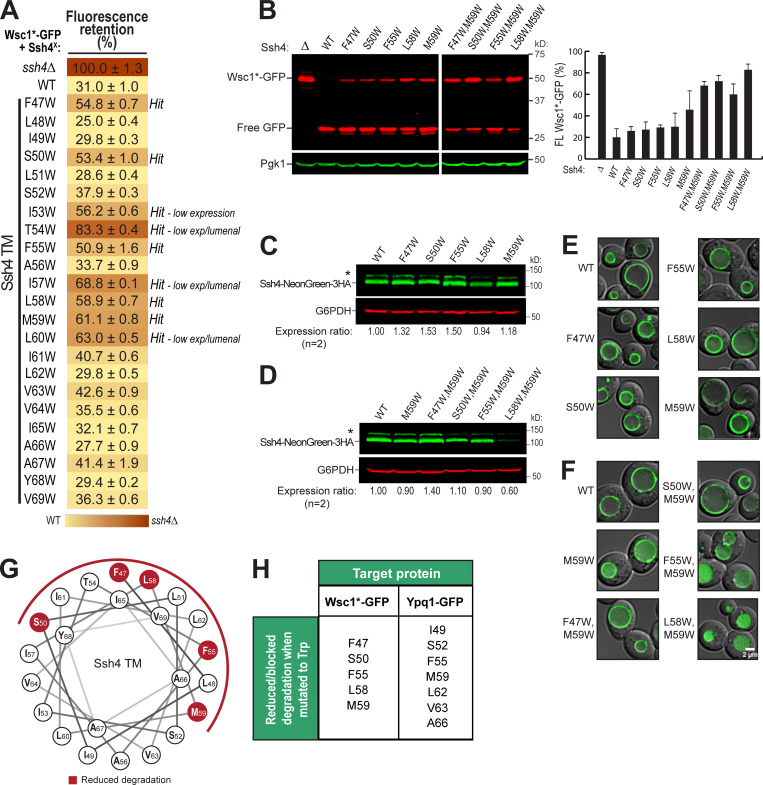
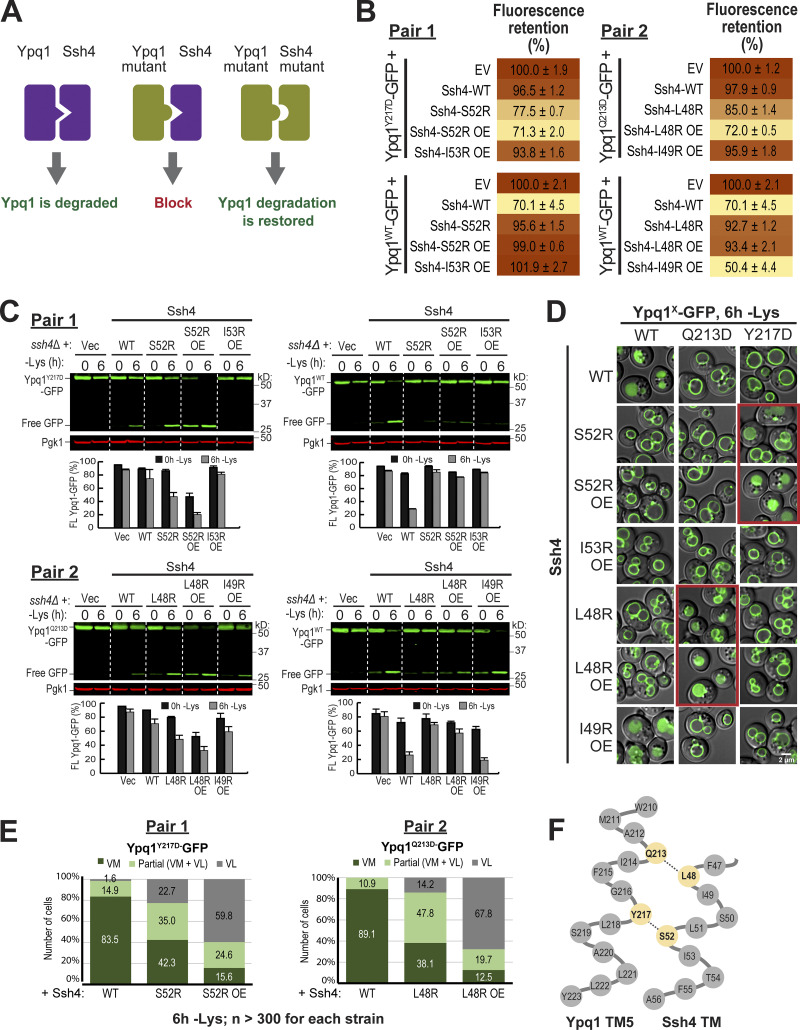
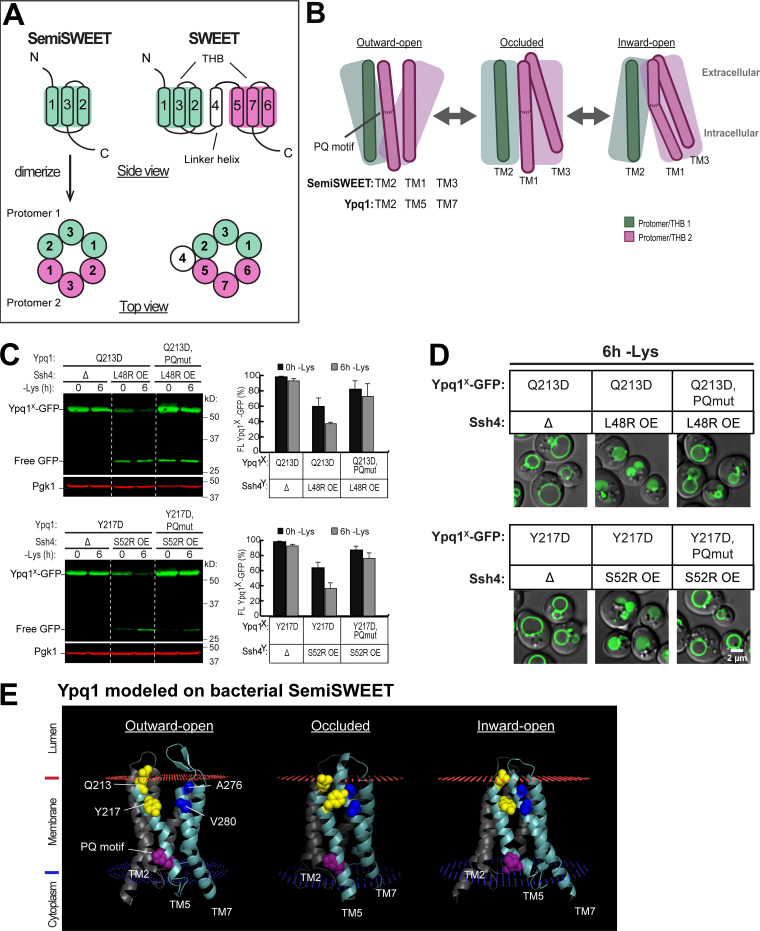
While it is well-known that E3 ubiquitin ligases can selectively ubiquitinate membrane proteins in response to specific environmental cues, the underlying mechanisms for the selectivity are poorly understood. In particular, the role of transmembrane regions, if any, in target recognition remains an open question. Here, we describe how Ssh4, a yeast E3 ligase adaptor, recognizes the PQ-loop lysine transporter Ypq1 only after lysine starvation. We show evidence of an interaction between two transmembrane helices of Ypq1 (TM5 and TM7) and the single transmembrane helix of Ssh4. This interaction is regulated by the conserved PQ motif. Strikingly, recent structural studies of the PQ-loop family have suggested that TM5 and TM7 undergo major conformational changes during substrate transport, implying that transport-associated conformational changes may determine the selectivity. These findings thus provide critical information concerning the regulatory mechanism through which transmembrane domains can be specifically recognized in response to changing environmental conditions.
虽然众所周知 E3 泛素连接酶可以选择性地泛素化膜蛋白以响应特定的环境信号,但选择性的潜在机制仍不清楚。特别是,跨膜区域(如果有的话)在靶标识别中的作用仍然是一个悬而未决的问题。在这里,我们描述了酵母 E3 连接酶接头 Ssh4 如何仅在赖氨酸饥饿后才能识别 PQ 环赖氨酸转运蛋白 Ypq1。我们提供了证据表明 Ypq1 的两个跨膜螺旋(TM5 和 TM7)和 Ssh4 的单个跨膜螺旋之间存在相互作用。这种相互作用受保守的 PQ 基序调节。引人注目的是,最近对 PQ 环家族的结构研究表明,TM5 和 TM7 在底物转运过程中经历了主要的构象变化,这意味着转运相关的构象变化可能决定了选择性。这些发现因此提供了有关调节机制的关键信息,通过该机制可以响应不断变化的环境条件特异性地识别跨膜结构域。