Cheng Kevin, Alhumood Khaldoon, El Shaer Fayez, De Silva Ranil
Specialist Angina Service, Royal Brompton and Harefield NHS Foundation Trust, London, UK.
Vascular Science Department, National Heart and Lung Institute, London, UK.
Adv Ther. 2021 Feb;38(2):925-948. doi: 10.1007/s12325-020-01582-w. Epub 2020 Dec 22.
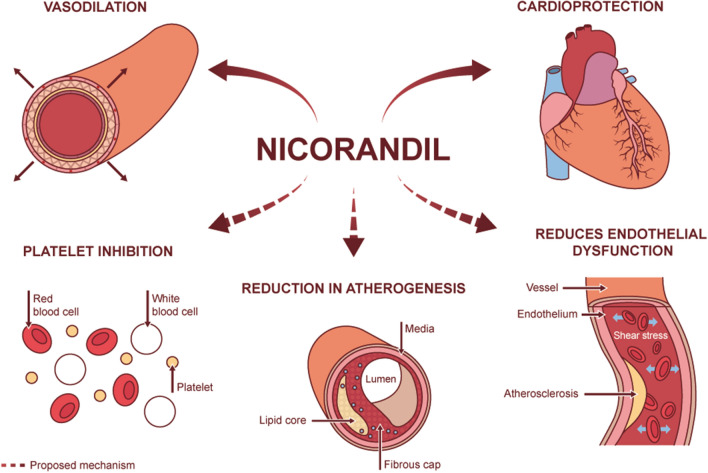
Chronic coronary syndromes (CCS) and stable angina are a growing clinical burden worldwide. This is of particular concern in the Gulf region given its high prevalence of cardiovascular risk factors, especially diabetes mellitus and smoking. Despite recommendations on the use of first- and second-line anti-anginal medication, management challenges remain. Current guidelines for pharmacologic treatment are not determined by the range of pathophysiological mechanisms of ischaemia and consequent angina, which may occur either in isolation or co-exist. In this article, we highlight the need to improve knowledge of the epidemiology of chronic coronary syndromes in the Middle East and Gulf region, and the need for studies of stratified pharmacologic approaches to improve symptomatic angina and quality of life in the large and growing number of patients with coronary artery disease from this region. We discuss the role of nicorandil, currently recommended as a second-line anti-anginal drug in CCS patients, and suggest that this may be a particularly useful add-on therapy for patients in the Gulf region.
慢性冠状动脉综合征(CCS)和稳定型心绞痛在全球范围内的临床负担日益加重。鉴于海湾地区心血管危险因素(尤其是糖尿病和吸烟)的高患病率,这一问题尤为令人担忧。尽管对于一线和二线抗心绞痛药物的使用有相关建议,但管理挑战依然存在。当前的药物治疗指南并非由缺血及随之而来的心绞痛的一系列病理生理机制决定,这些机制可能单独出现或同时存在。在本文中,我们强调有必要提高对中东和海湾地区慢性冠状动脉综合征流行病学的认识,并且需要开展分层药物治疗方法的研究,以改善该地区大量且不断增加的冠心病患者的症状性心绞痛和生活质量。我们讨论了尼可地尔的作用,目前它被推荐作为CCS患者的二线抗心绞痛药物,并认为这可能是海湾地区患者一种特别有用的附加治疗方法。