Department of Neurology, Shengjing Hospital of China Medical University, Shenyang, People's Republic of China.
J Cardiovasc Pharmacol. 2020 Dec 22;77(2):208-216. doi: 10.1097/FJC.0000000000000945.
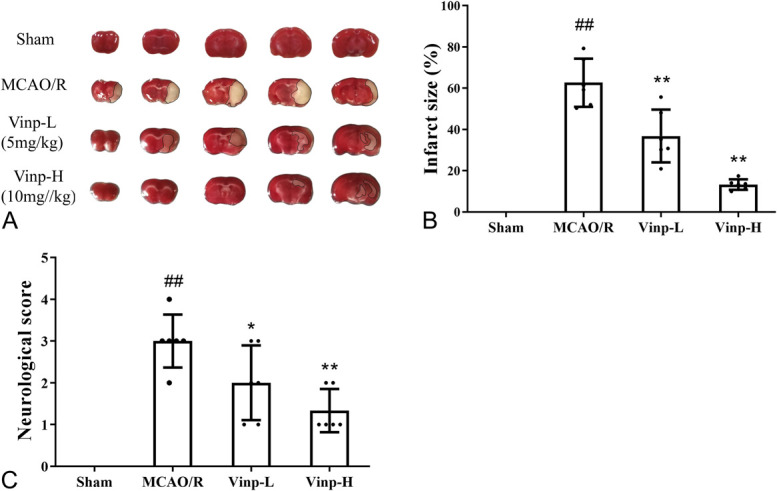
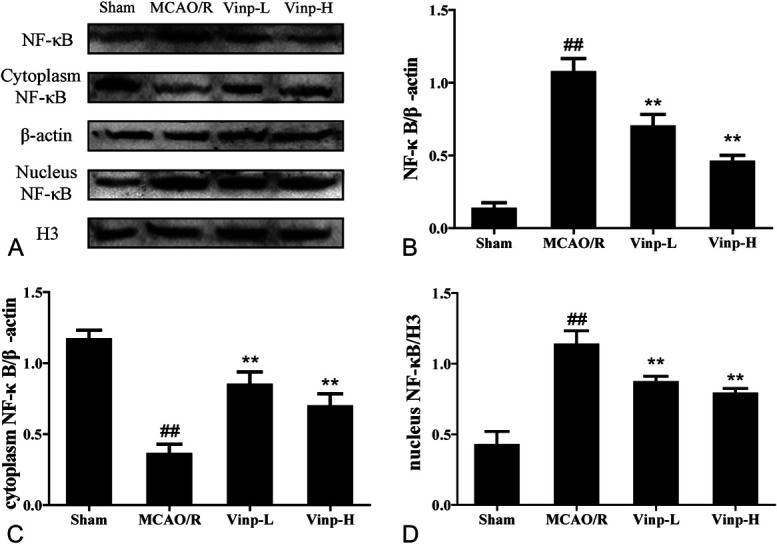
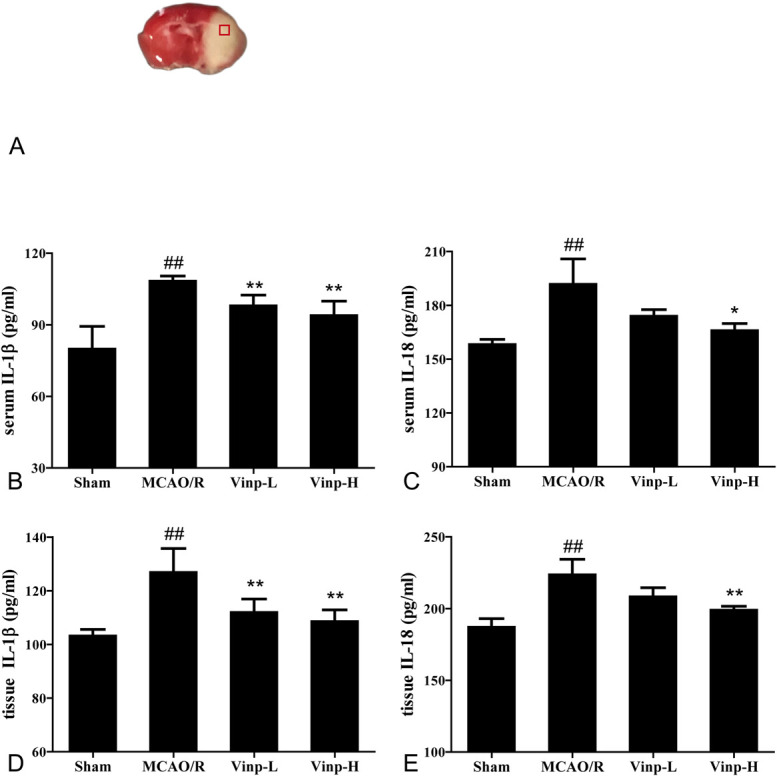
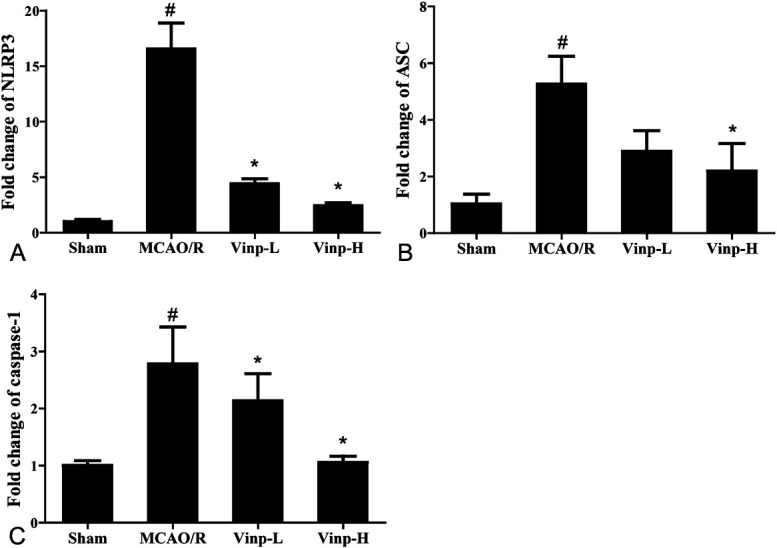
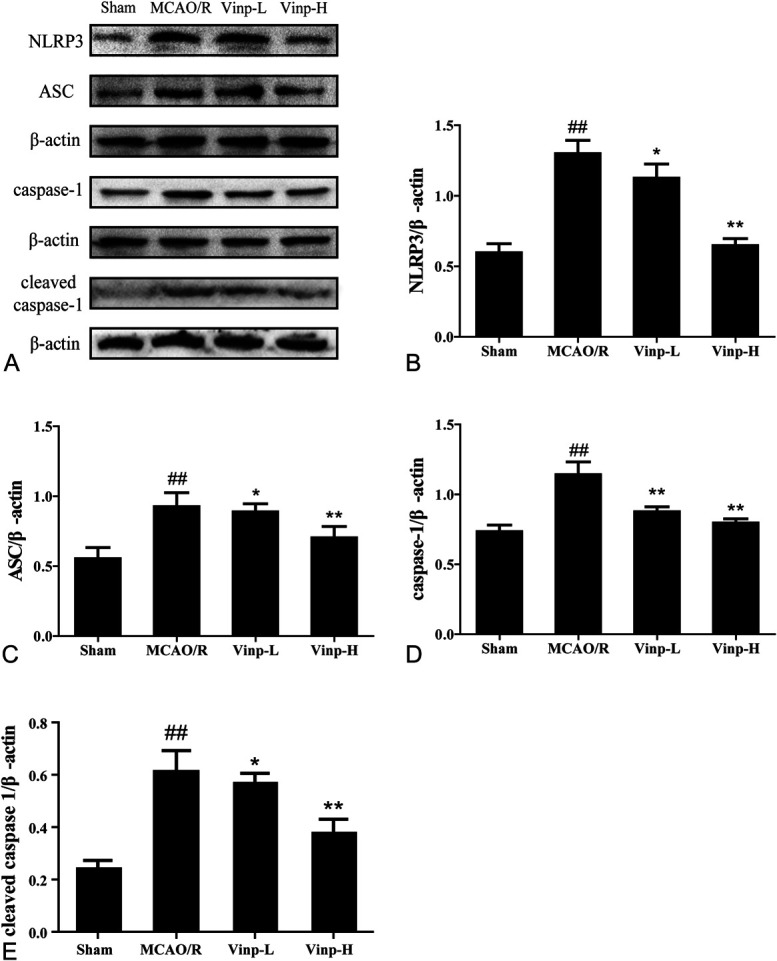
Ischemic stroke is the leading cause of globe death and permanent disability, but its therapeutic strategies are limited. Over the past decades, multiprotein complexes called inflammasomes have been shown as promising targets in ischemic stroke. Here, we examined vinpocetine (Vinp), a synthetic drug, playing a neuroprotective role against ischemic stroke in mice through regulating NOD-like receptor family pyrin domain-containing 3 (NLRP3) inflammasome activation. Middle cerebral artery occlusion/reperfusion (MCAO/R) was applied to mimic ischemic stroke in vivo. Vinp was administrated by intraperitoneal injection with different dose (5 or 10 mg/kg) 1 hour after reperfusion. Then, neurological assessment and infarct size were performed, and interleukin-1β (IL-1β) and IL-18 levels were evaluated using ELISA. The levels of NLRP3 inflammasome components and its upstream nuclear factor-κB (NF-κB) were determined using real-time PCR or Western blot. The experimental results indicated that posttreatment with Vinp decreased cerebral infarct size, improved behavior recover, reduced NLRP3 inflammasome expression, and suppressed the transfer of NF-κB to nucleus and proinflammatory cytokine release in middle cerebral artery occlusion/reperfusion mice. In conclusion, this study demonstrates that Vinp alleviates ischemic stroke by regulating levels of NLRP3 inflammasome, NF-κB, and proinflammatory cytokines in vivo, offering an alternative medication for ischemic stroke associated with inflammation.
缺血性中风是全球死亡和永久性残疾的主要原因,但治疗策略有限。在过去的几十年中,多种称为炎性小体的多蛋白复合物已被证明是缺血性中风的有希望的治疗靶点。在这里,我们研究了长春西汀(Vinp),一种合成药物,通过调节 NOD 样受体家族吡喃结构域包含 3(NLRP3)炎性小体激活在小鼠中发挥对缺血性中风的神经保护作用。通过应用大脑中动脉闭塞/再灌注(MCAO/R)在体内模拟缺血性中风。再灌注后 1 小时通过腹腔注射给予不同剂量(5 或 10mg/kg)的 Vinp。然后进行神经学评估和梗死面积测定,并通过 ELISA 评估白细胞介素-1β(IL-1β)和白细胞介素-18(IL-18)水平。使用实时 PCR 或 Western blot 测定 NLRP3 炎性小体成分及其上游核因子-κB(NF-κB)的水平。实验结果表明,Vinp 后处理可减少脑梗死面积,改善行为恢复,减少 NLRP3 炎性小体表达,并抑制 NF-κB 向细胞核的转移和促炎细胞因子在大脑中动脉闭塞/再灌注小鼠中的释放。总之,这项研究表明,Vinp 通过调节体内 NLRP3 炎性小体、NF-κB 和促炎细胞因子的水平缓解缺血性中风,为与炎症相关的缺血性中风提供了一种替代药物。