Komfo Anokye Teaching Hospital, Kumasi, Ghana.
Kumasi Center for Collaborative Research in Tropical Medicine, Kwame Nkrumah University of Science and Technology, Kumasi, Ghana.
PLoS Negl Trop Dis. 2020 Dec 22;14(12):e0008902. doi: 10.1371/journal.pntd.0008902. eCollection 2020 Dec.
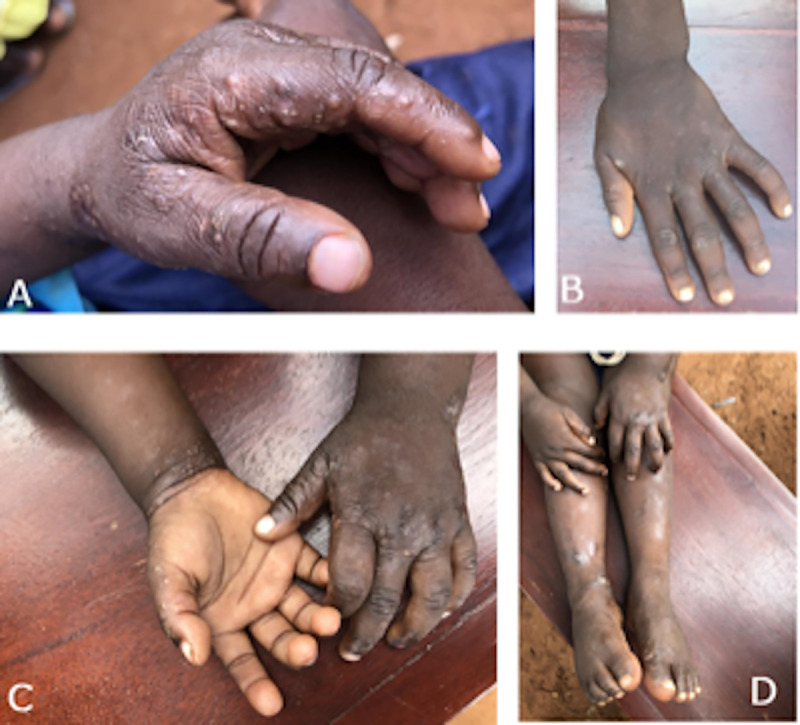
There is a dearth of data on scabies from Ghana. In September 2019, local health authorities in the East Mamprusi district of northern Ghana received reports of scabies from many parts of the district. Due to on-going reports of more cases, an assessment team visited the communities to assess the effect of the earlier individual treatment on the outbreak. The assessment team furthermore aimed to contribute to the data on scabies burden in Ghana and to demonstrate the use of the International Alliance for the Control of Scabies (IACS) diagnostic tool in a field survey in a resource limited setting.
METHODOLOGY/PRINCIPAL FINDINGS: This was a cross sectional study. Demographic information and medical history was collected on all participants using a REDCap questionnaire. A standardised skin examination of exposed regions of the body was performed on all participants. Scabies was diagnosed based on the criteria of the International Alliance for the Control of Scabies (IACS). Participants were mostly female (61.5%) and had a median age of 18.8 years (IQR 13-25). Two hundred out of 283 (71%) of participants had scabies with most (47%) presenting with moderate disease. Impetigo was found in 22% of participants with scabies and 10.8% of those without scabies [RR 2.27 (95% CI 1.21-4.27)]. 119 participants who received scabies treatment in the past months still had clinical evidence of the disease. 97% of participants reported a recent scabies contact. Scabies was commoner in participants ≤16 years compared to those >16 years [RR 3.06 (95% CI 1.73-5.45)].
CONCLUSION/SIGNIFICANCE: The prevalence of scabies was extremely high. The lack of a systematic approach to scabies treatment led to recurrence and ongoing community spread. The IACS criteria was useful in this outbreak assessment in Ghana. Alternative strategies such as Mass drug administration may be required to contain outbreaks early in such settings.
加纳的疥疮数据匮乏。2019 年 9 月,加纳北部东芒普拉州的地方卫生当局收到该地区许多地方的疥疮报告。由于持续有更多病例的报告,一个评估小组前往社区评估早期个别治疗对疫情的影响。评估小组还旨在为加纳的疥疮负担数据做出贡献,并展示在资源有限的环境中使用国际疥疮控制联盟(IACS)诊断工具进行现场调查。
方法/主要发现:这是一项横断面研究。使用 REDCap 问卷收集所有参与者的人口统计学信息和病史。对所有参与者进行身体暴露部位的标准化皮肤检查。根据国际疥疮控制联盟(IACS)的标准诊断疥疮。参与者主要为女性(61.5%),中位年龄为 18.8 岁(IQR 13-25)。283 名参与者中有 200 名(71%)患有疥疮,其中大多数(47%)为中度疾病。患有疥疮的参与者中有 22%患有脓疱疮,而没有疥疮的参与者中有 10.8%患有脓疱疮[RR 2.27(95%CI 1.21-4.27)]。过去几个月接受疥疮治疗的 119 名参与者仍有疾病的临床证据。97%的参与者报告最近有过疥疮接触。≤16 岁的参与者中疥疮更为常见,而>16 岁的参与者中则较为少见[RR 3.06(95%CI 1.73-5.45)]。
结论/意义:疥疮的患病率极高。缺乏系统的疥疮治疗方法导致疾病复发和持续社区传播。IACS 标准在加纳的这次疫情评估中很有用。在这种情况下,可能需要替代策略,如大规模药物治疗,以尽早控制疫情爆发。