Division of Nuclear Medicine and Clinical Molecular Imaging, Department of Radiology, Perelman School of Medicine, University of Pennsylvania, Philadelphia, PA 19104, USA.
Ovarian Cancer Research Center, Division of Gynecology Oncology, Department of Obstetrics and Gynecology, Perelman School of Medicine, University of Pennsylvania, Philadelphia, PA 19104, USA.
Molecules. 2020 Dec 19;25(24):6029. doi: 10.3390/molecules25246029.
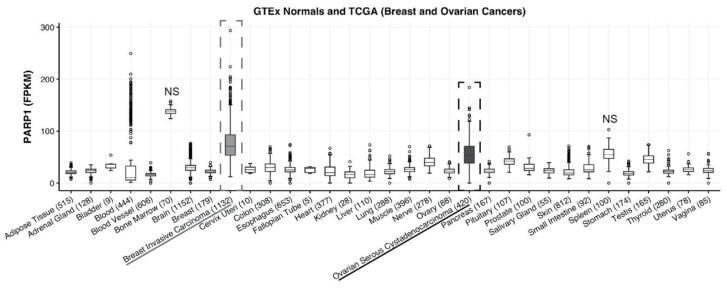
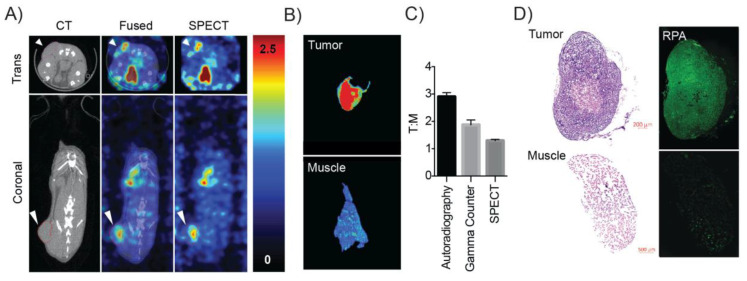
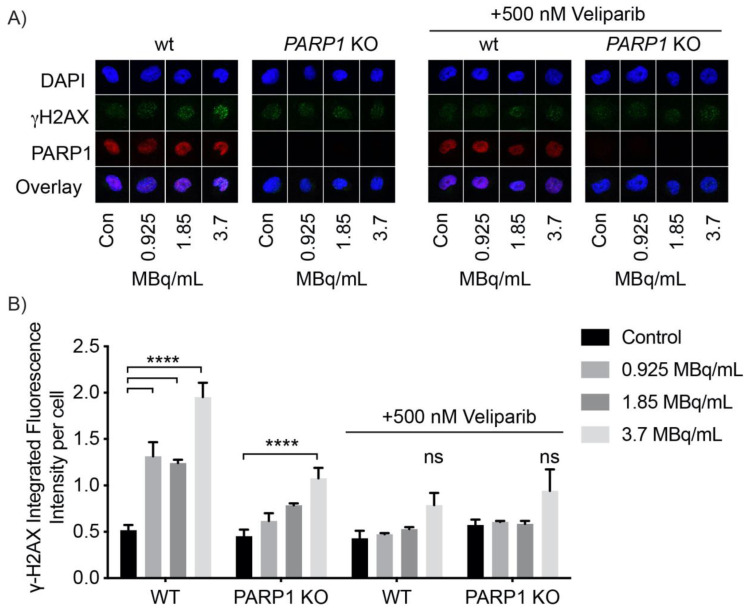
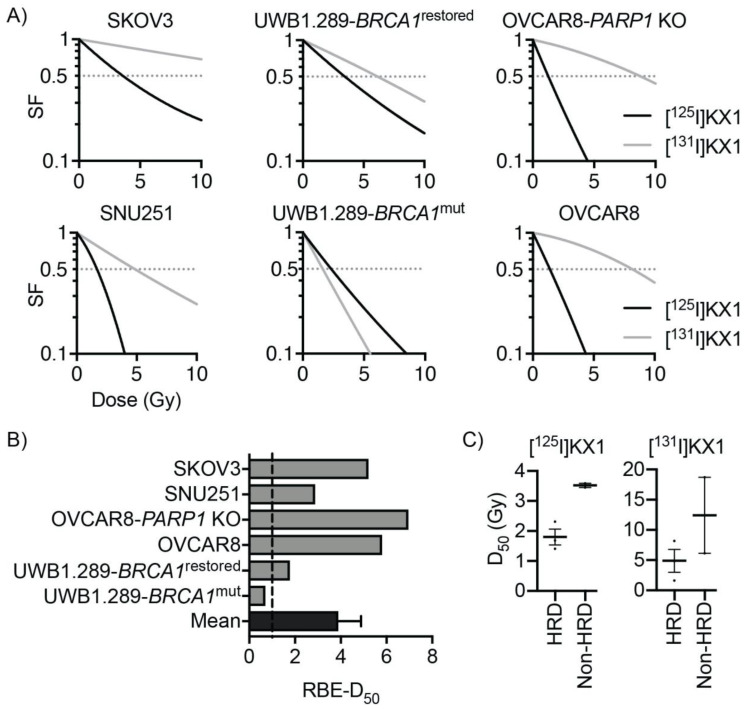
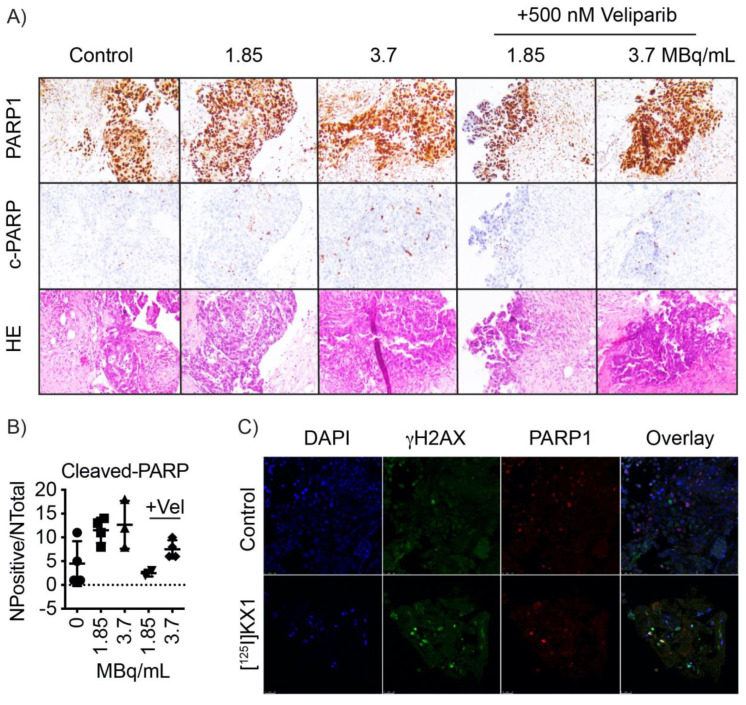
Theranostics are emerging as a pillar of cancer therapy that enable the use of single molecule constructs for diagnostic and therapeutic application. As poly adenosine diphosphate (ADP)-ribose polymerase 1 (PARP-1) is overexpressed in various cancer types, and is localized to the nucleus, PARP-1 can be safely targeted with Auger emitters to induce DNA damage in tumors. Here, we investigated a radioiodinated PARP inhibitor, [I]KX1, and show drug target specific DNA damage and subsequent killing of and non- mutant ovarian cancer cells at sub-pharmacological concentrations several orders of magnitude lower than traditional PARP inhibitors. Furthermore, we demonstrated that viable tumor tissue from ovarian cancer patients can be used to screen tumor radiosensitivity ex-vivo, enabling the direct assessment of therapeutic efficacy. Finally, we showed tumors can be imaged by single-photon computed tomography (SPECT) with PARP theranostic, [I]KX1, in a human ovarian cancer xenograft mouse model. These data support the utility of PARP-1 targeted radiopharmaceutical therapy as a theranostic option for PARP-1 overexpressing ovarian cancers.
治疗诊断学正在成为癌症治疗的一个支柱,它使单分子结构可用于诊断和治疗应用。由于聚腺苷二磷酸核糖聚合酶 1(PARP-1)在各种癌症类型中过度表达,并定位于细胞核,因此可以使用 Auger 发射器安全地靶向 PARP-1,以在肿瘤中诱导 DNA 损伤。在这里,我们研究了一种放射性碘标记的 PARP 抑制剂 [I]KX1,并显示药物靶标特异性 DNA 损伤,随后在亚药理浓度下杀死 和非 突变卵巢癌细胞,其浓度比传统 PARP 抑制剂低几个数量级。此外,我们证明可以使用卵巢癌患者的存活肿瘤组织在体外筛选肿瘤放射敏感性,从而可以直接评估治疗效果。最后,我们显示可以用人卵巢癌异种移植小鼠模型通过单光子计算机断层扫描(SPECT)对 PARP 治疗诊断 [I]KX1 进行肿瘤成像。这些数据支持 PARP-1 靶向放射性药物治疗作为 PARP-1 过表达卵巢癌的治疗诊断选择的实用性。