Department of Education, Faculty of Education Sciences, University of Almería, 04120 Almería, Spain.
SPORT Research Group (CTS-1024), CERNEP Research Center, University of Almería, 04120 Almería, Spain.
Int J Environ Res Public Health. 2020 Dec 18;17(24):9501. doi: 10.3390/ijerph17249501.
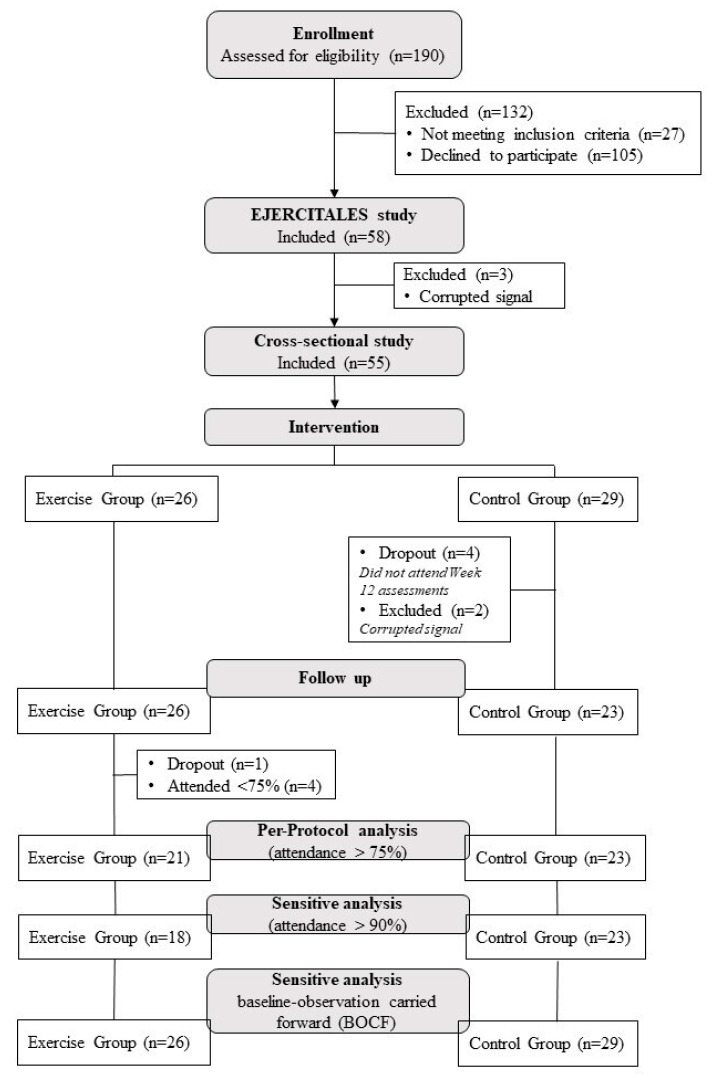
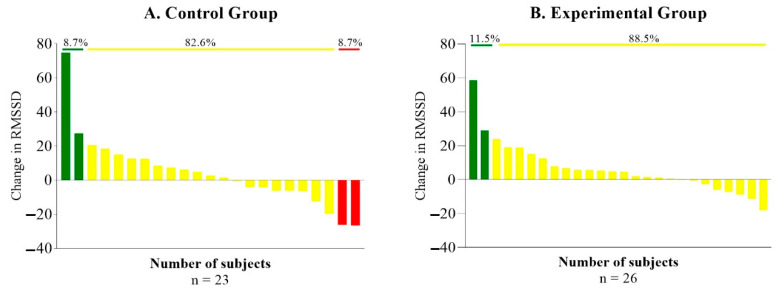
Abnormal heart rate variability (HRV) has been observed in patients with systemic lupus erythematosus (SLE). In a combined cross-sectional and interventional study approach, we investigated the association of HRV with inflammation and oxidative stress markers, patient-reported outcomes, and the effect of 12 weeks of aerobic exercise in HRV. Fifty-five women with SLE (mean age 43.5 ± 14.0 years) were assigned to either aerobic exercise ( = 26) or usual care ( = 29) in a non-randomized trial. HRV was assessed using a heart rate monitor during 10 min, inflammatory and oxidative stress markers were obtained, psychological stress (Perceived Stress Scale), sleep quality (Pittsburg Sleep Quality Index), fatigue (Multidimensional Fatigue Inventory), depressive symptoms (Beck Depression Inventory), and quality of life (36-item Short-Form Health Survey) were also assessed. Low frequency to high frequency power (LFHF) ratio was associated with physical fatigue ( = 0.019). Sample entropy was inversely associated with high-sensitivity C-reactive protein ( = 0.014) and myeloperoxidase ( = 0.007). There were no significant between-group differences in the changes in HRV derived parameters after the exercise intervention. High-sensitivity C-reactive protein and myeloperoxidase were negatively related to sample entropy and physical fatigue was positively related to LFHF ratio. However, an exercise intervention of 12 weeks of aerobic training did not produce any changes in HRV derived parameters in women with SLE in comparison to a control group.
异常的心率变异性(HRV)已在系统性红斑狼疮(SLE)患者中观察到。在一项联合横断面和干预研究方法中,我们研究了 HRV 与炎症和氧化应激标志物、患者报告的结果以及 12 周有氧运动对 HRV 的影响之间的关联。55 名女性 SLE 患者(平均年龄 43.5 ± 14.0 岁)被分配到有氧运动(n = 26)或常规护理(n = 29),这是非随机试验。使用心率监测器在 10 分钟内评估 HRV,获得炎症和氧化应激标志物,评估心理压力(感知压力量表)、睡眠质量(匹兹堡睡眠质量指数)、疲劳(多维疲劳量表)、抑郁症状(贝克抑郁量表)和生活质量(36 项简明健康调查)。低频到高频功率(LFHF)比与身体疲劳相关( = 0.019)。样本熵与高敏 C 反应蛋白( = 0.014)和髓过氧化物酶( = 0.007)呈负相关。运动干预后,HRV 衍生参数的组间差异无统计学意义。高敏 C 反应蛋白和髓过氧化物酶与样本熵呈负相关,身体疲劳与 LFHF 比呈正相关。然而,与对照组相比,12 周有氧运动干预并未使 SLE 女性的 HRV 衍生参数发生任何变化。