Federowicz Karol, Figueiredo Vitoria Alves, Al-Kroom Hussein, Abdel-Gawwad Hamdy A, Abd Elrahman Mohamed, Sikora Pawel
Faculty of Civil and Environmental Engineering, West Pomeranian University of Technology Szczecin, 70-311 Szczecin, Poland.
Department of Civil Engineering, São Paulo State University (UNESP), Alameda Bahia, 550, Ilha Solteira 15385000, Brazil.
Materials (Basel). 2020 Dec 18;13(24):5800. doi: 10.3390/ma13245800.
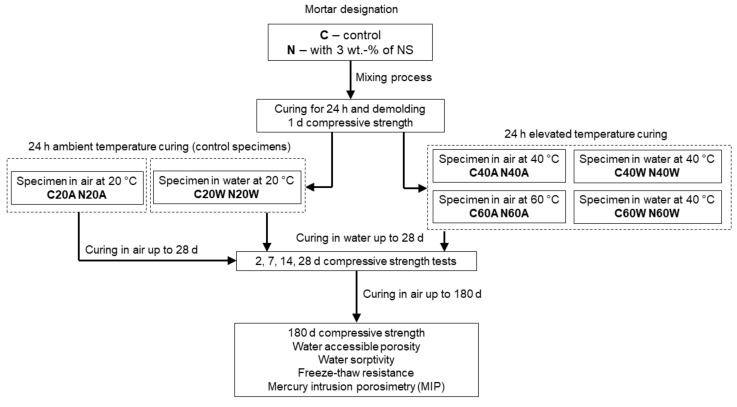
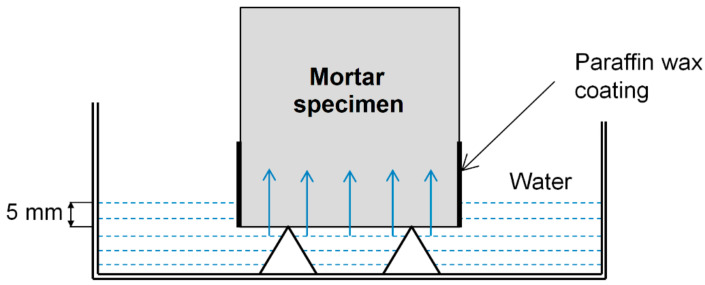
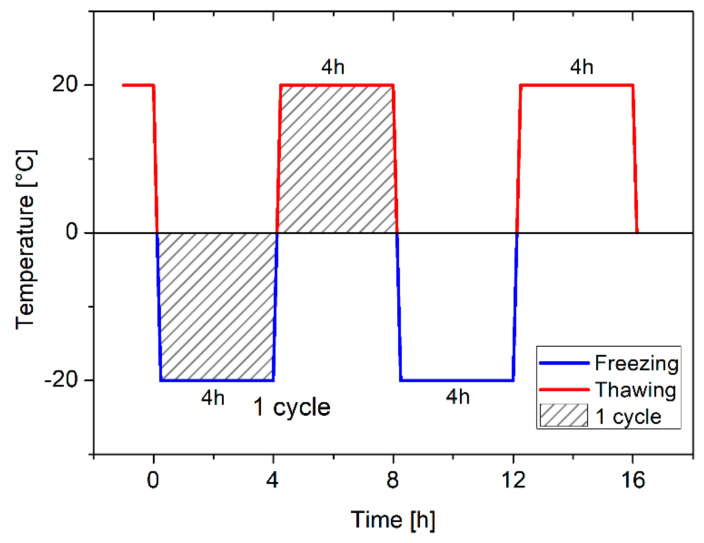
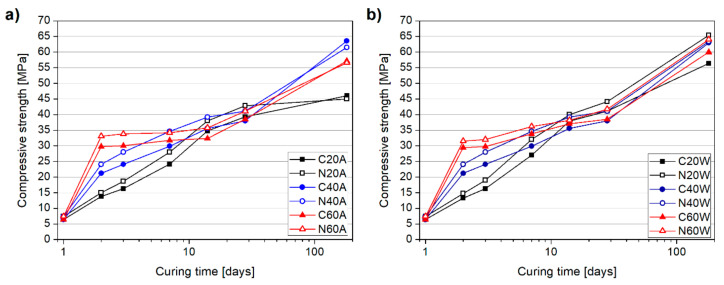
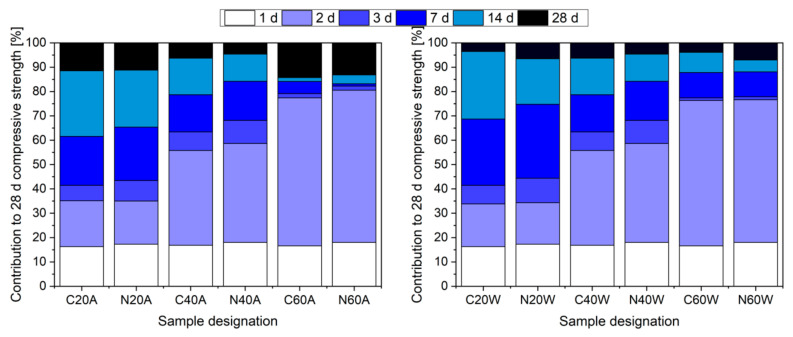
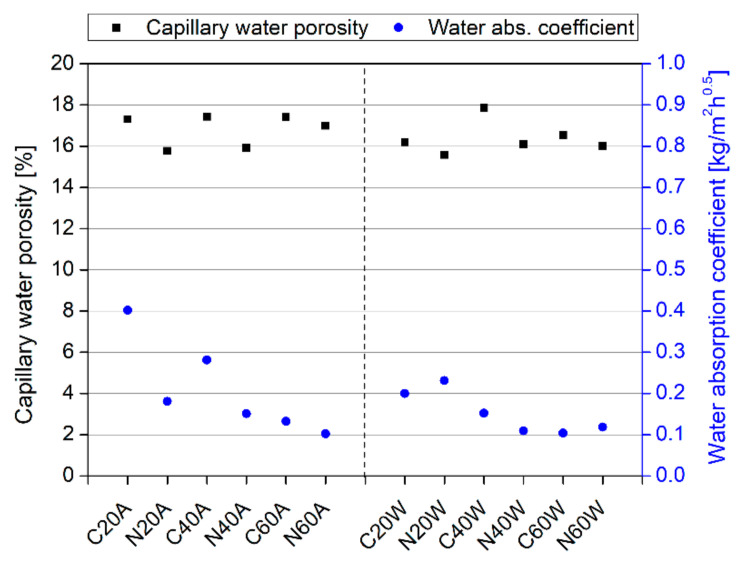
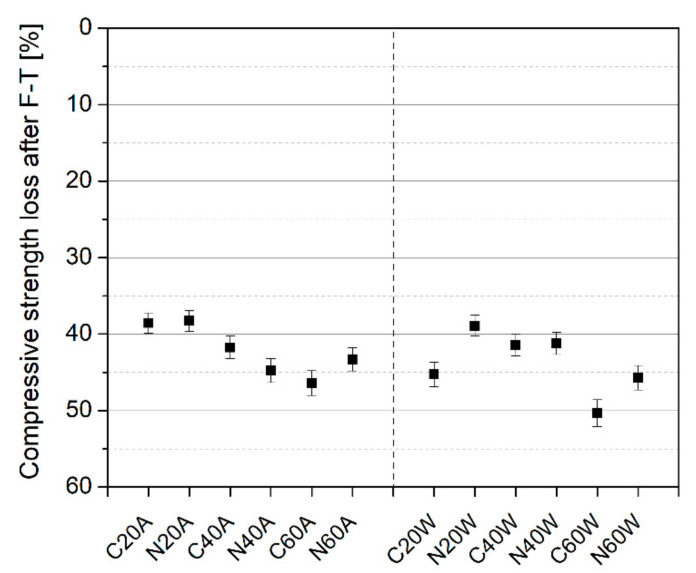
This investigation studies the effects of hot water and hot air curing on the strength development, transport properties, and freeze-thaw resistance of mortars incorporating low-heat blast furnace slag cement and nanosilica (NS). Mortar samples were prepared and stored in ambient conditions for 24 h. After demolding, mortar samples were subjected to two different hot curing methods: Hot water and hot air curing (40 °C and 60 °C) for 24 h. For comparison purposes, mortar reference mixes were prepared and cured in water and air at ambient conditions. Strength development (from 1 to 180 days), capillary water porosity, water sorptivity, and freeze-thaw resistance were tested after 180 days of curing. The experimental results showed that both curing regimes accelerate the strength development of mortars, especially in the first seven days of hydration. The highest early strengths were reported for mortars subjected to a temperature of 60 °C, followed by those cured at 40 °C. The hot water curing regime was found to be more suitable, as a result of more stable strength development. Similar findings were observed in regard to durability-related properties. It is worth noting that thermal curing can more efficiently increase strength in the presence of nanosilica, suggesting that NS is more effective in enhancing strength under thermal curing.
本研究考察了热水养护和热空气养护对掺低热矿渣水泥和纳米二氧化硅(NS)的砂浆强度发展、传输性能及抗冻融性的影响。制备砂浆样品并在环境条件下存放24小时。脱模后,砂浆样品采用两种不同的热养护方法:在40℃和60℃下进行热水养护和热空气养护24小时。为作比较,制备砂浆参考混合料并在环境条件下的水和空气中养护。养护180天后测试强度发展(1至180天)、毛细水孔隙率、吸水性及抗冻融性。试验结果表明,两种养护方式均能加速砂浆的强度发展,尤其是在水化的前七天。温度为60℃的砂浆早期强度最高,其次是在40℃养护的砂浆。由于强度发展更稳定,发现热水养护方式更合适。在耐久性相关性能方面也观察到类似结果。值得注意的是,在纳米二氧化硅存在的情况下,热养护能更有效地提高强度,这表明纳米二氧化硅在热养护下增强强度方面更有效。