Costa Marlene, Losada-Barreiro Sonia, Bravo-Díaz Carlos, Monteiro Luís S, Paiva-Martins Fátima
REQUIMTE-LAQV, Department of Chemistry and Biochemistry, Faculty of Sciences, University of Porto, 4169-007 Porto, Portugal.
Departamento de Química-Física, Facultade de Química, Universidade de Vigo, 36310 Vigo, Spain.
Foods. 2020 Dec 18;9(12):1897. doi: 10.3390/foods9121897.
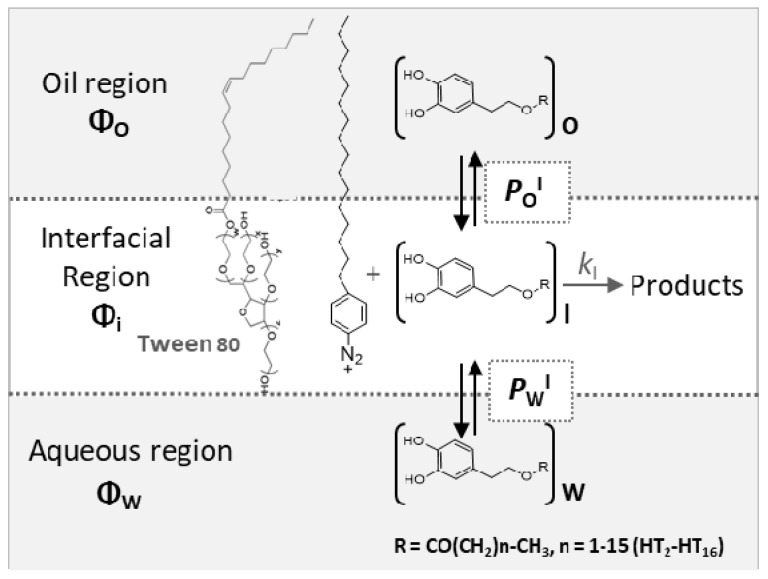
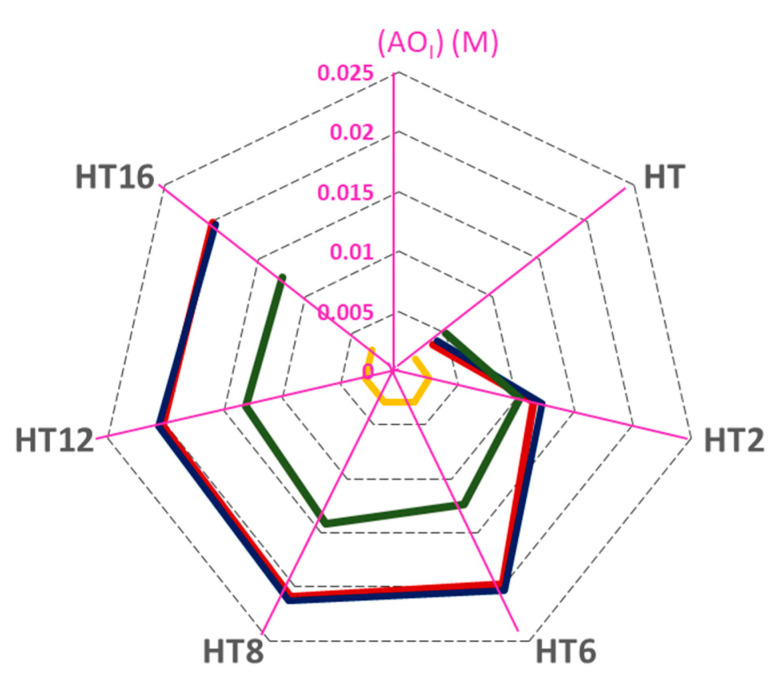
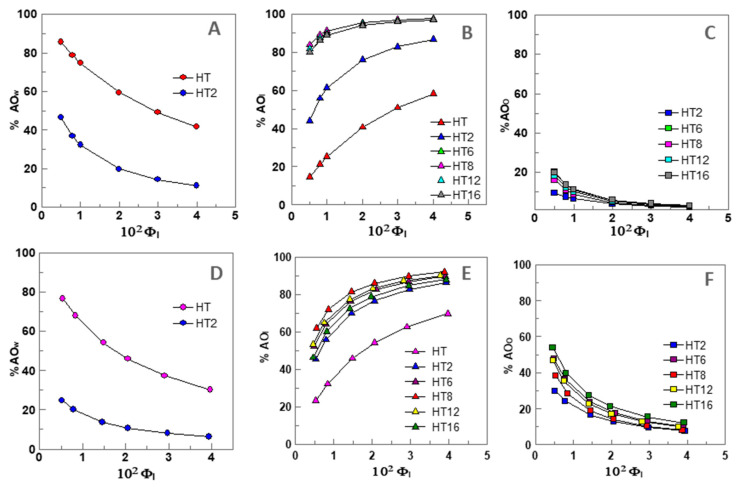
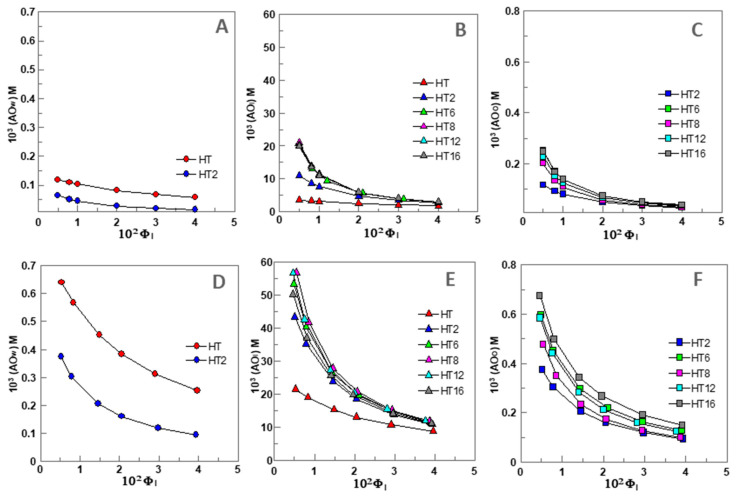
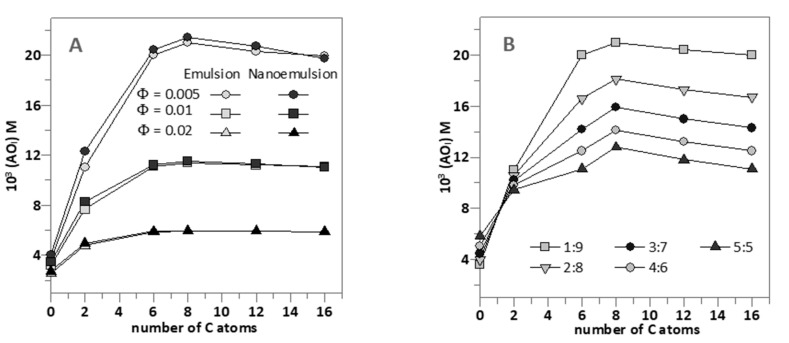
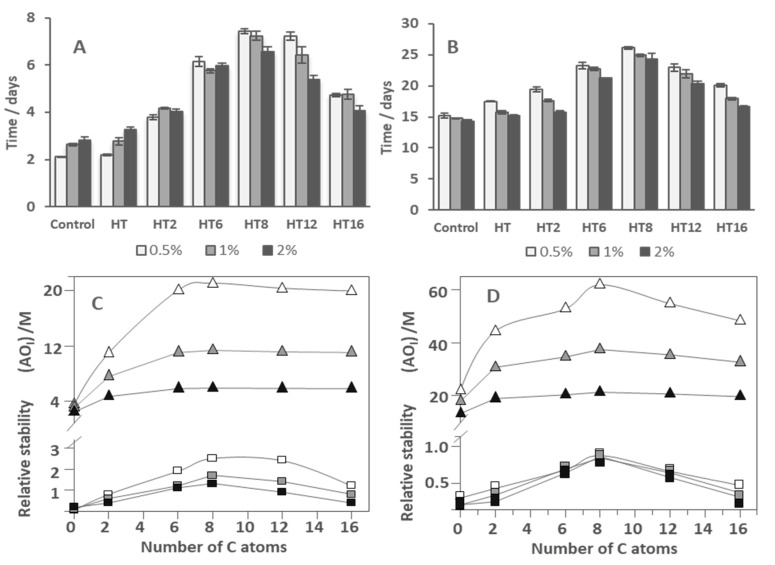
Reports on the effect of droplet size on the oxidative stability of emulsions and nanoemulsions are scarce in the literature and frequently contradictory. Here, we have employed a set of hydroxytyrosol (HT) esters of different hydrophobicity and fish oil-in-water emulsified systems containing droplets of different sizes to evaluate the effect of the droplet size, surfactant, (Φ) and oil (Φ) volume fractions on their oxidative stability. To quantitatively unravel the observed findings, we employed a well-established pseudophase kinetic model to determine the distribution and interfacial concentrations of the antioxidants (AOs) in the intact emulsions and nanoemulsions. Results show that there is a direct correlation between antioxidant efficiency and the concentration of the AOs in the interfacial region, which is much higher (20-200 fold) than the stoichiometric one. In both emulsified systems, the highest interfacial concentration and the highest antioxidant efficiency was found for hydroxytyrosol octanoate. Results clearly show that the principal parameter controlling the partitioning of antioxidants is the surfactant volume fraction, Φ, followed by the O/W ratio; meanwhile, the droplet size has no influence on their interfacial concentrations and, therefore, on their antioxidant efficiency. Moreover, no correlation was seen between droplet size and oxidative stability of both emulsions and nanoemulsions.
关于液滴大小对乳液和纳米乳液氧化稳定性影响的报道在文献中很少见,且常常相互矛盾。在此,我们使用了一组具有不同疏水性的羟基酪醇(HT)酯以及含有不同大小液滴的水包油乳化体系,以评估液滴大小、表面活性剂(Φ)和油相(Φ)体积分数对其氧化稳定性的影响。为了定量阐释观察到的结果,我们采用了一个成熟的假相动力学模型来确定完整乳液和纳米乳液中抗氧化剂(AO)的分布和界面浓度。结果表明,抗氧化效率与界面区域中AO的浓度之间存在直接关联,该浓度比化学计量浓度高得多(20 - 200倍)。在两种乳化体系中,辛酸羟基酪醇的界面浓度最高,抗氧化效率也最高。结果清楚地表明,控制抗氧化剂分配的主要参数是表面活性剂体积分数Φ,其次是油/水比;同时,液滴大小对其界面浓度没有影响,因此对其抗氧化效率也没有影响。此外,在乳液和纳米乳液的液滴大小与氧化稳定性之间未发现相关性。