Department of cardiothoracic surgery, Affiliated Hangzhou First People's Hospital, Zhejiang University School of Medicine, Hangzhou, Zhejiang 310006, China.
The Second Affiliated Hospital of Xi'an Jiaotong University, Xi'an, Shaanxi 710061, China.
Anal Cell Pathol (Amst). 2020 Dec 4;2020:6021602. doi: 10.1155/2020/6021602. eCollection 2020.
To study the expression, biological function, and mechanism of FKBP4 in non-small-cell lung cancer (NSCLC).
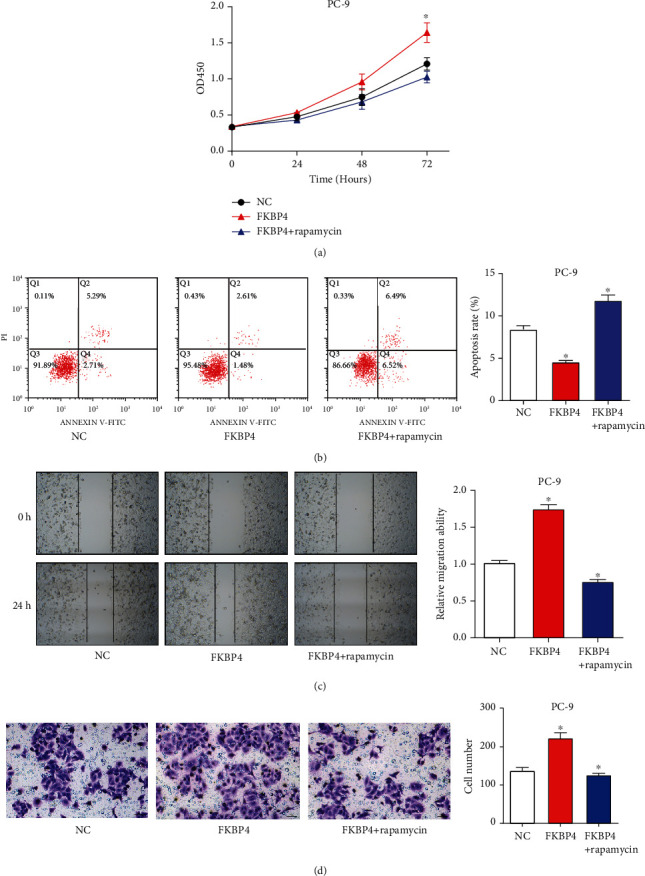
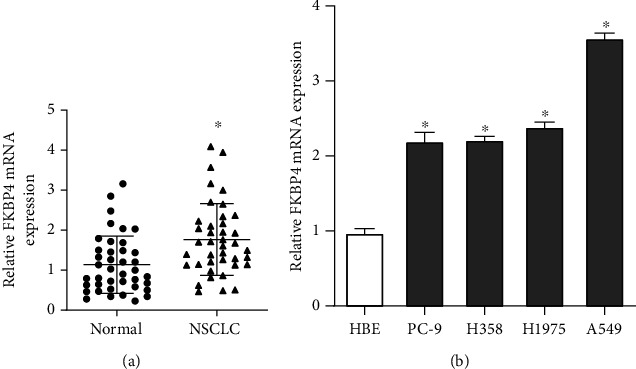
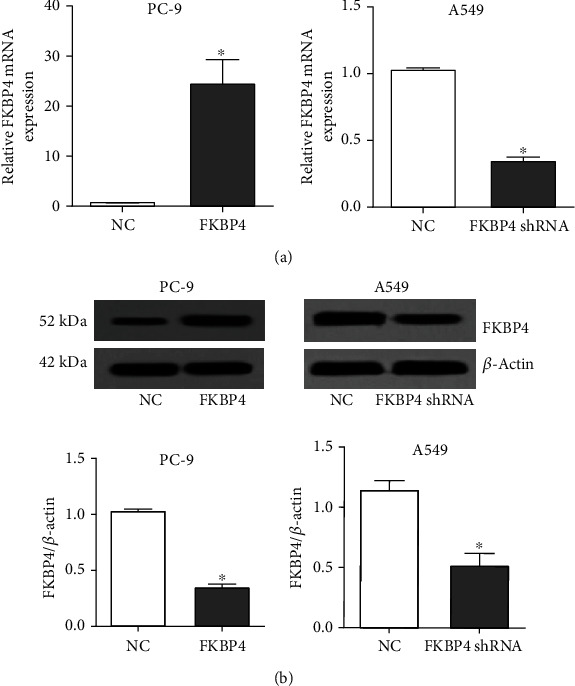
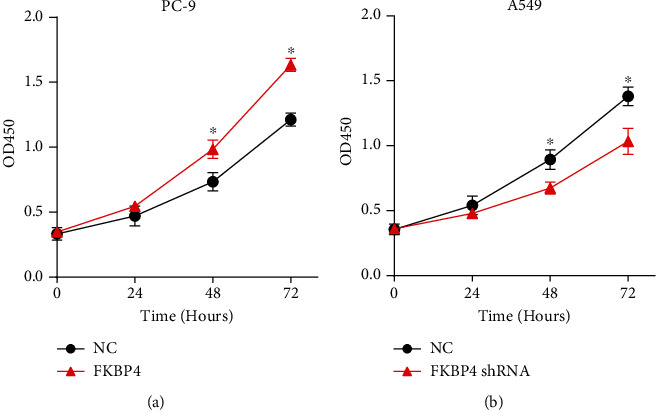
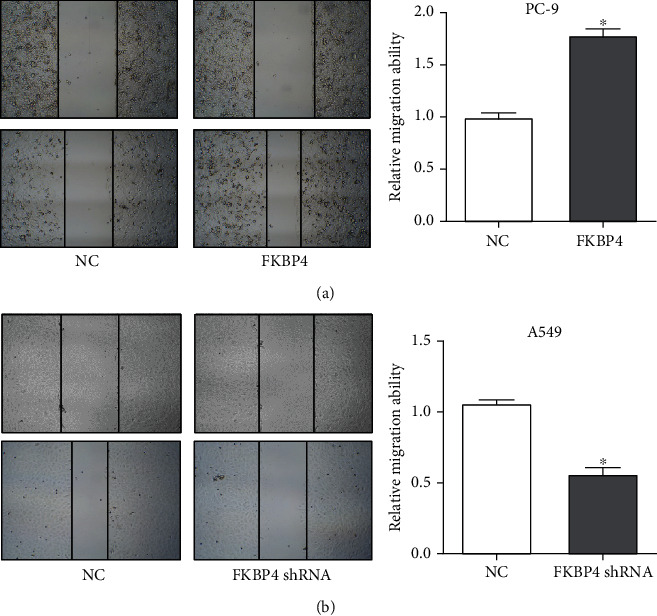
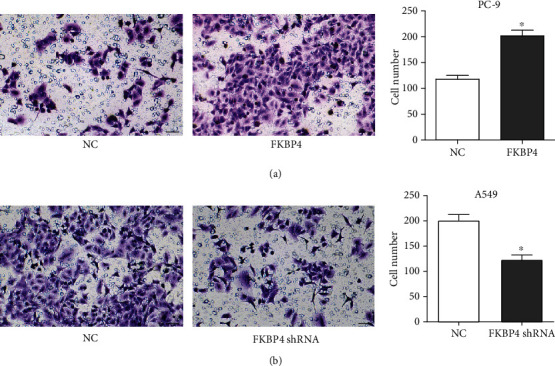
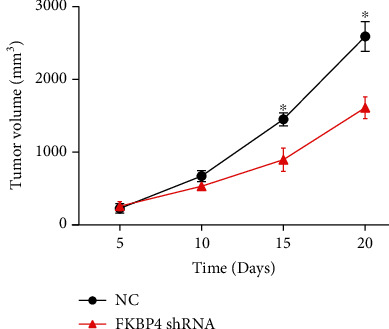
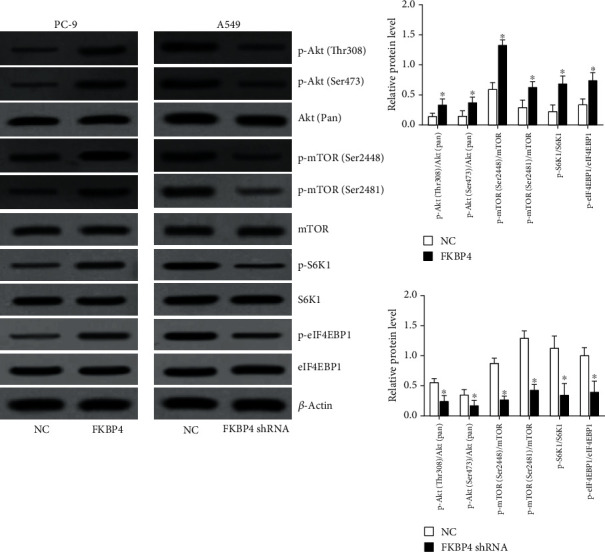
First of all, the expression of FKBP4 in NSCLC tissues and cell lines was detected by qRT-PCR; then, the effects of FKBP4 on proliferation, apoptosis, migration, and invasion of NSCLC were studied by CCK-8 assays, flow cytometry assays, wound-healing assays, and Transwell assays. After that, tumor xenografts were used to explore the effect of FKBP4 on NSCLC tumor growth in vivo, and the phosphorylation of Akt and mTOR was measured by western blot.
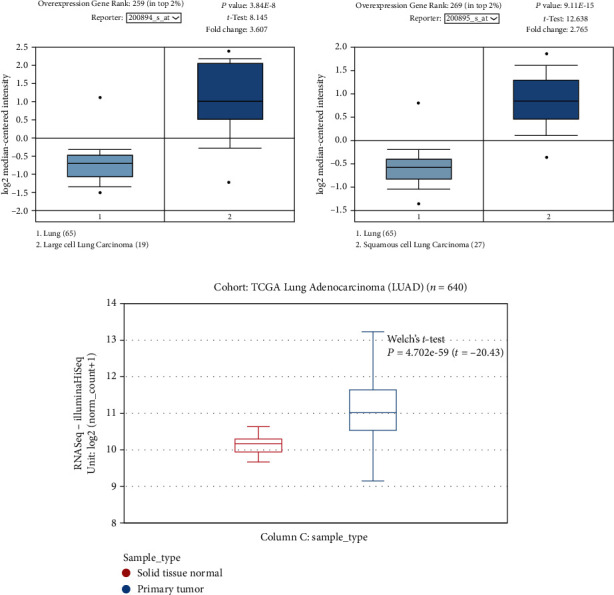
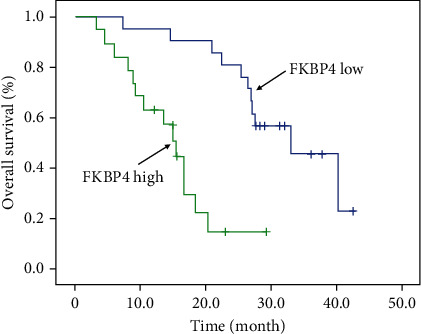
FKBP4 was highly expressed in NSCLC tissues and cells, and its expression was closely related to NSCLC tumor size, lymph node metastasis, and patient prognosis. In vitro, FKBP4 can promote NSCLC cell proliferation, migration, and invasion and inhibit NSCLC cell apoptosis. In vivo, FKBP4 can promote NSCLC tumor growth. Furthermore, FKBP4 can promote Akt and mTOR phosphorylation and activate the Akt/mTOR signaling pathway and an mTOR inhibitor can neutralize the functions of FKBP4 in NSCLC cells.
FKBP4 serves as an oncogene to promote malignant processes in NSCLC, and it has the potential to be used as a biological marker and therapeutic target for NSCLC.
研究 FKBP4 在非小细胞肺癌(NSCLC)中的表达、生物学功能和机制。
首先,通过 qRT-PCR 检测 FKBP4 在 NSCLC 组织和细胞系中的表达;然后,通过 CCK-8 assays、流式细胞术 assays、划痕愈合 assays 和 Transwell assays 研究 FKBP4 对 NSCLC 增殖、凋亡、迁移和侵袭的影响。之后,使用肿瘤异种移植模型在体内探索 FKBP4 对 NSCLC 肿瘤生长的影响,并通过 Western blot 测量 Akt 和 mTOR 的磷酸化。
FKBP4 在 NSCLC 组织和细胞中高表达,其表达与 NSCLC 肿瘤大小、淋巴结转移和患者预后密切相关。在体外,FKBP4 可促进 NSCLC 细胞增殖、迁移和侵袭,并抑制 NSCLC 细胞凋亡。在体内,FKBP4 可促进 NSCLC 肿瘤生长。此外,FKBP4 可促进 Akt 和 mTOR 磷酸化并激活 Akt/mTOR 信号通路,而 mTOR 抑制剂可中和 FKBP4 在 NSCLC 细胞中的功能。
FKBP4 作为一种癌基因,促进 NSCLC 中的恶性进程,有可能成为 NSCLC 的生物标志物和治疗靶点。