Department of Biology and Biotechnology "Charles Darwin," Sapienza University of Rome, P.le A. Moro 5, 00185 Rome, Italy.
Czech Centre of Phenogenomics and Laboratory of Transgenic Models of Diseases, Institute of Molecular Genetics of the Czech Academy of Sciences, v.v.i., Prumyslova 595, 252 50 Vestec, Czech Republic.
Cell Rep. 2020 Dec 22;33(12):108548. doi: 10.1016/j.celrep.2020.108548.
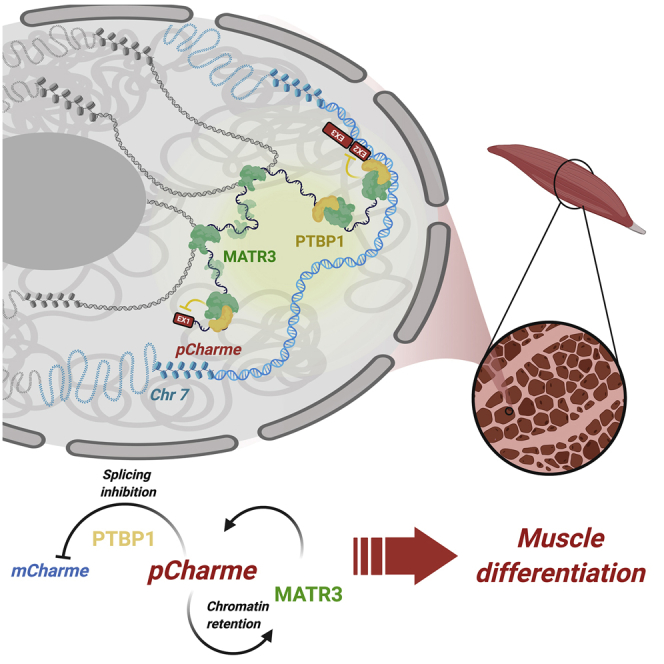
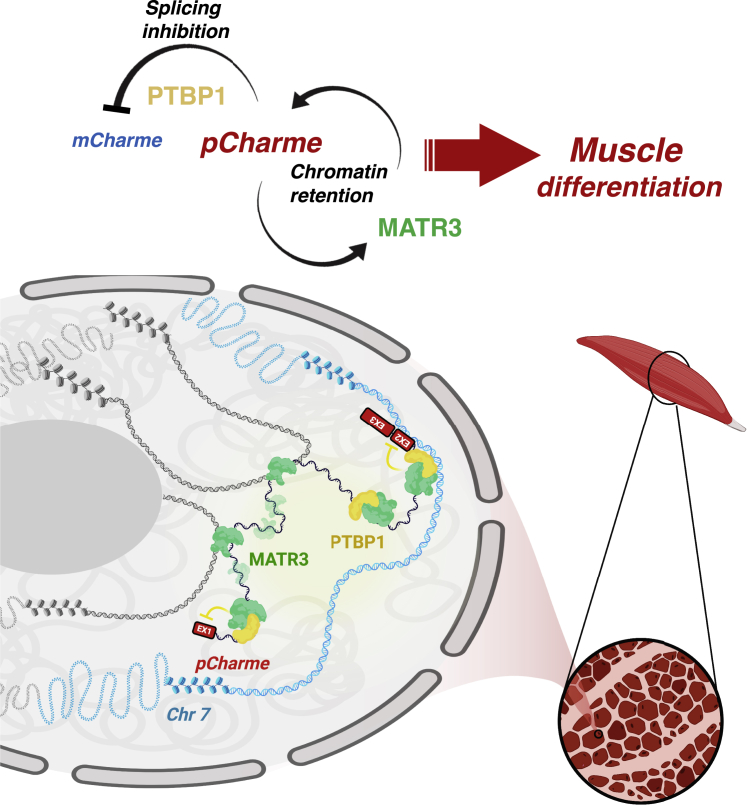
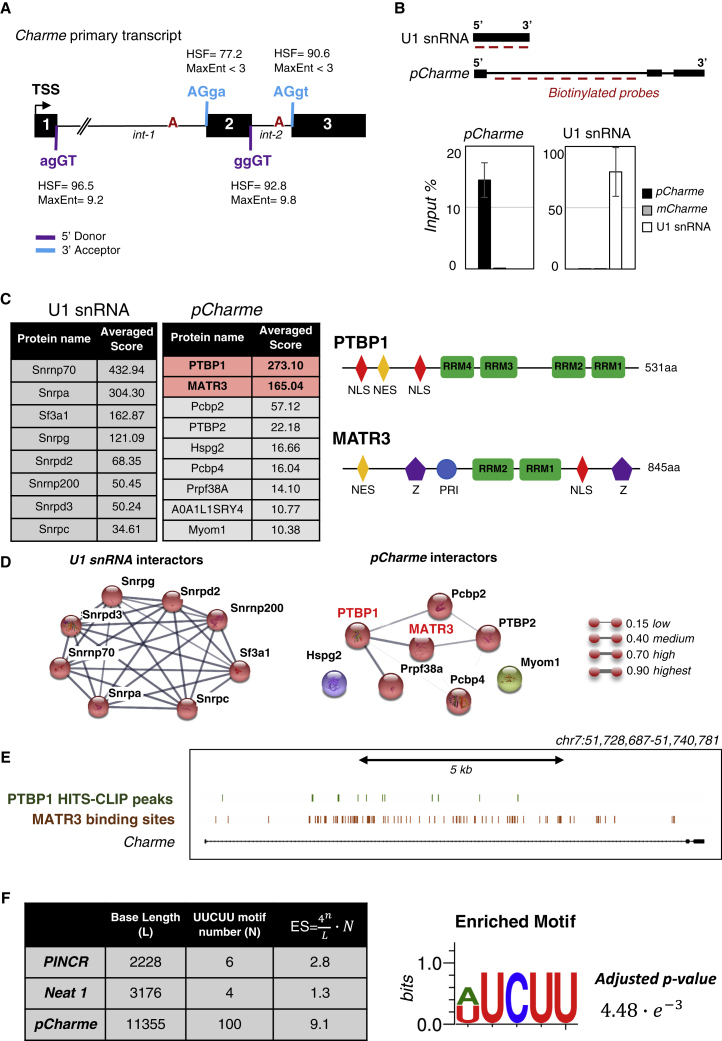
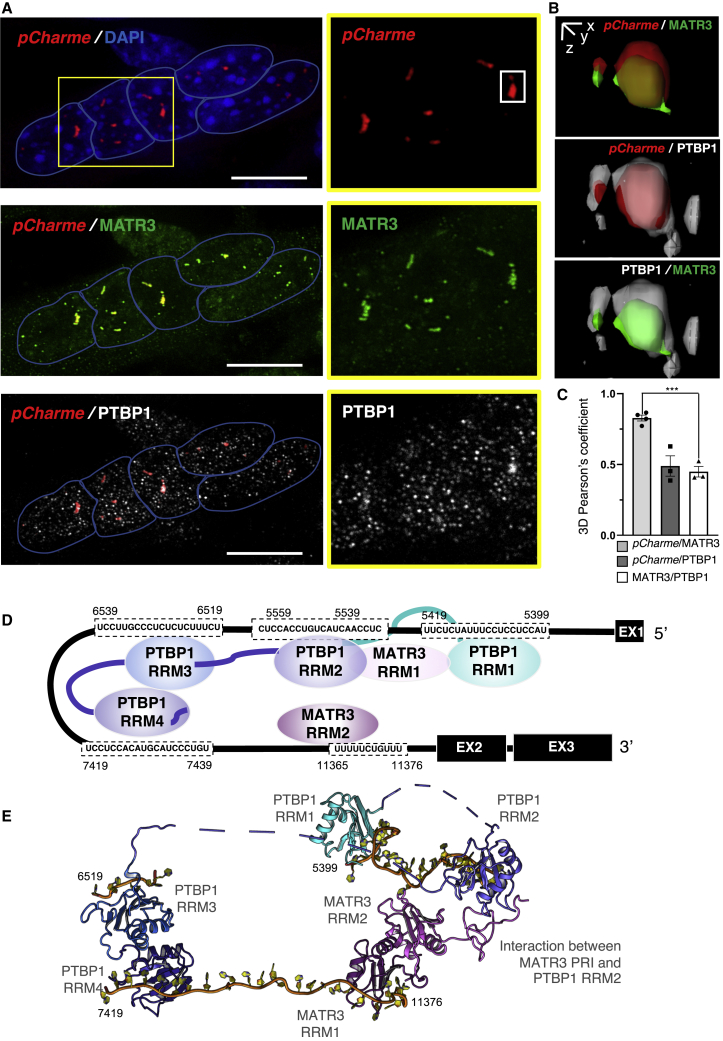
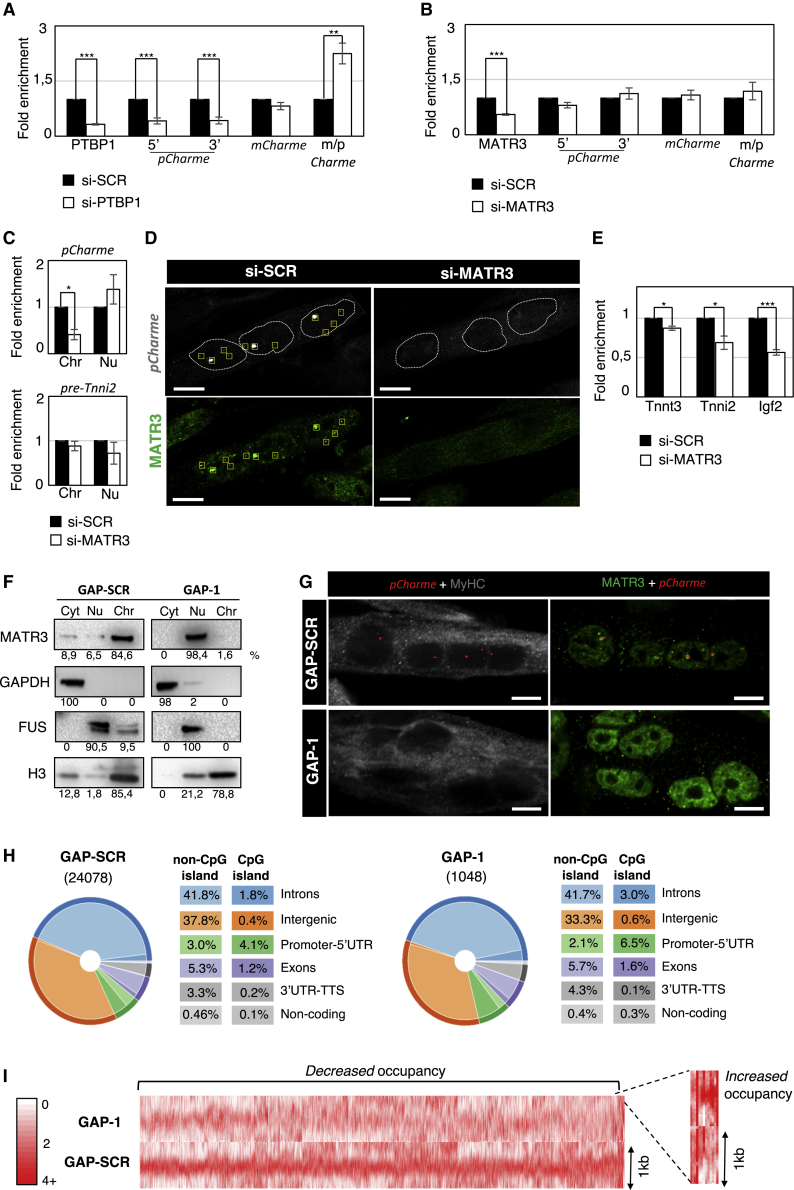
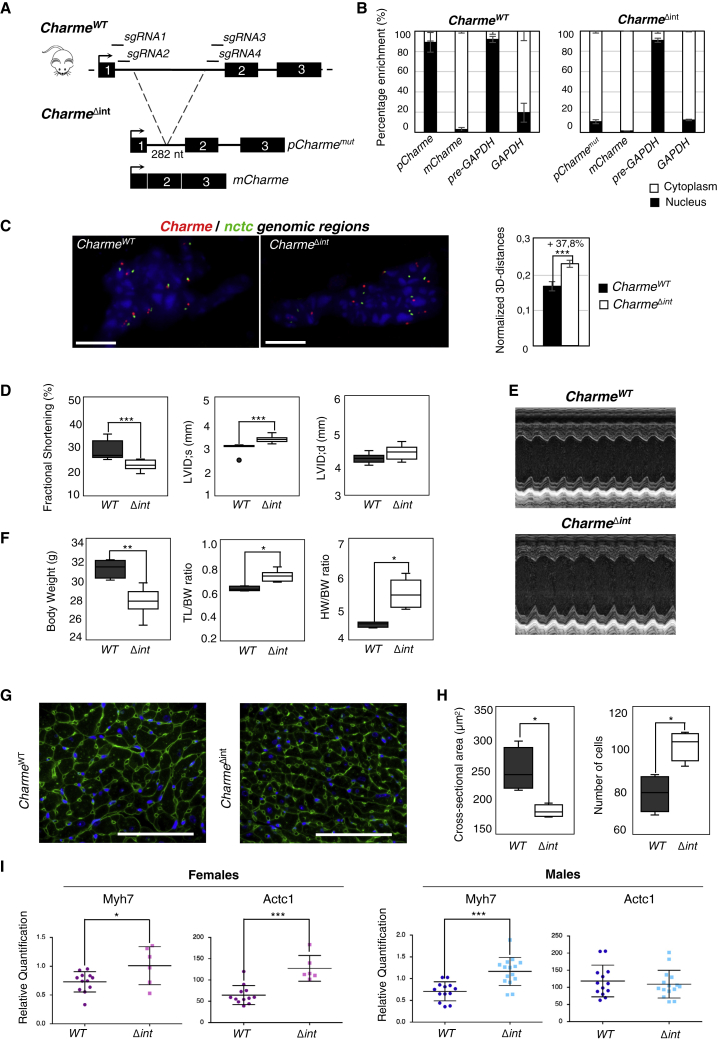
Chromatin architect of muscle expression (Charme) is a muscle-restricted long noncoding RNA (lncRNA) that plays an important role in myogenesis. Earlier evidence indicates that the nuclear Charme isoform, named pCharme, acts on the chromatin by assisting the formation of chromatin domains where myogenic transcription occurs. By combining RNA antisense purification (RAP) with mass spectrometry and loss-of-function analyses, we have now identified the proteins that assist these chromatin activities. These proteins-which include a sub-set of splicing regulators, principally PTBP1 and the multifunctional RNA/DNA binding protein MATR3-bind to sequences located within the alternatively spliced intron-1 to form nuclear aggregates. Consistent with the functional importance of pCharme interactome in vivo, a targeted deletion of the intron-1 by a CRISPR-Cas9 approach in mouse causes the release of pCharme from the chromatin and results in cardiac defects similar to what was observed upon knockout of the full-length transcript.
肌表达染色质架构(Charme)是一种肌肉特异性长非编码 RNA(lncRNA),在肌发生中发挥重要作用。早期证据表明,核 Charme 同种型,命名为 pCharme,通过协助肌生成转录发生的染色质域的形成来作用于染色质。通过将 RNA 反义纯化(RAP)与质谱和功能丧失分析相结合,我们现在已经鉴定出协助这些染色质活性的蛋白质。这些蛋白质——包括一组剪接调节剂,主要是 PTBP1 和多功能 RNA/DNA 结合蛋白 MATR3——结合到位于可变剪接内含子 1 内的序列上,形成核聚集体。与 pCharme 相互作用体在体内的功能重要性一致,通过 CRISPR-Cas9 方法在小鼠中靶向缺失内含子 1 会导致 pCharme 从染色质中释放出来,并导致类似于全长转录本敲除时观察到的心脏缺陷。