Department of Oncology, University Hospital Center Split, School of Medicine, University of Split, Spinčićeva 1, Split, HR-21.000, Croatia.
Medical Oncology Department, APHP Tenon, 4 Rue de La Chine, Paris, 75020, France.
Breast. 2021 Feb;55:79-90. doi: 10.1016/j.breast.2020.12.005. Epub 2020 Dec 13.
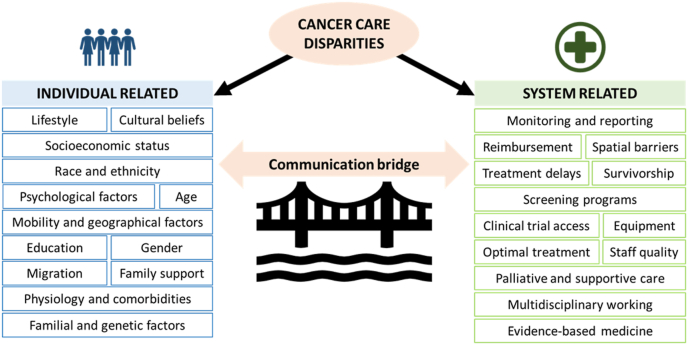
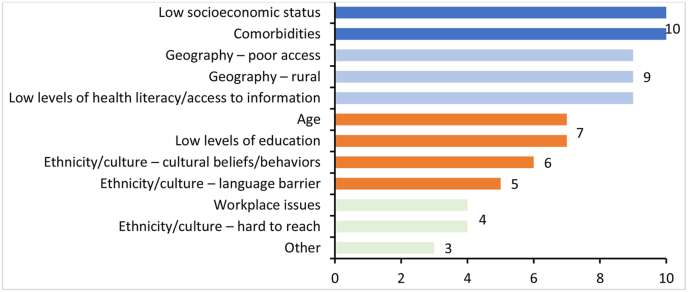
People with metastatic breast cancer face many challenges and disparities in obtaining optimal cancer care. These challenges are accentuated in underserved patient populations across Europe, who are less likely to receive quality healthcare for reasons including socioeconomic inequalities, educational or cultural status, or geographic location. While there are many local and national initiatives targeted to address these challenges, there remains a need to reduce disparities and improve access to healthcare to improve outcomes, with a focus on multidisciplinary stakeholder engagement. In October 2019, a range of experts in metastatic breast cancer, including healthcare professionals, patient representatives, policymakers and politicians, met to discuss and prioritize the critical needs of underserved patient populations with metastatic breast cancer in Europe. Six key challenges faced by these communities were identified: the need for amplification of the metastatic breast cancer patient voice, better and wider implementation of high-quality guidelines for metastatic breast cancer, more collaboration between stakeholders, tailored support for patients from different cultural and ethnic backgrounds, improved data sharing, and work-related issues. The Expert Panel then conceived and discussed potential actionable goals to address each key challenge. Their conclusions present a set of interrelated approaches to address the different challenges and could serve as the basis for concerted improvement of the lives of patients with metastatic breast cancer in Europe.
转移性乳腺癌患者在获得最佳癌症治疗方面面临许多挑战和差异。这些挑战在欧洲服务不足的患者群体中更为突出,他们由于社会经济不平等、教育或文化地位、或地理位置等原因,不太可能获得高质量的医疗保健。尽管有许多针对这些挑战的本地和国家举措,但仍需要减少差异,改善医疗保健的可及性,以改善结果,并侧重于多学科利益相关者的参与。2019 年 10 月,转移性乳腺癌领域的一系列专家,包括医疗保健专业人员、患者代表、政策制定者和政治家,聚在一起讨论并确定欧洲转移性乳腺癌服务不足患者群体的关键需求。确定了这些社区面临的六个关键挑战:需要放大转移性乳腺癌患者的声音,更好地、更广泛地实施高质量的转移性乳腺癌指南,加强利益相关者之间的合作,为来自不同文化和种族背景的患者提供量身定制的支持,改善数据共享,以及与工作相关的问题。专家小组随后构思并讨论了针对每个关键挑战的潜在可操作目标。他们的结论提出了一系列相互关联的方法来应对不同的挑战,可以作为协调改善欧洲转移性乳腺癌患者生活的基础。