Laigaard Jens, Bache Nina, Stottmeier Stefan, Mathiesen Ole, Estrup Stine
Centre for Anaesthesiological Research, Department of Anesthesiology, Zealand University Hospital, Køge, Denmark.
Multidisciplinary Pain Center, Department of Anesthesiology, Zealand University Hospital, Køge, Denmark.
J Pain Res. 2020 Dec 14;13:3385-3394. doi: 10.2147/JPR.S273025. eCollection 2020.
Evidence for efficacy and safety lacks for long-term opioid therapy in patients with chronic non-cancer pain and adverse effects, including affection of cognitive function and quality of life, is of concern. We aimed to investigate cognitive function and health-related quality of life in patients with chronic non-cancer pain during opioid reduction.
At two multidisciplinary pain centers, all patients with planned opioid reduction were screened for eligibility. Cognitive function was assessed using the Repeatable Battery for the Assessment of Neuropsychological Status (RBANS) and Trail Making Test A and B. Health-related quality of life was assessed using Short Form-36 (SF36) and Hospital Anxiety and Depression Scale (HADS).
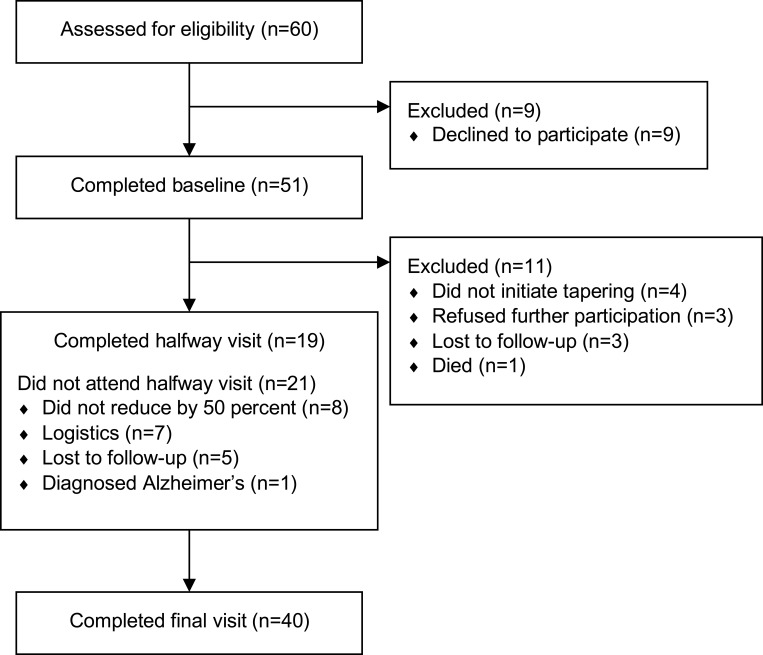
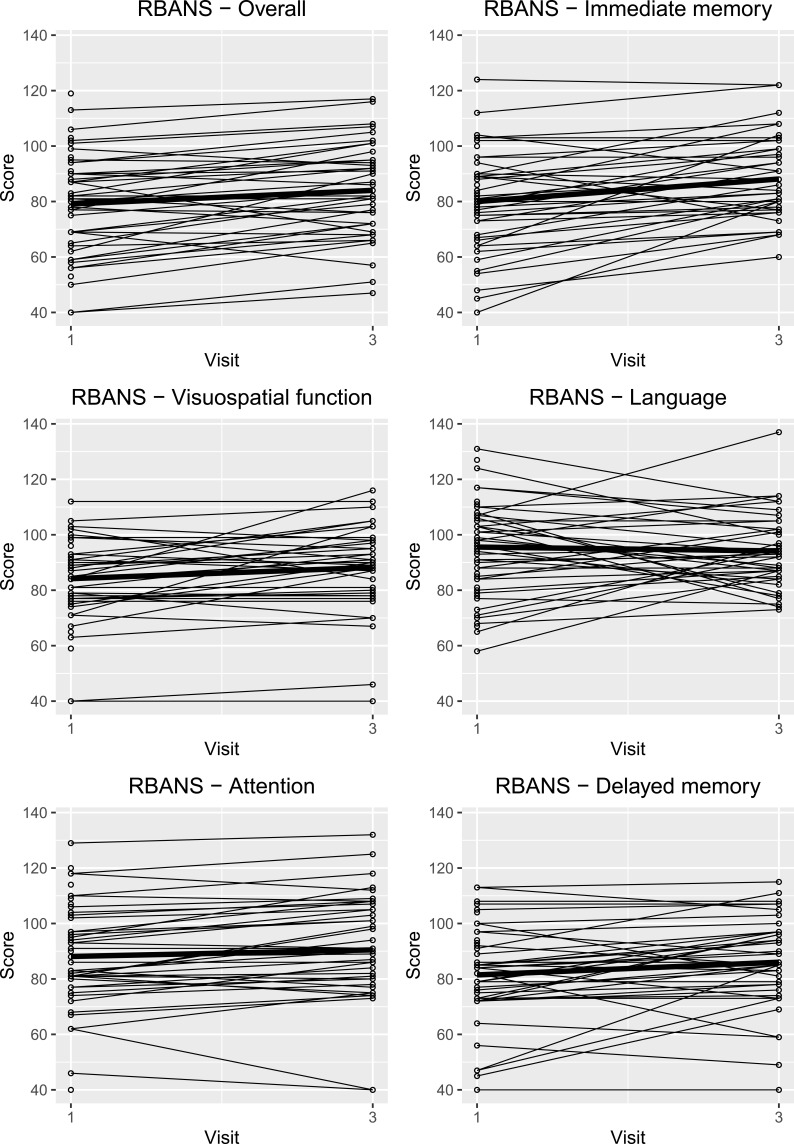
We included 51 participants and 40 participants attended follow-up of median 254 (IQR 106-357) days. Baseline RBANS score was 82 (IQR 65-93) with reference population norm value of 100 (SD±15). Daily opioid consumption was reduced from median 80 (IQR 45-161) oral morphine milligram equivalents to 19 (IQR 0-60) mg. RBANS score estimate increased by 6.2 (95% CI 3.1-9.3, p=0.0004) points after tapering. No differences were observed for Trail Making Test times, HADS or SF36 scores.
Generally, cognitive function showed minor improvement after opioid tapering with stationary health-related quality of life, depression and anxiety scores. The clinical significance is unclear, as no minimal clinically important difference in RBANS score is available.
慢性非癌性疼痛患者长期使用阿片类药物治疗的疗效和安全性证据不足,其不良反应,包括对认知功能和生活质量的影响,令人担忧。我们旨在研究慢性非癌性疼痛患者在减少阿片类药物用量期间的认知功能和与健康相关的生活质量。
在两个多学科疼痛中心,对所有计划减少阿片类药物用量的患者进行资格筛查。使用可重复神经心理状态评估量表(RBANS)以及连线测验A和B评估认知功能。使用简明健康状况调查量表(SF36)和医院焦虑抑郁量表(HADS)评估与健康相关的生活质量。
我们纳入了51名参与者,40名参与者参加了中位时间为254天(四分位间距106 - 357天)的随访。基线RBANS评分为82分(四分位间距65 - 93分),参考人群标准值为100分(标准差±15)。每日阿片类药物消耗量从中位80毫克口服吗啡当量(四分位间距45 - 161毫克)降至19毫克(四分位间距0 - 60毫克)。减量后RBANS评分估计增加了6.2分(95%置信区间3.1 - 9.3,p = 0.0004)。连线测验时间、HADS或SF36评分未观察到差异。
总体而言,减少阿片类药物用量后,认知功能有轻微改善,与健康相关的生活质量、抑郁和焦虑评分保持稳定。由于RBANS评分尚无最小临床重要差异,其临床意义尚不清楚。