Lv Yanni, Chen Jin, Hu Jinfang, Qian Yisong, Kong Ying, Fu Longsheng
Department of Pharmacy, The First Affiliated Hospital of Nanchang University, Jiangxi, China.
Department of Neurology, The First Affiliated Hospital of Nanchang University, Jiangxi, China.
Front Pharmacol. 2020 Dec 8;11:598592. doi: 10.3389/fphar.2020.598592. eCollection 2020.
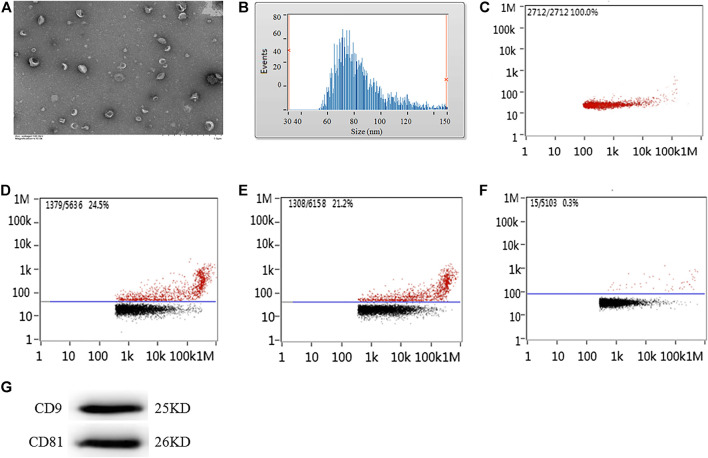
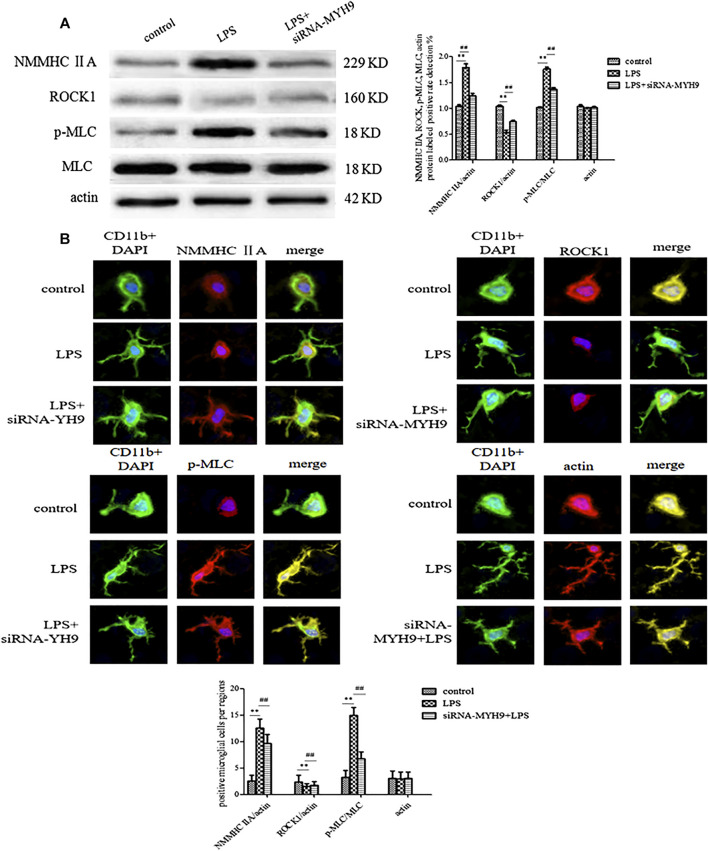
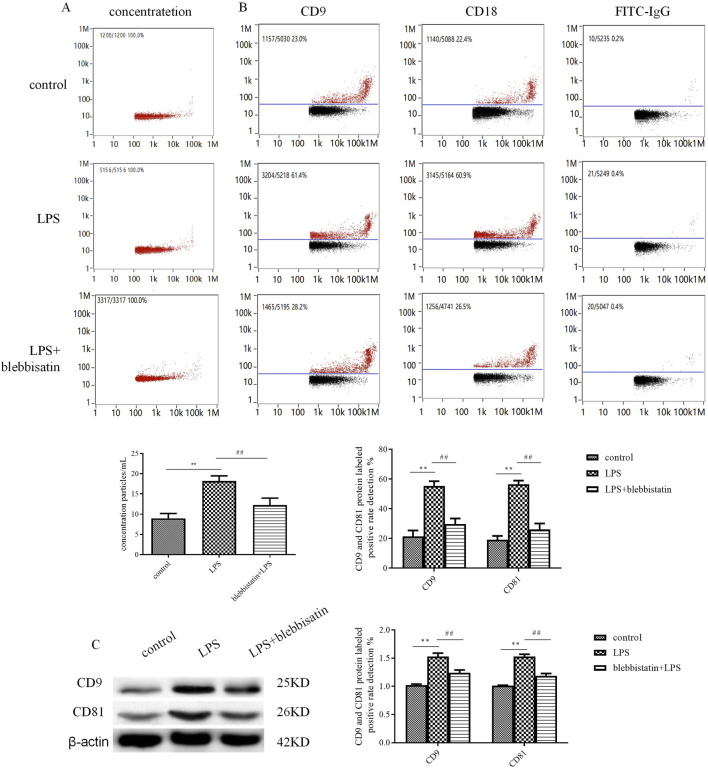
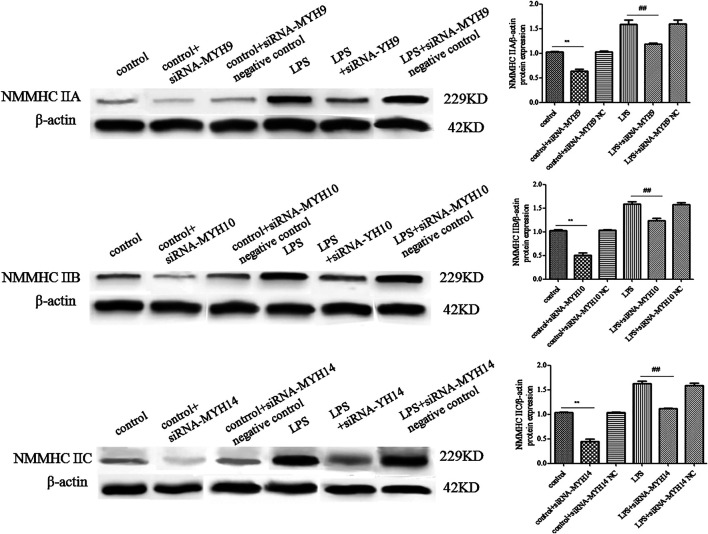
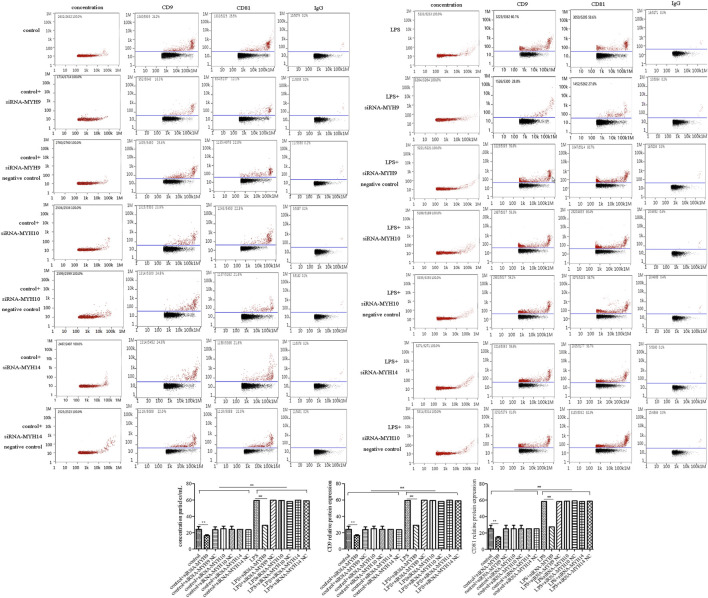
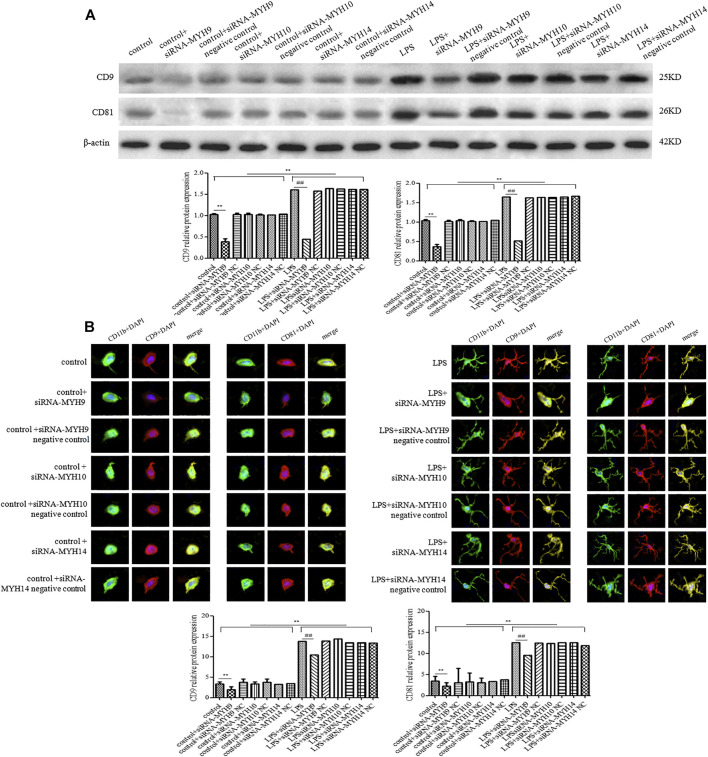
Nonmuscle myosin ⅡA, a kind of ATP-dependent molecular motor, binds actin to form the molecular motors of the cell. We found that interfering with nonmuscle myosin heavy chain (NMMHC) ⅡA could affect the exosome release from microglial cells stimulated by LPS. LPS could enhance exosome release from microglial cells by increasing exosome concentration, elevating the rate of positively labeled CD9 and CD81 proteins and protein expression. The myosin inhibitor, blebbistatin, could decrease the concentration of released exosome and reduce CD9 and CD81 protein expression on the exosome surface compared with that in the LPS group. To further determine the exact subtype of myosin Ⅱ responsible for these effects, we transfected microglial cells with siRNA for MYH9, MYH10, and MYH14. The data showed that only the transfection of siRNA-MYH9, but not MYH10 or MYH14 could decrease the released exosome concentration and particle size compared with those in the LPS group. siRNA-MYH9 would also weaken the CD9 and CD81 protein positive rate and protein expression compared with that in the LPS group by the quantification of CD9 and CD81 fluorescence intensities and by western blotting. Western blots and immunofluorescence assays indicated that NMMHC ⅡA might trigger the ROCK1/MLC/actin signaling pathway of microglial cells upon stimulation by LPS, which might be the potential mechanism of exosome release. These observations demonstrated that NMMHC ⅡA might be the potential target required for exosome release.
非肌肉肌球蛋白ⅡA是一种依赖ATP的分子马达,它与肌动蛋白结合形成细胞的分子马达。我们发现干扰非肌肉肌球蛋白重链(NMMHC)ⅡA会影响脂多糖(LPS)刺激的小胶质细胞释放外泌体。LPS可通过增加外泌体浓度、提高CD9和CD81蛋白阳性标记率及蛋白表达来增强小胶质细胞释放外泌体。与LPS组相比,肌球蛋白抑制剂blebbistatin可降低释放的外泌体浓度,并减少外泌体表面CD9和CD81蛋白表达。为进一步确定负责这些效应的肌球蛋白Ⅱ的确切亚型,我们用针对MYH9、MYH10和MYH14的小干扰RNA(siRNA)转染小胶质细胞。数据显示,与LPS组相比,仅转染siRNA-MYH9可降低释放的外泌体浓度和粒径,而转染siRNA-MYH10或siRNA-MYH14则无此作用。通过对CD9和CD81荧光强度进行定量分析以及蛋白质印迹法检测发现,与LPS组相比,siRNA-MYH9还会降低CD9和CD81蛋白阳性率及蛋白表达。蛋白质印迹法和免疫荧光分析表明,NMMHCⅡA可能在LPS刺激下触发小胶质细胞的ROCK1/MLC/肌动蛋白信号通路,这可能是外泌体释放的潜在机制。这些观察结果表明,NMMHCⅡA可能是外泌体释放所需的潜在靶点。