Eseta Wakuma Akafu, Lemma Teferi Daba, Geta Edosa Tesfaye
Ghimbi District Health Office, Ghimbi, Oromia, Ethiopia.
Department of Health Policy and Management, Faculty of Public Health, Institute of Health, Jimma University, Jimma, Oromia, Ethiopia.
Clinicoecon Outcomes Res. 2020 Dec 16;12:747-760. doi: 10.2147/CEOR.S284702. eCollection 2020.
Community-based health insurance (CBHI) is a prepayment method of financial contributions for healthcare which aims to risk pooling, avoidance of catastrophic and impoverishing health expenditure. However, a high dropout from the scheme remains the biggest challenge to effective and sustainable progress towards universal financial protection in low- and middle-income countries. While large literature had examined initial enrollment and factors associated with it, only a few studies dealt with dropout. So the study aimed to assess the magnitude and determinants of dropout from community-based health insurance among households in Manna district, Jimma zone, Oromia Regional State, Ethiopia.
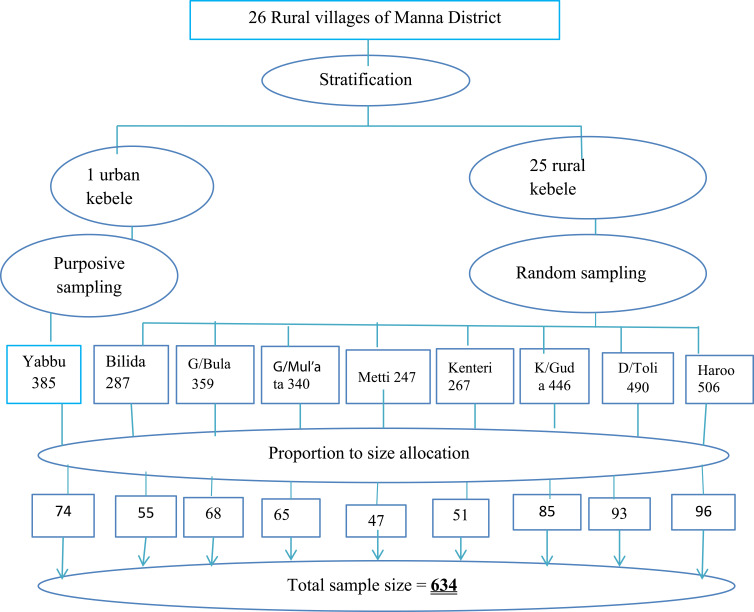
A community-based cross-sectional study design was employed to collect data from 634 household heads from March 1 to 30, 2020. A multistage sampling technique was carried out and interviewer-administered questionnaires were used to collect data. Descriptive statistics and multivariable logistic regression analyses were performed, and variables with a -value<0.05 were considered as having a statistically significant association with the dropout from the CBHI.
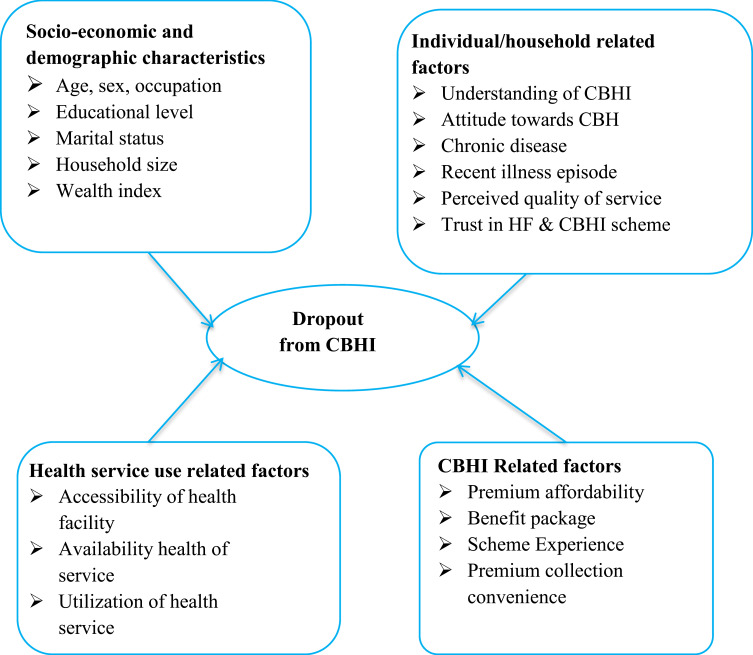
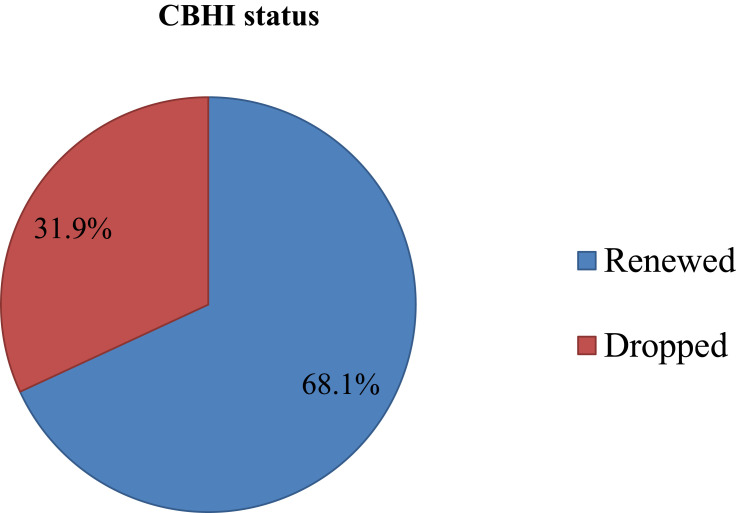
Magnitude of dropout from CBHI was 31.9% with 95% confidence interval (CI)=28.2-35.8% and relatively older age [adjusted odds ratio (AOR) (95% CI)=0.26 (0.10-0.78)], educational level [AOR (95% CI)=0.16 (0.06-0.41)], family size [AOR (95% CI)=0.36 (0.19-0.66)], poor perceived quality of service [AOR (95% CI)=5.7 (2.8-11.8)], trust in health facility [AOR (95% CI)=0.43 (0.3-0.61)], trust in the scheme [AOR (95% CI)=0.61 (0.45-0.84)], providers' attitude [AOR (95% CI)=10 (4.0-25.4)], and benefit package [AOR (95% CI)=4.9 (2.4-9.9)] were statistically significant determinants associated with dropout.
Dropout from CBHI in this study area was high. Household heads' age, educational level, family size, perceived quality of service, providers' attitude, a benefits package, trust in the contracted health facility, and the scheme were the significant predictors of dropout. We strongly recommend that greater efforts should be made toward the providers' attitude, promised benefit package, and quality of services.
基于社区的医疗保险(CBHI)是一种用于医疗保健的财务缴款预付方式,旨在实现风险共担,避免灾难性和致贫性医疗支出。然而,该计划的高退出率仍然是低收入和中等收入国家在实现全民金融保护方面有效和可持续进展的最大挑战。虽然大量文献研究了初始参保情况及其相关因素,但只有少数研究涉及退出问题。因此,本研究旨在评估埃塞俄比亚奥罗米亚州吉马地区曼纳区家庭中基于社区的医疗保险退出率及其决定因素。
采用基于社区的横断面研究设计,于2020年3月1日至30日从634名户主中收集数据。采用多阶段抽样技术,并使用访谈员管理的问卷收集数据。进行描述性统计和多变量逻辑回归分析,P值<0.05的变量被认为与CBHI退出具有统计学显著关联。
CBHI的退出率为31.9%,95%置信区间(CI)=28.2 - 35.8%,相对较高的年龄[调整优势比(AOR)(95%CI)=0.26(0.10 - 0.78)]、教育水平[AOR(95%CI)=0.16(0.06 - 0.41)]、家庭规模[AOR(95%CI)=0.36(0.19 - 0.66)]、对服务质量的感知较差[AOR(95%CI)=5.7(2.8 - 11.8)]、对医疗机构的信任[AOR(95%CI)=0.43(0.3 - 0.61)]、对该计划的信任[AOR(95%CI)=0.61(0.45 - 0.84)]、提供者态度[AOR(95%CI)=10(4.0 - 25.4)]和福利套餐[AOR(95%CI)=4.9(2.4 - 9.9)]是与退出相关的具有统计学意义的决定因素。
本研究区域内CBHI的退出率较高。户主的年龄、教育水平、家庭规模、对服务质量的感知、提供者态度、福利套餐、对签约医疗机构的信任以及该计划是退出的重要预测因素。我们强烈建议应在提供者态度、承诺的福利套餐和服务质量方面做出更大努力。