Matsuoka Koshi, Watanabe Aki, Kawaguchi Takayuki, Misawa Koji, Murakami Keiichi, Fukuda Michinari
Department of Rehabilitation Medicine, Tamakyuryo Hospital, Machida, Japan.
Graduate School of Medical Science, Kitasato University, Sagamihara, Japan.
Prog Rehabil Med. 2020 Dec 22;5:20200031. doi: 10.2490/prm.20200031. eCollection 2020.
There are few scales that reflect the function of the stroke-affected arm as it relates to the performance of daily activities while also indicating the difficulty of scale items. In this study, we developed the Activities Specific Upper-extremity Hemiparesis Scale (ASUHS) to evaluate daily activities performable by the affected arm after stroke. We also clarified the validity, reliability, and item difficulty of the scale.
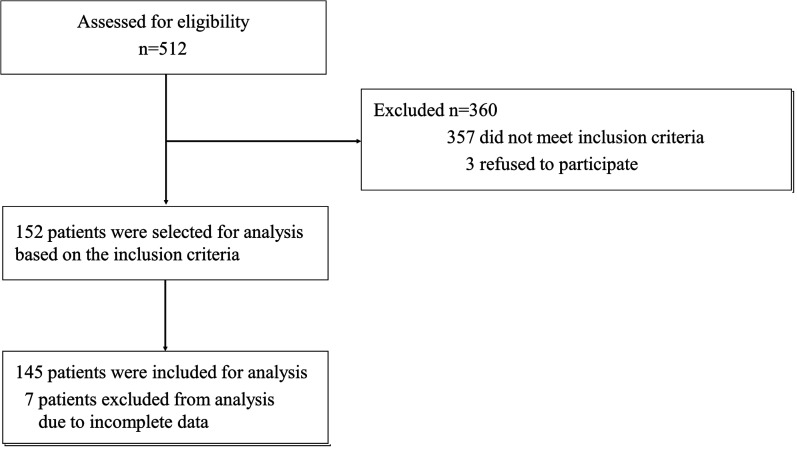
The participants were 145 patients with stroke who were consecutively admitted to a convalescent rehabilitation ward. The unidimensionality of ASUHS was assessed by principal component analysis. Analyses of item discrimination and content validity were conducted to assess the overall validity. Reliability was evaluated by assessing internal consistency and inter-rater reliability. Item difficulties were determined by Rasch analysis.
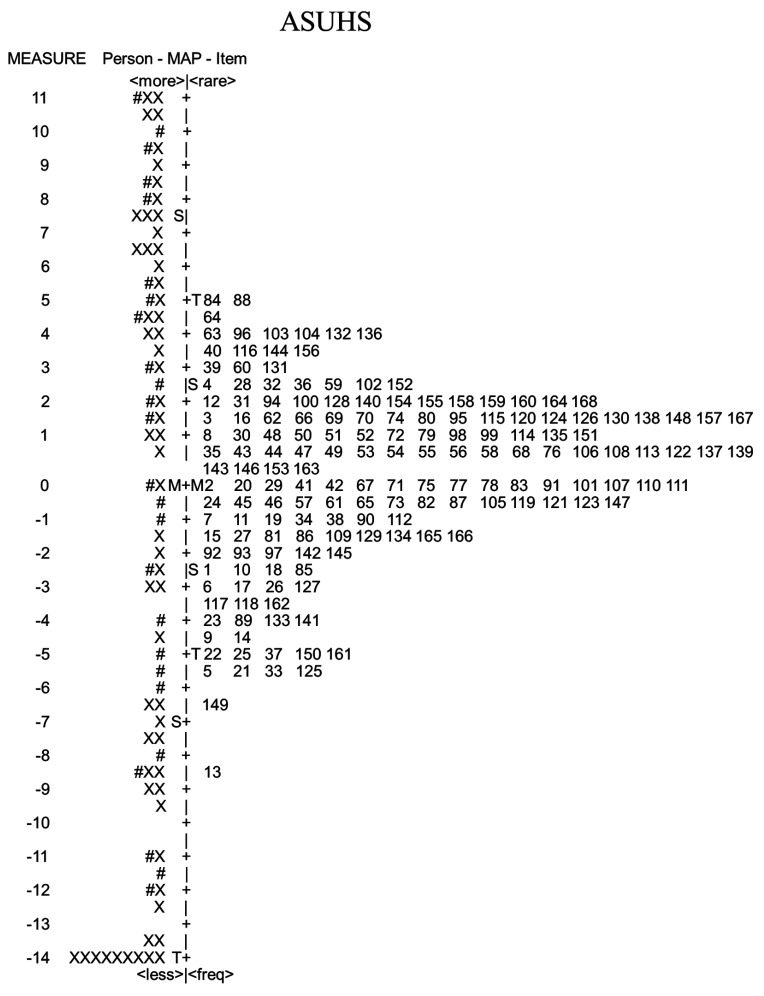
Unidimensionality, high discrimination, and good content validity were shown for all items. ASUHS consists of a dominant hand scale and non-dominant hand scale. Both scales showed good internal consistency (Cronbach's α coefficient = 0.99) and substantial inter-rater reliability (Cohen's Kappa coefficient = 0.74 and 0.75, respectively). Item difficulty was determined as being in the range -8.71 to +5.18 logit.
This study suggested good validity and reliability of ASUHS. Furthermore, because the item difficulties of daily activities performed by the affected arm were clarified, therapists can use ASUHS to identify the process that should be the next focus for training. Consequently, therapists may be able to train patients in daily activities that match the affected arm's ability step by step rather than determining training activities empirically.
很少有量表能反映中风后受影响手臂的功能与日常活动表现的关系,同时还能表明量表项目的难度。在本研究中,我们开发了特定活动上肢偏瘫量表(ASUHS)来评估中风后受影响手臂可进行的日常活动。我们还阐明了该量表的效度、信度和项目难度。
参与者为145名连续入住康复疗养病房的中风患者。通过主成分分析评估ASUHS的单维性。进行项目区分度和内容效度分析以评估整体效度。通过评估内部一致性和评分者间信度来评估信度。通过Rasch分析确定项目难度。
所有项目均显示出单维性、高区分度和良好的内容效度。ASUHS由优势手量表和非优势手量表组成。两个量表均显示出良好的内部一致性(Cronbach's α系数 = 0.99)和较高的评分者间信度(Cohen's Kappa系数分别为0.74和0.75)。项目难度确定在-8.71至+5.18对数单位范围内。
本研究表明ASUHS具有良好的效度和信度。此外,由于明确了受影响手臂进行日常活动的项目难度,治疗师可以使用ASUHS来确定接下来训练应关注的重点过程。因此,治疗师或许能够逐步针对与受影响手臂能力相匹配的日常活动对患者进行训练,而不是凭经验确定训练活动。