Kalra Sanjay, Shaikh Shehla, Priya Gagan, Baruah Manas P, Verma Abhyudaya, Das Ashok K, Shah Mona, Das Sambit, Khandelwal Deepak, Sanyal Debmalya, Ghosh Sujoy, Saboo Banshi, Bantwal Ganapathi, Ayyagari Usha, Gardner Daphne, Jimeno Cecilia, Barbary Nancy E, Hafidh Khadijah A, Bhattarai Jyoti, Minulj Tania T, Zufry Hendra, Bulugahapitiya Uditha, Murad Moosa, Tan Alexander, Shahjada Selim, Bello Mijinyawa B, Katulanda Prasad, Podgorski Gracjan, AbuHelaiqa Wajeeha I, Tan Rima, Latheef Ali, Govender Sedeshan, Assaad-Khalil Samir H, Kootin-Sanwu Cecilia, Joshi Ansumali, Pathan Faruque, Nkansah Diana A
Department of Endocrinology, Bharti Hospital and BRIDE, Karnal, Haryana, India.
Department of Endocrinology, KGN Institute of Diabetes and Endocrinology, Mumbai, Maharashtra, India.
Diabetes Ther. 2021 Feb;12(2):465-485. doi: 10.1007/s13300-020-00973-0. Epub 2020 Dec 26.
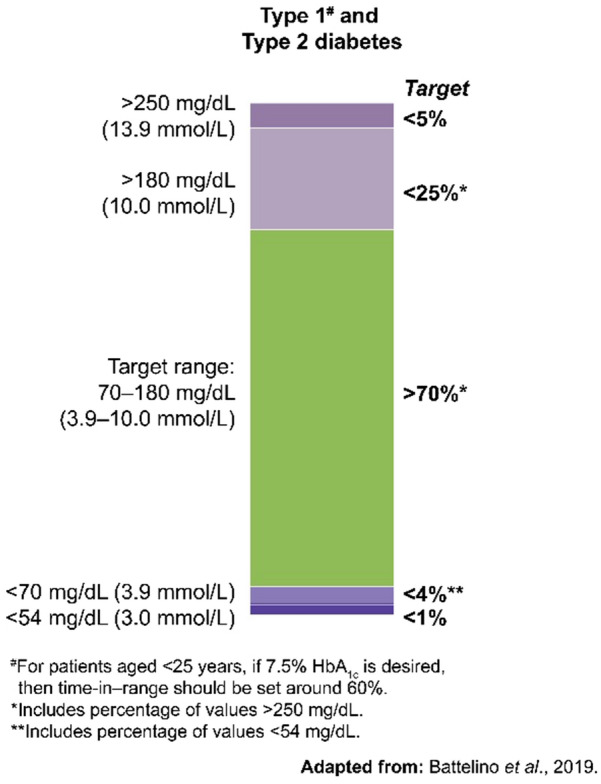
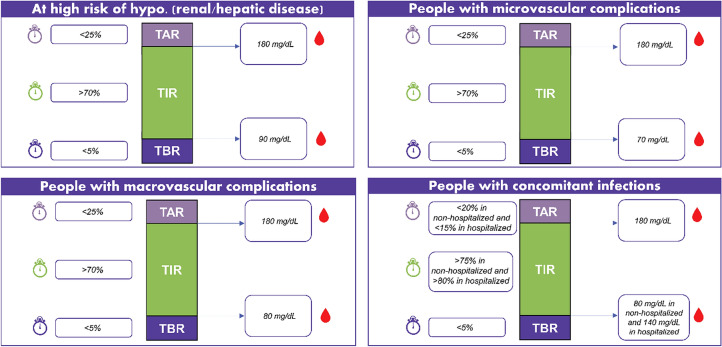
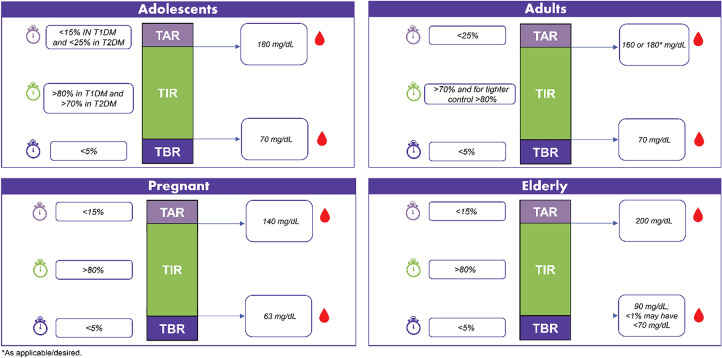
Diabetes mellitus is a global health concern associated with significant morbidity and mortality. Inadequate control of diabetes leads to chronic complications and higher mortality rates, which emphasizes the importance of achieving glycemic targets. Although glycated hemoglobin (HbA) is the gold standard for measuring glycemic control, it has several limitations. Therefore, in recent years, along with the emergence of continuous glucose monitoring (CGM) technology, glycemic control modalities have moved beyond HbA. They encompass modern glucometrics, such as glycemic variability (GV) and time-in-range (TIR). The key advantage of these newer metrics over HbA is that they allow personalized diabetes management with person-centric glycemic control. Basal insulin analogues, especially second-generation basal insulins with properties such as longer duration of action and low risk of hypoglycemia, have demonstrated clinical benefits by reducing GV and improving TIR. Therefore, for more effective and accurate diabetes management, the development of an integrated approach with second-generation basal insulin and glucometrics involving GV and TIR is the need of the hour. With this objective, a multinational group of endocrinologists and diabetologists reviewed the existing recommendations on TIR, provided their clinical insights into the individualization of TIR targets, and elucidated on the role of the second-generation basal insulin analogues in addressing TIR.
糖尿病是一个全球性的健康问题,与严重的发病率和死亡率相关。糖尿病控制不佳会导致慢性并发症和更高的死亡率,这凸显了实现血糖目标的重要性。尽管糖化血红蛋白(HbA)是衡量血糖控制的金标准,但它有几个局限性。因此,近年来,随着持续葡萄糖监测(CGM)技术的出现,血糖控制模式已超越了HbA。它们包括现代血糖监测指标,如血糖波动(GV)和血糖达标时间(TIR)。这些新指标相对于HbA的关键优势在于,它们允许以患者为中心进行个性化糖尿病管理和血糖控制。基础胰岛素类似物,尤其是具有作用时间更长和低血糖风险低等特性的第二代基础胰岛素,已通过降低GV和改善TIR显示出临床益处。因此,为了更有效、准确地管理糖尿病,当下需要开发一种将第二代基础胰岛素与涉及GV和TIR的血糖监测指标相结合的综合方法。出于这一目的,一个由内分泌学家和糖尿病专家组成的跨国小组回顾了关于TIR的现有建议,提供了他们对TIR目标个体化的临床见解,并阐明了第二代基础胰岛素类似物在实现TIR方面的作用。