Department of Health and Kinesiology, Purdue University, West Lafayette, IN, USA.
Department of Statistics, Purdue University, West Lafayette, IN, USA.
Physiol Rep. 2021 Jan;8(24):e14650. doi: 10.14814/phy2.14650.
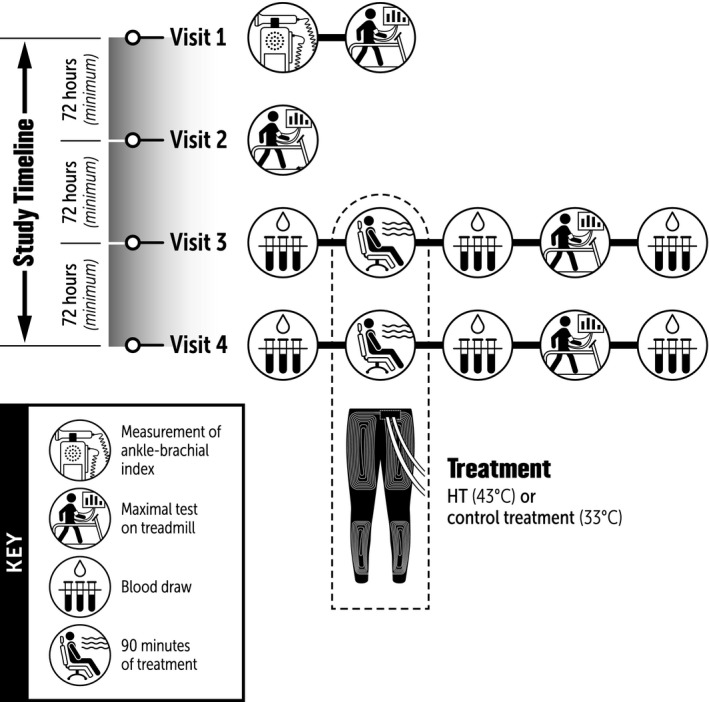
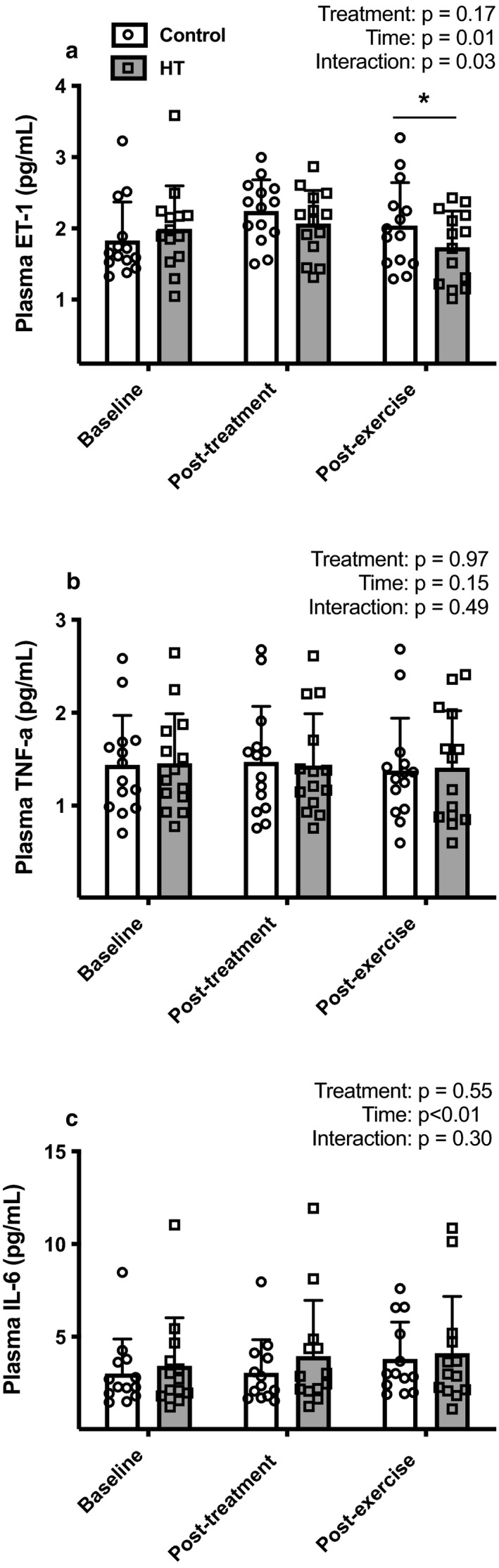
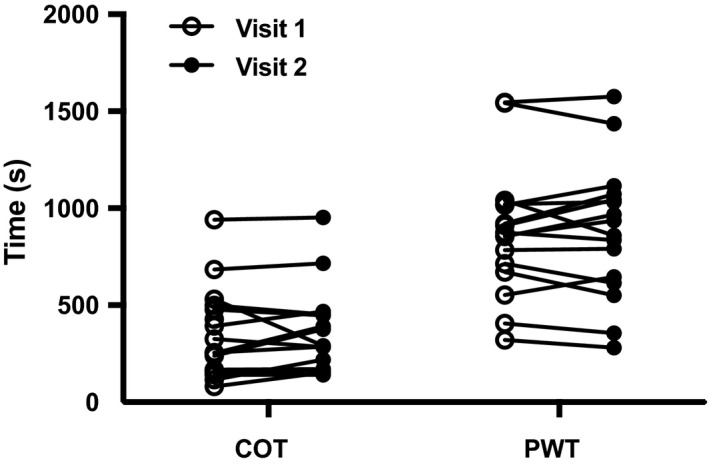
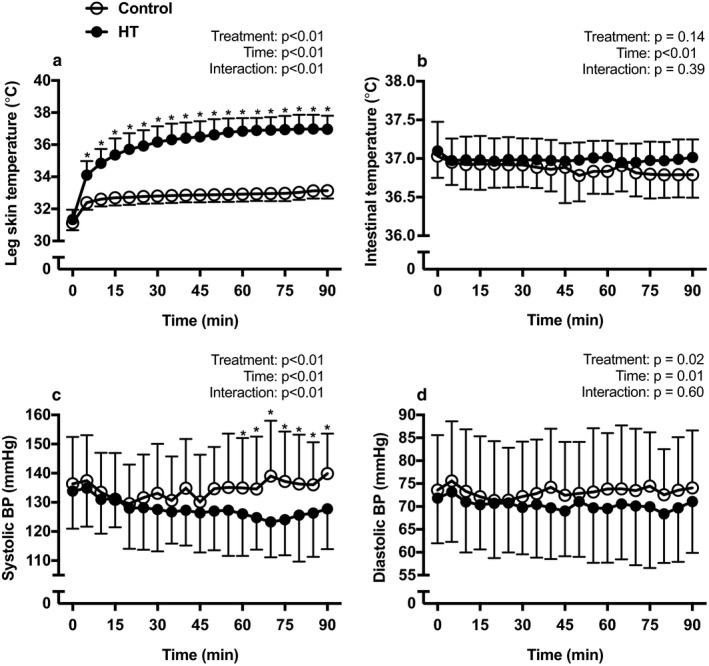
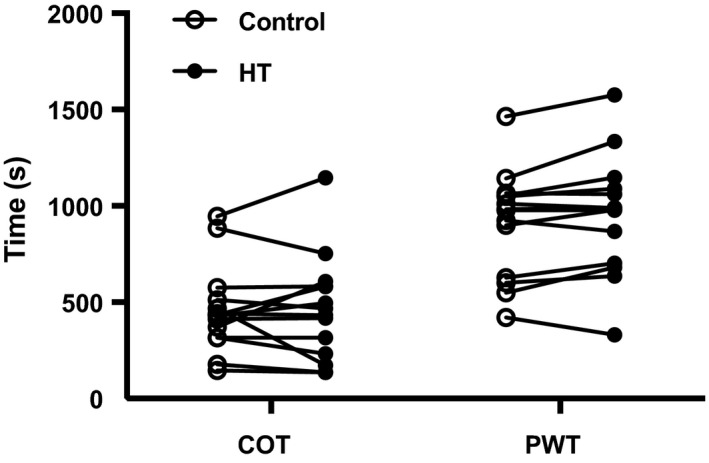
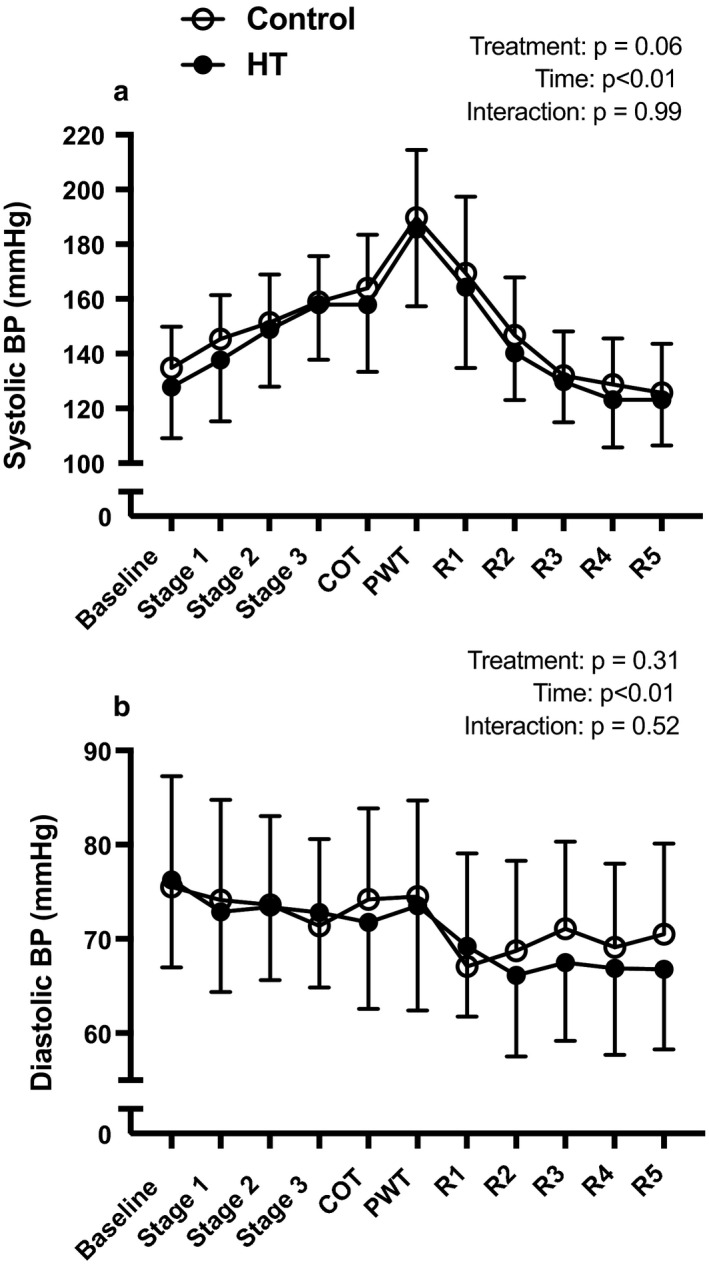
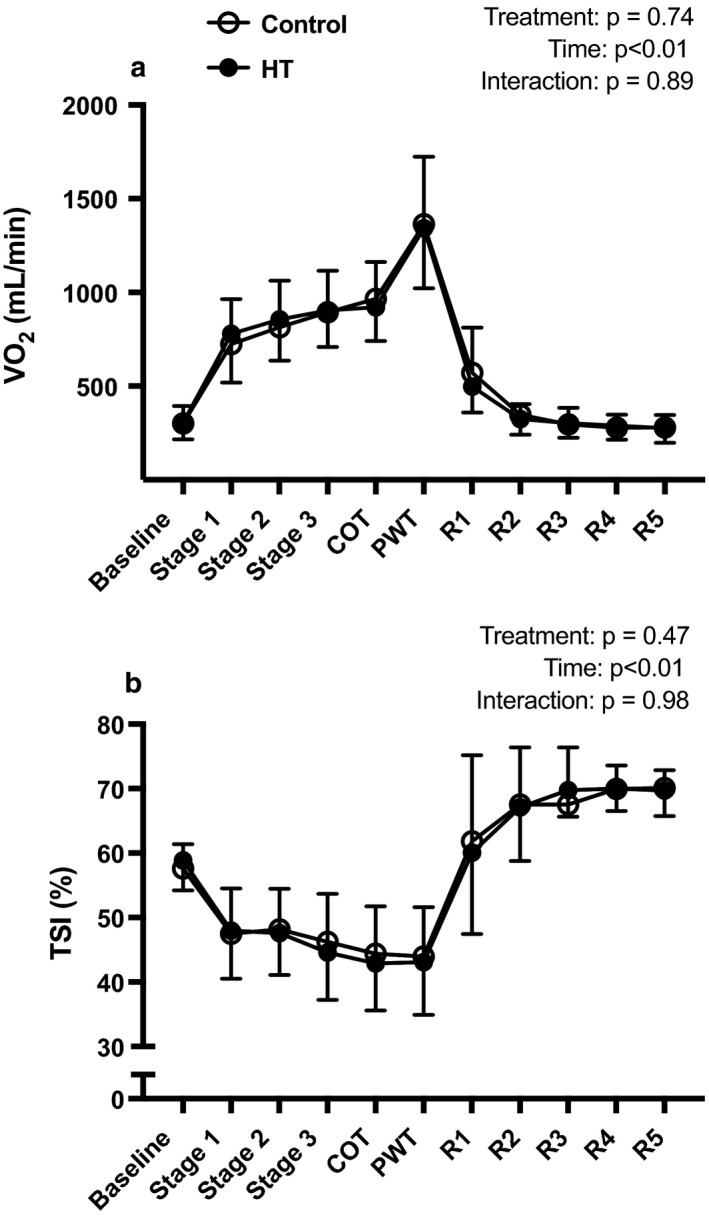
Lower-extremity peripheral artery disease (PAD) is associated with increased risk of cardiovascular events and impaired exercise tolerance. We have previously reported that leg heat therapy (HT) applied using liquid-circulating trousers perfused with warm water increases leg blood flow and reduces blood pressure (BP) and the circulating levels of endothelin-1 (ET-1) in patients with symptomatic PAD. In this sham-controlled, randomized, crossover study, sixteen patients with symptomatic PAD (age 65 ± 5.7 years and ankle-brachial index: 0.69 ± 0.1) underwent a single 90-min session of HT or a sham treatment prior to a symptom-limited, graded cardiopulmonary exercise test on the treadmill. The primary outcome was the peak walking time (PWT) during the exercise test. Secondary outcomes included the claudication onset time (COT), resting and exercise BP, calf muscle oxygenation, pulmonary oxygen uptake (V̇O ), and plasma levels of ET-1, interleukin-6 (IL-6) and tumor necrosis factor-alpha (TNF-α). Systolic, but not diastolic BP, was significantly lower (~7 mmHg, p < .05) during HT when compared to the sham treatment. There was also a trend for lower SBP throughout the exercise and the recovery period following HT (p = .057). While COT did not differ between treatments (p = .77), PWT tended to increase following HT (CON: 911 ± 69 s, HT: 954 ± 77 s, p = .059). Post-exercise plasma levels of ET-1 were also lower in the HT session (CON: 2.0 ± 0.1, HT: 1.7 ± 0.1, p = .02). Calf muscle oxygenation, V̇O , COT, IL-6, and TNF-α did not differ between treatments. A single session of leg HT lowers BP and post-exercise circulating levels of ET-1 and may enhance treadmill walking performance in symptomatic PAD patients.
下肢外周动脉疾病(PAD)与心血管事件风险增加和运动耐量受损有关。我们之前报道过,使用循环水灌注的液体循环裤进行腿部热疗(HT)可增加腿部血流量,并降低血压(BP)和症状性 PAD 患者循环内皮素-1(ET-1)水平。在这项假对照、随机、交叉研究中,16 名有症状的 PAD 患者(年龄 65 ± 5.7 岁,踝肱指数:0.69 ± 0.1)在跑步机上进行症状限制分级心肺运动测试前,分别接受了单次 90 分钟的 HT 或假治疗。主要结局是运动测试中的峰值步行时间(PWT)。次要结局包括跛行起始时间(COT)、静息和运动时 BP、小腿肌肉氧合、肺摄取氧量(V̇O )以及 ET-1、白细胞介素-6(IL-6)和肿瘤坏死因子-α(TNF-α)的血浆水平。与假治疗相比,HT 时收缩压(但不是舒张压)显著降低(~7mmHg,p < 0.05)。HT 期间整个运动和运动后恢复期间 SBP 也呈下降趋势(p = 0.057)。虽然两种治疗方法的 COT 没有差异(p = 0.77),但 HT 后 PWT 有增加的趋势(CON:911 ± 69s,HT:954 ± 77s,p = 0.059)。HT 后 ET-1 的血浆水平也较低(CON:2.0 ± 0.1,HT:1.7 ± 0.1,p = 0.02)。小腿肌肉氧合、V̇O 、COT、IL-6 和 TNF-α在两种治疗方法之间没有差异。单次腿部 HT 可降低 BP 和运动后循环 ET-1 水平,并可能增强症状性 PAD 患者在跑步机上的步行表现。