Department of Pathology & Immunology, Baylor College of Medicine, Houston, TX, USA.
Jan and Dan Duncan Neurological Research Institute at Texas Children's Hospital, Houston, TX, USA.
J Physiol. 2021 Apr;599(7):2037-2054. doi: 10.1113/JP280978. Epub 2021 Jan 9.
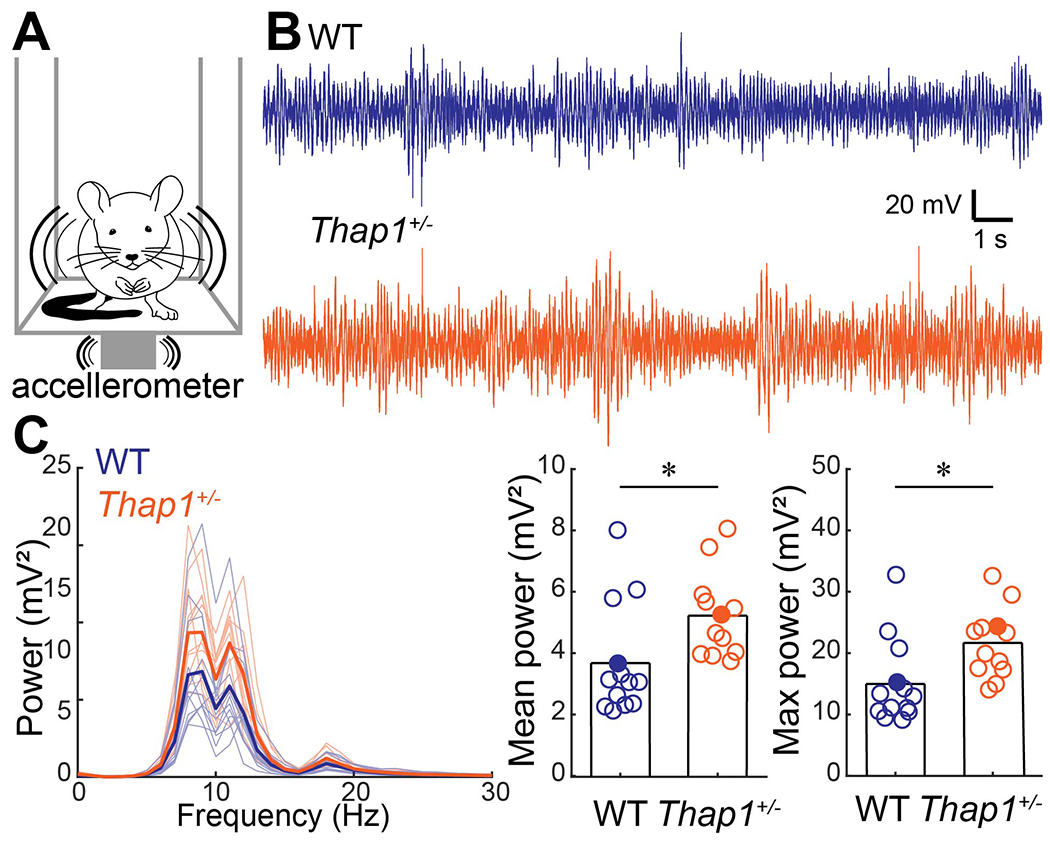
Loss-of-function mutations in the Thap1 gene cause partially penetrant dystonia type 6 (DYT6). Some non-manifesting DYT6 mutation carriers have tremor and abnormal cerebello-thalamo-cortical signalling. We show that Thap1 heterozygote mice have action tremor, a reduction in cerebellar neuron number, and abnormal electrophysiological signals in the remaining neurons. These results underscore the importance of Thap1 levels for cerebellar function. These results uncover how cerebellar abnormalities contribute to different dystonia-associated motor symptoms.
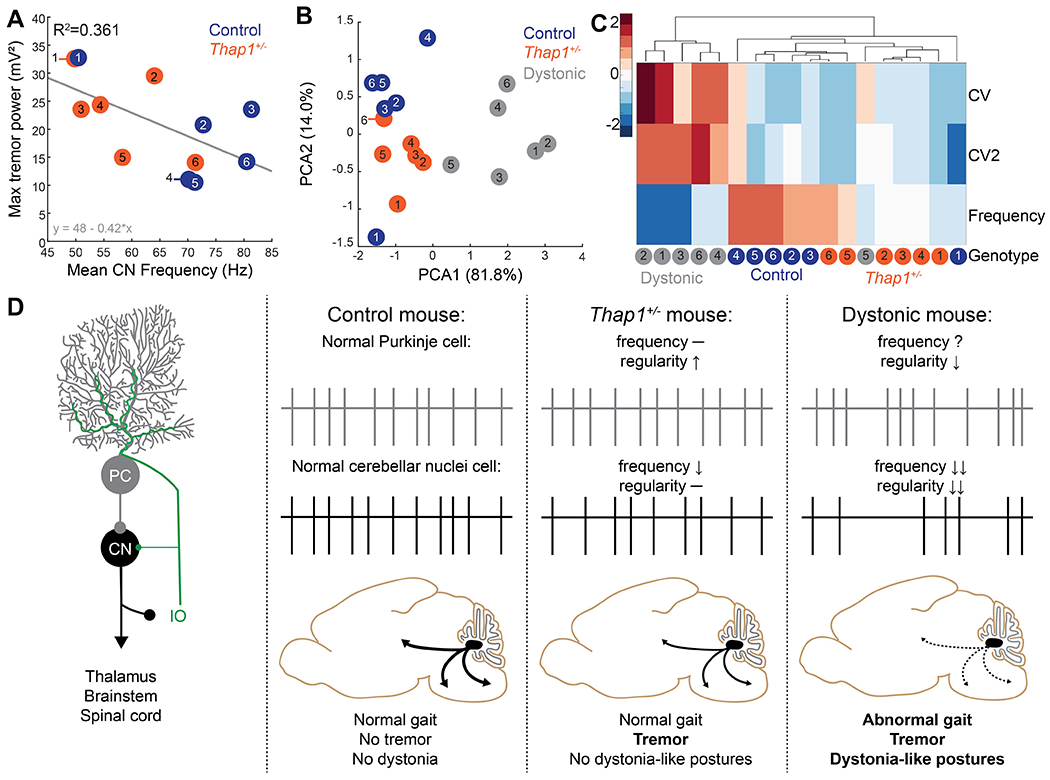
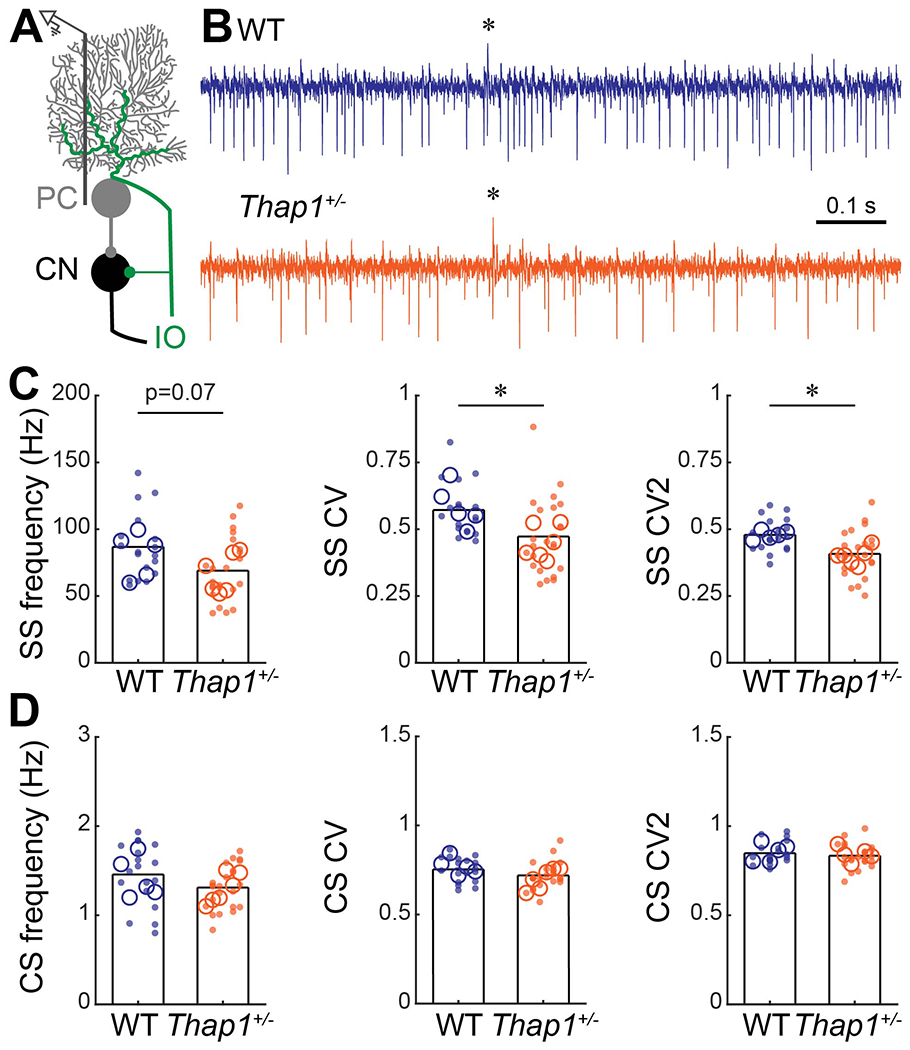
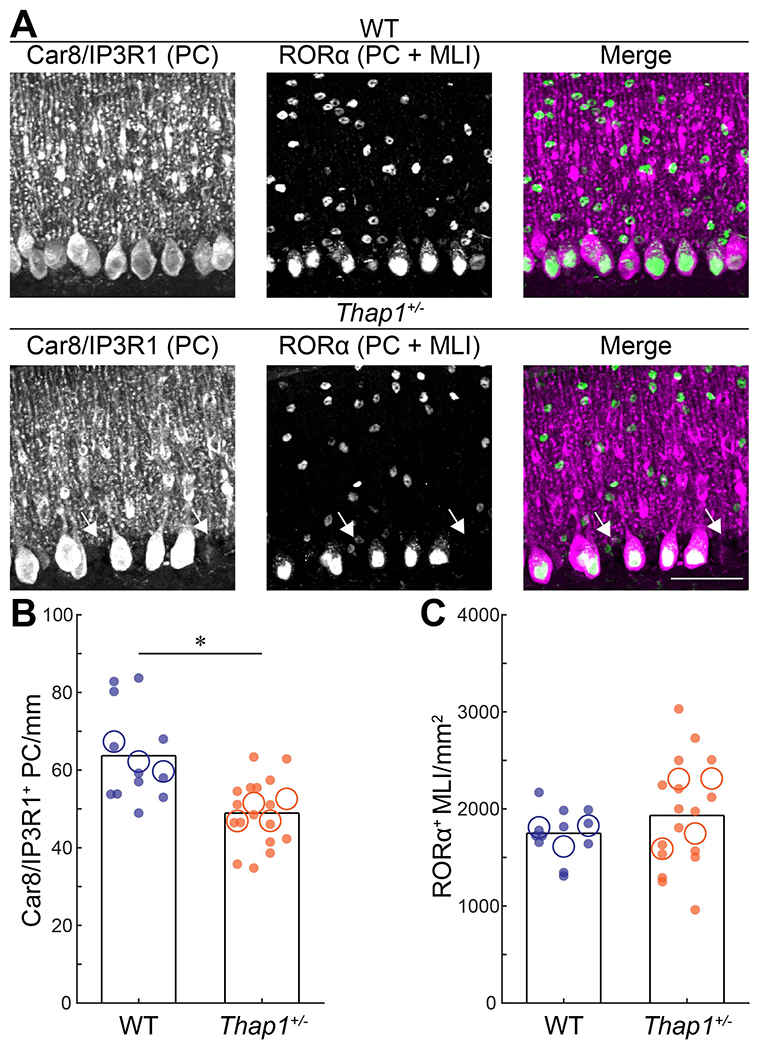
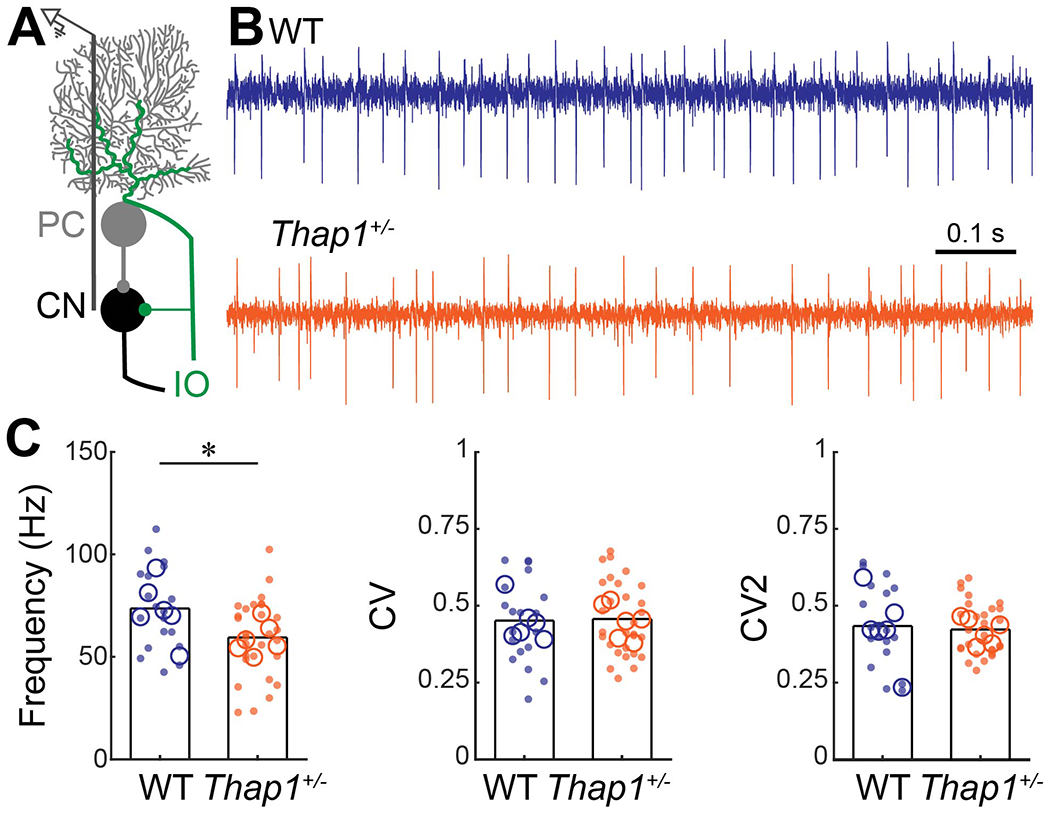
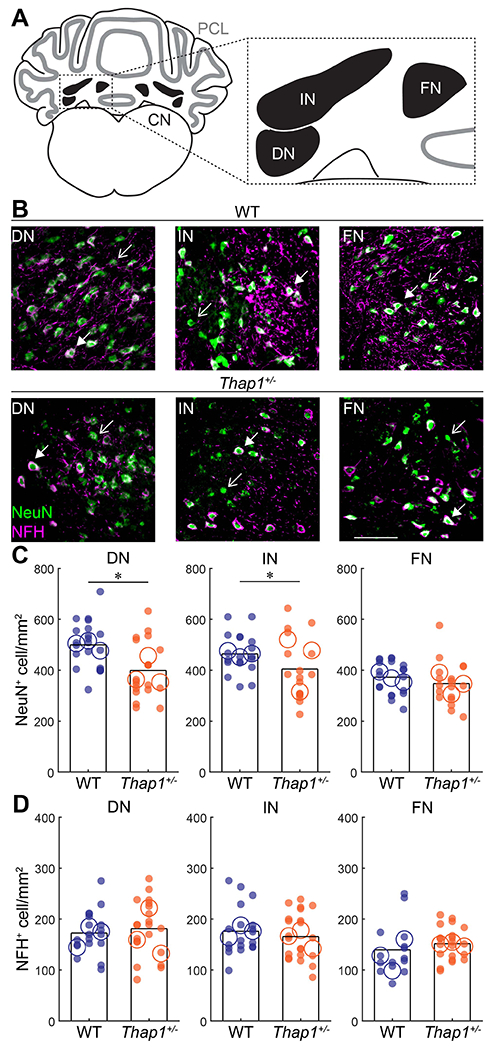
Loss-of-function mutations in the Thanatos-associated domain-containing apoptosis-associated protein 1 (THAP1) gene cause partially penetrant autosomal dominant dystonia type 6 (DYT6). However, the neural abnormalities that promote the resultant motor dysfunctions remain elusive. Studies in humans show that some non-manifesting DYT6 carriers have altered cerebello-thalamo-cortical function with subtle but reproducible tremor. Here, we uncover that Thap1 heterozygote mice have action tremor that rises above normal baseline values even though they do not exhibit overt dystonia-like twisting behaviour. At the neural circuit level, we show using in vivo recordings in awake Thap1 mice that Purkinje cells have abnormal firing patterns and that cerebellar nuclei neurons, which connect the cerebellum to the thalamus, fire at a lower frequency. Although the Thap1 mice have fewer Purkinje cells and cerebellar nuclei neurons, the number of long-range excitatory outflow projection neurons is unaltered. The preservation of interregional connectivity suggests that abnormal neural function rather than neuron loss instigates the network dysfunction and the tremor in Thap1 mice. Accordingly, we report an inverse correlation between the average firing rate of cerebellar nuclei neurons and tremor power. Our data show that cerebellar circuitry is vulnerable to Thap1 mutations and that cerebellar dysfunction may be a primary cause of tremor in non-manifesting DYT6 carriers and a trigger for the abnormal postures in manifesting patients.
Thap1 基因的功能丧失突变导致部分显性 6 型肌张力障碍(DYT6)。一些未表现出 DYT6 突变的携带者有震颤和小脑-丘脑-皮质信号异常。我们表明,Thap1 杂合子小鼠有动作性震颤、小脑神经元数量减少以及剩余神经元的异常电生理信号。这些结果强调了 Thap1 水平对小脑功能的重要性。这些结果揭示了小脑异常如何导致不同的与肌张力障碍相关的运动症状。
Thanatos 相关结构域包含凋亡相关蛋白 1(THAP1)基因的功能丧失突变导致部分显性常染色体显性 6 型肌张力障碍(DYT6)。然而,促进运动功能障碍的神经异常仍然难以捉摸。在人类中的研究表明,一些未表现出 DYT6 症状的携带者有改变的小脑-丘脑-皮质功能,伴有细微但可重复的震颤。在这里,我们揭示了 Thap1 杂合子小鼠有动作性震颤,即使它们没有表现出明显的扭转样行为,这种震颤也会高于正常基线值。在神经回路水平,我们使用清醒 Thap1 小鼠的体内记录表明,浦肯野细胞有异常的放电模式,连接小脑到丘脑的小脑核神经元以较低的频率放电。尽管 Thap1 小鼠有较少的浦肯野细胞和小脑核神经元,但长程兴奋性传出投射神经元的数量没有改变。区域间连接的保留表明,异常的神经功能而不是神经元丢失引发了 Thap1 小鼠的网络功能障碍和震颤。因此,我们报告小脑核神经元的平均放电率与震颤功率之间存在反比关系。我们的数据表明,小脑回路容易受到 Thap1 突变的影响,小脑功能障碍可能是未表现出 DYT6 携带者震颤的主要原因,也是表现出症状的患者异常姿势的触发因素。