VA RR&D National Center for Rehabilitative Auditory Research (NCRAR), VA Portland Health Care System, Portland, Oregon, United States of America.
VA HSR&D Center to Improve Veteran Involvement in Care (CIVIC), VA Portland Health Care System, Portland, Oregon, United States of America.
PLoS One. 2020 Dec 28;15(12):e0242007. doi: 10.1371/journal.pone.0242007. eCollection 2020.
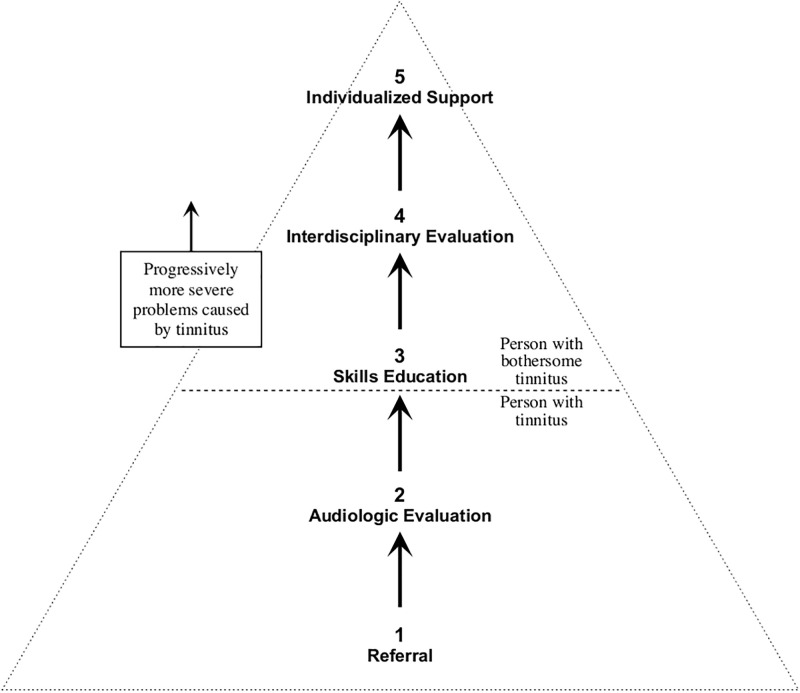
Progressive Tinnitus Management (PTM) is an evidence-based interdisciplinary stepped-care approach to improving quality of life for patients with tinnitus. PTM was endorsed by Department of Veterans Affairs (VA) Audiology leadership in 2009. Factors affecting implementation of PTM are unknown. We conducted a study to: 1) estimate levels of PTM program implementation in VA Audiology and Mental Health clinics across the country; and 2) identify barriers and facilitators to PTM implementation based on the experiences of VA audiologists and mental health providers.
We conducted an anonymous, web-based survey targeting Audiology and Mental Health leaders at 144 major VA facilities. Quantitative analyses summarized respondents' facility characteristics and levels of program implementation (full PTM, partial PTM, or no PTM). Qualitative analyses identified themes in factors influencing the implementation of PTM across VA sites.
Surveys from 87 audiologists and 66 mental health clinicians revealed that few facilities offered full PTM; the majority offered partial or no PTM. Inductive analysis of the open-ended survey responses identified seven factors influencing implementation of PTM: 1) available resources, 2) service collaboration, 3) prioritization, 4) Veterans' preferences and needs, 5) clinician training, 6) awareness of (evidence-based) options, and 7) perceptions of scope of practice.
Results suggest wide variation in services provided, a need for greater engagement of mental health providers in tinnitus care, and an interest among both audiologists and mental health providers in receiving tinnitus-related training. Future research should address barriers to PTM implementation, including methods to: 1) improve understanding among mental health providers of their potential role in tinnitus management; 2) enhance coordination of tinnitus-related care between health care disciplines; and 3) collect empirical data on Veterans' need for and interest in PTM, including delivery by telehealth modalities.
渐进性耳鸣管理(PTM)是一种基于证据的跨学科阶梯式护理方法,旨在提高耳鸣患者的生活质量。PTM 于 2009 年得到美国退伍军人事务部(VA)听力科领导层的认可。影响 PTM 实施的因素尚不清楚。我们进行了一项研究,以:1)估计全国 VA 听力科和心理健康诊所实施 PTM 计划的水平;2)根据 VA 听力学家和心理健康提供者的经验,确定实施 PTM 的障碍和促进因素。
我们对 144 个主要 VA 设施的听力科和心理健康科的领导进行了一项匿名的网络调查。定量分析总结了受访者所在机构的特征和项目实施水平(全面 PTM、部分 PTM 或无 PTM)。定性分析确定了影响 VA 站点实施 PTM 的因素的主题。
来自 87 名听力学家和 66 名心理健康临床医生的调查显示,很少有机构提供全面的 PTM;大多数机构提供部分或没有 PTM。对开放式调查答复的归纳分析确定了影响 PTM 实施的七个因素:1)可用资源;2)服务协作;3)优先级;4)退伍军人的偏好和需求;5)临床医生培训;6)对(基于证据的)选择的认识;7)对实践范围的看法。
结果表明,提供的服务存在广泛差异,需要让更多的心理健康提供者参与耳鸣护理,并且听力学家和心理健康提供者都对接受耳鸣相关培训感兴趣。未来的研究应解决 PTM 实施的障碍,包括:1)提高心理健康提供者对其在耳鸣管理中潜在作用的理解;2)增强医疗保健学科之间的耳鸣相关护理协调;3)收集关于退伍军人对 PTM 的需求和兴趣的实证数据,包括通过远程医疗模式提供。