Smidt Heart Institute, Cedars-Sinai Medical Center, Los Angeles, California, United States of America.
PLoS One. 2020 Dec 28;15(12):e0244533. doi: 10.1371/journal.pone.0244533. eCollection 2020.
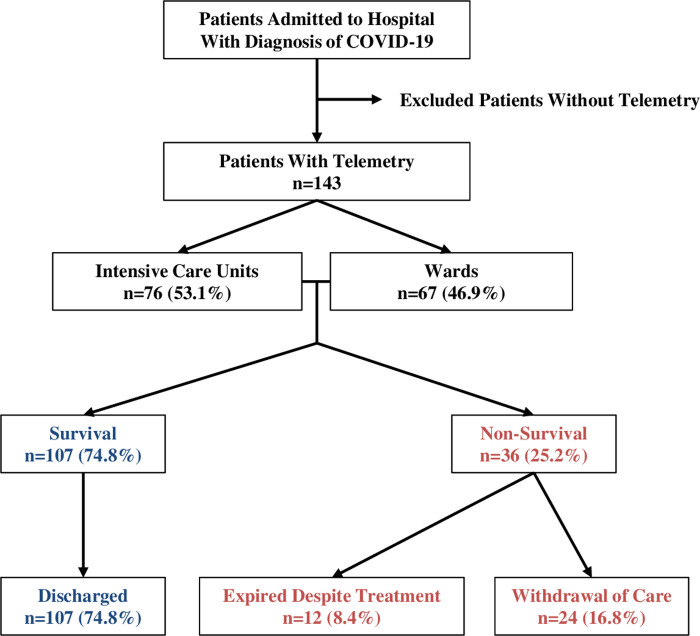
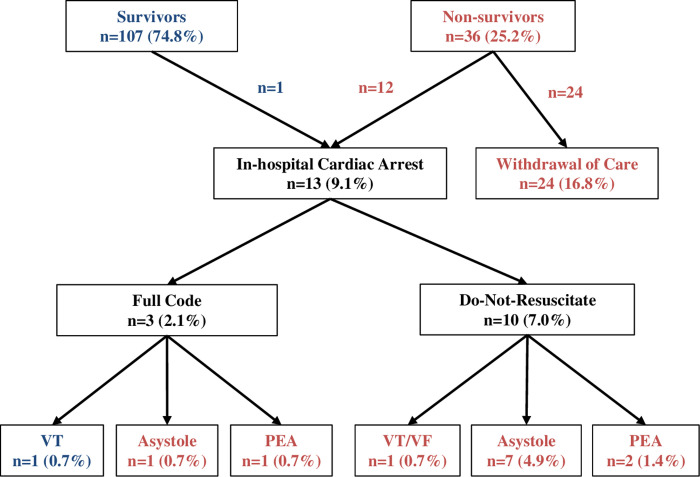
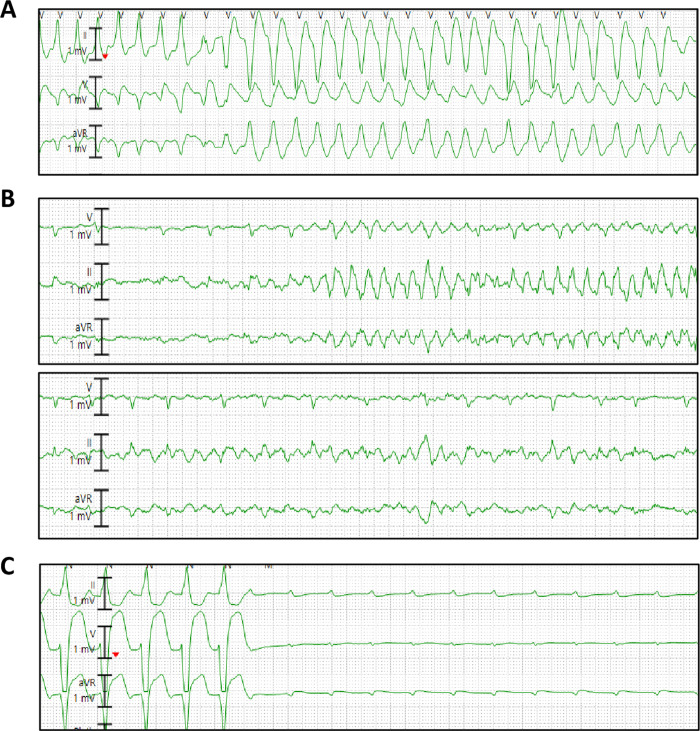
Arrhythmias have been reported frequently in COVID-19 patients, but the incidence and nature have not been well characterized. Patients admitted with COVID-19 and monitored by telemetry were prospectively enrolled in the study. Baseline characteristics, hospital course, treatment and complications were collected from the patients' medical records. Telemetry was monitored to detect the incidence of cardiac arrhythmias. The incidence and types of cardiac arrhythmias were analyzed and compared between survivors and non-survivors. Among 143 patients admitted with telemetry monitoring, overall in-hospital mortality was 25.2% (36/143 patients) during the period of observation (mean follow-up 23.7 days). Survivors were less tachycardic on initial presentation (heart rate 90.6 ± 19.6 vs. 99.3 ± 23.1 bpm, p = 0.030) and had lower troponin (peak troponin 0.03 vs. 0.18 ng/ml. p = 0.004), C-reactive protein (peak C-reactive protein 97 vs. 181 mg/dl, p = 0.029), and interleukin-6 levels (peak interleukin-6 30 vs. 246 pg/ml, p = 0.003). Sinus tachycardia, the most common arrhythmia (detected in 39.9% [57/143] of patients), occurred more frequently in non-survivors (58.3% vs. 33.6% in survivors, p = 0.009). Premature ventricular complexes occurred in 28.7% (41/143), and non-sustained ventricular tachycardia in 15.4% (22/143) of patients, with no difference between survivors and non-survivors. Sustained ventricular tachycardia and ventricular fibrillation were not frequent (seen only in 1.4% and 0.7% of patients, respectively). Contrary to reports from other regions, overall mortality was higher and ventricular arrhythmias were infrequent in this hospitalized and monitored COVID-19 population. Either disease or management-related factors could explain this divergence of clinical outcomes, and should be urgently investigated.
心律失常在 COVID-19 患者中经常被报道,但发病率和性质尚未得到很好的描述。本研究前瞻性纳入了因 COVID-19 入院并接受遥测监测的患者。从患者病历中收集了基线特征、住院过程、治疗和并发症。监测遥测以检测心律失常的发生率。分析并比较了存活者和非存活者之间心律失常的发生率和类型。在 143 例接受遥测监测的患者中,观察期间(平均随访 23.7 天)总体院内死亡率为 25.2%(36/143 例)。存活者在初始表现时心率较慢(心率 90.6 ± 19.6 与 99.3 ± 23.1 bpm,p = 0.030),肌钙蛋白峰值较低(0.03 与 0.18 ng/ml,p = 0.004),C 反应蛋白峰值较低(97 与 181 mg/dl,p = 0.029),白细胞介素-6 水平较低(峰值白细胞介素-6 30 与 246 pg/ml,p = 0.003)。窦性心动过速(在 143 例患者中有 39.9%[57/143]例患者发生)是最常见的心律失常,在非存活者中更为常见(58.3%与存活者的 33.6%相比,p = 0.009)。室性期前收缩发生在 28.7%(41/143)例患者中,非持续性室性心动过速发生在 15.4%(22/143)例患者中,存活者和非存活者之间无差异。持续性室性心动过速和心室颤动不常见(分别仅见于 1.4%和 0.7%的患者)。与其他地区的报告相反,在这个住院并接受监测的 COVID-19 人群中,总死亡率较高,室性心律失常不常见。疾病或管理相关因素可能解释了这种临床结果的差异,应紧急进行调查。