Govender Laurencia, Siwela Muthulisi
Discipline of Dietetics and Human Nutrition, School of Agricultural, Earth and Environmental Sciences, University of KwaZulu-Natal, Private Bag X01, Scottsville 3209, Pietermaritzburg 3201, South Africa.
Foods. 2020 Dec 21;9(12):1910. doi: 10.3390/foods9121910.
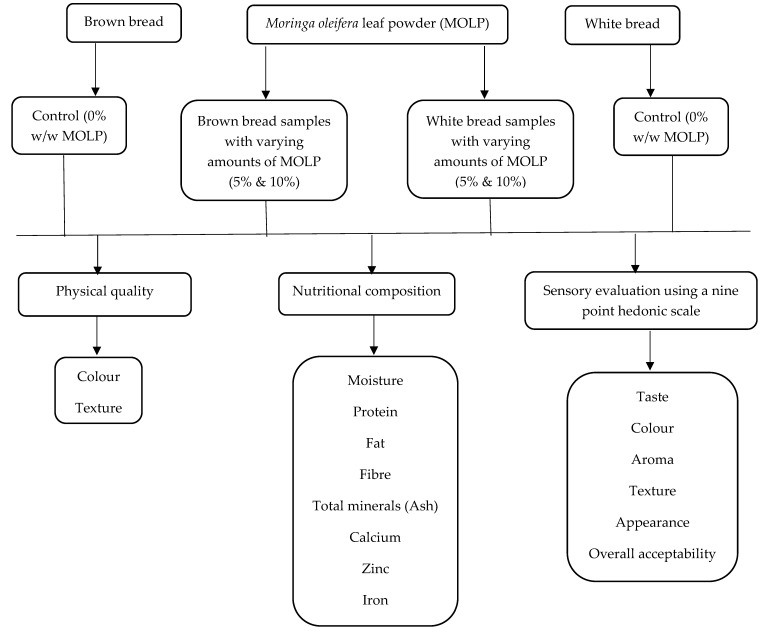
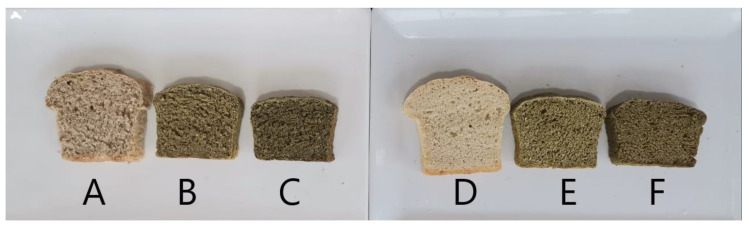
Fortifying popular, relatively affordable, but nutrient-limited staple foods, such as bread, with leaf powder (MOLP), could contribute significantly to addressing under nutrition, especially protein and mineral deficiencies, which are particularly prevalent among a large proportion of populations in sub-Saharan African countries. The current study aimed to determine the effect of MOLP on the physical quality, nutritional composition and consumer acceptability of white and brown breads. The texture, colour and nutritional composition of white and brown bread samples substituted with 5% and 10% (/) MOLPs were analysed using standard methods and compared with the control (0% MOLP). A consumer panel evaluated the acceptability of the bread samples using a nine-point hedonic scale. Bread samples became darker as the concentration of MOLP was increased, whilst nutrient levels increased. The overall consumer acceptability of the bread samples decreased with increasing concentrations of MOLP. However, brown bread samples were significantly more acceptable compared with corresponding white bread samples ( < 0.05). Under the experiment conditions of the current study, it seems that the bread containing 5% MOLP can be used to contribute significantly to addressing malnutrition, with respect to protein deficiency.
用叶粉(MOLP)强化面包等常见、相对实惠但营养有限的主食,可对解决营养不良问题做出重大贡献,尤其是蛋白质和矿物质缺乏问题,这些问题在撒哈拉以南非洲国家的很大一部分人口中尤为普遍。本研究旨在确定MOLP对白面包和黑面包的物理品质、营养成分及消费者可接受性的影响。使用标准方法分析了用5%和10%(/)MOLP替代的白面包和黑面包样品的质地、颜色和营养成分,并与对照(0%MOLP)进行比较。一个消费者小组使用九点享乐量表评估了面包样品的可接受性。随着MOLP浓度的增加,面包样品颜色变深,而营养水平提高。面包样品的总体消费者可接受性随着MOLP浓度的增加而降低。然而,黑面包样品比相应的白面包样品明显更可接受(<0.05)。在本研究的实验条件下,似乎含5%MOLP的面包可对解决蛋白质缺乏引起的营养不良问题做出重大贡献。