Department of Biology Molecular Biology Section, Faculty of Science, Ege University, Bornova, İzmir, Turkey.
Department of Parasitology, Faculty of Medicine, Ege University, Bornova, İzmir, Turkey.
Sci Rep. 2020 Dec 28;10(1):22387. doi: 10.1038/s41598-020-79645-9.
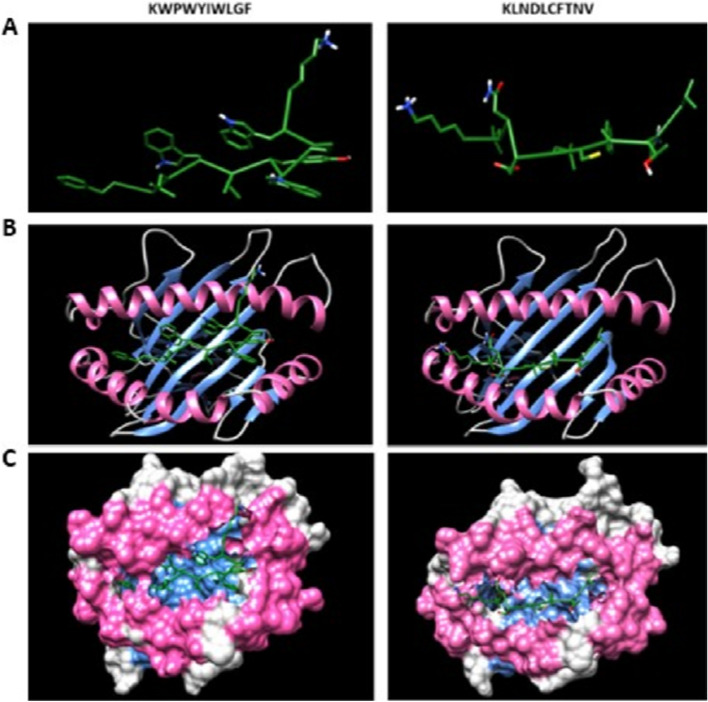
In the genome of SARS-CoV-2, the 5'-terminus encodes a polyprotein, which is further cleaved into 15 non-structural proteins whereas the 3' terminus encodes four structural proteins and eight accessory proteins. Among these 27 proteins, the present study aimed to discover likely antigenic proteins and epitopes to be used for the development of a vaccine or serodiagnostic assay using an in silico approach. For this purpose, after the full genome analysis of SARS-CoV-2 Wuhan isolate and variant proteins that are detected frequently, surface proteins including spike, envelope, and membrane proteins as well as proteins with signal peptide were determined as probable vaccine candidates whereas the remaining were considered as possible antigens to be used during the development of serodiagnostic assays. According to results obtained, among 27 proteins, 26 of them were predicted as probable antigen. In 26 proteins, spike protein was selected as the best vaccine candidate because of having a signal peptide, negative GRAVY value, one transmembrane helix, moderate aliphatic index, a big molecular weight, a long-estimated half-life, beta wrap motifs as well as having stable, soluble and non-allergic features. In addition, orf7a, orf8, and nsp-10 proteins with signal peptide were considered as potential vaccine candidates. Nucleocapsid protein and a highly antigenic GGDGKMKD epitope were identified as ideal antigens to be used in the development of serodiagnostic assays. Moreover, considering MHC-I alleles, highly antigenic KLNDLCFTNV and ITLCFTLKRK epitopes can be used to develop an epitope-based peptide vaccine.
在 SARS-CoV-2 的基因组中,5'-末端编码一种多蛋白,该多蛋白进一步被切割成 15 种非结构蛋白,而 3'-末端编码 4 种结构蛋白和 8 种辅助蛋白。在这 27 种蛋白中,本研究旨在通过计算机方法发现可能的抗原蛋白和表位,用于开发疫苗或血清学诊断检测。为此,在对 SARS-CoV-2 武汉分离株和经常检测到的变异蛋白的全基因组进行分析后,确定了包括刺突、包膜和膜蛋白在内的表面蛋白以及具有信号肽的蛋白作为可能的疫苗候选物,而其余蛋白则被认为是在开发血清学诊断检测时使用的可能抗原。根据获得的结果,在 27 种蛋白中,有 26 种被预测为可能的抗原。在 26 种蛋白中,刺突蛋白因其具有信号肽、负 GRAVY 值、一个跨膜螺旋、中等脂肪指数、较大分子量、较长估计半衰期、β 缠绕基序以及具有稳定、可溶性和非变应性特征而被选为最佳疫苗候选物。此外,具有信号肽的 orf7a、orf8 和 nsp-10 蛋白也被认为是有潜力的疫苗候选物。核衣壳蛋白和一个高度抗原性的 GGDGKMKD 表位被鉴定为开发血清学诊断检测的理想抗原。此外,考虑到 MHC-I 等位基因,高度抗原性的 KLNDLCFTNV 和 ITLCFTLKRK 表位可用于开发基于表位的肽疫苗。