Van Gool Stefaan W, Makalowski Jennifer, Fiore Simon, Sprenger Tobias, Prix Lothar, Schirrmacher Volker, Stuecker Wilfried
Immun-Onkologisches Zentrum Köln, Hohenstaufenring 30-32, 50674 Koln, Germany.
Biofocus, Berghäuser Strasse 295, 45659 Recklinghausen, Germany.
Cancers (Basel). 2020 Dec 24;13(1):32. doi: 10.3390/cancers13010032.
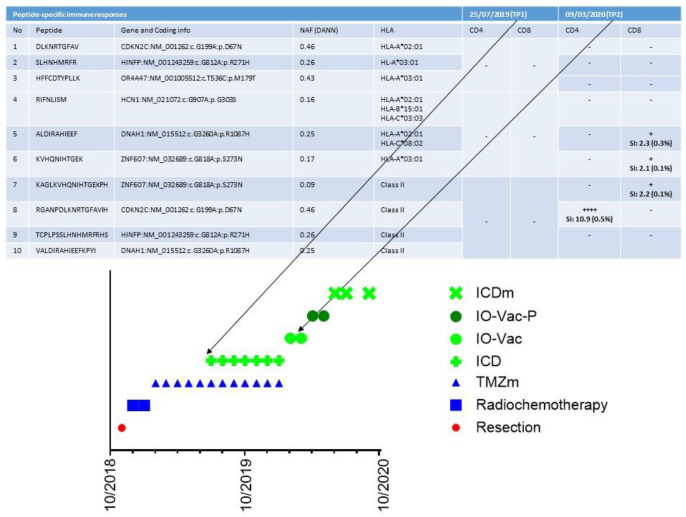
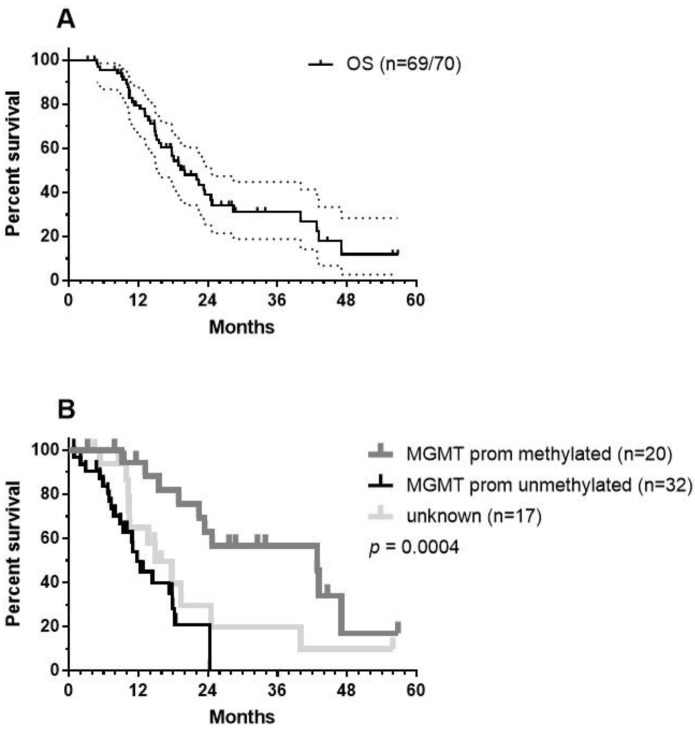
Immunotherapies represent a promising strategy for glioblastoma multiforme (GBM) treatment. Different immunotherapies include the use of checkpoint inhibitors, adoptive cell therapies such as chimeric antigen receptor (CAR) T cells, and vaccines such as dendritic cell vaccines. Antibodies have also been used as toxin or radioactive particle delivery vehicles to eliminate target cells in the treatment of GBM. Oncolytic viral therapy and other immunogenic cell death-inducing treatments bridge the antitumor strategy with immunization and installation of immune control over the disease. These strategies should be included in the standard treatment protocol for GBM. Some immunotherapies are individualized in terms of the medicinal product, the immune target, and the immune tumor-host contact. Current individualized immunotherapy strategies focus on combinations of approaches. Standardization appears to be impossible in the face of complex controlled trial designs. To define appropriate control groups, stratification according to the Recursive Partitioning Analysis classification, MGMT promotor methylation, epigenetic GBM sub-typing, tumor microenvironment, systemic immune functioning before and after radiochemotherapy, and the need for/type of symptom-relieving drugs is required. Moreover, maintenance of a fixed treatment protocol for a dynamic, deadly cancer disease in a permanently changing tumor-host immune context might be inappropriate. This complexity is illustrated using our own data on individualized multimodal immunotherapies for GBM. Individualized medicines, including multimodal immunotherapies, are a rational and optimal yet also flexible approach to induce long-term tumor control. However, innovative methods are needed to assess the efficacy of complex individualized treatments and implement them more quickly into the general health system.
免疫疗法是多形性胶质母细胞瘤(GBM)治疗的一种有前景的策略。不同的免疫疗法包括使用检查点抑制剂、过继性细胞疗法如嵌合抗原受体(CAR)T细胞,以及疫苗如树突状细胞疫苗。抗体也被用作毒素或放射性粒子递送载体,以在GBM治疗中消除靶细胞。溶瘤病毒疗法和其他诱导免疫原性细胞死亡的治疗方法将抗肿瘤策略与免疫以及对疾病的免疫控制相结合。这些策略应纳入GBM的标准治疗方案。一些免疫疗法在药品、免疫靶点和免疫肿瘤-宿主接触方面是个体化的。当前的个体化免疫疗法策略侧重于方法的组合。面对复杂的对照试验设计,标准化似乎是不可能的。为了确定合适的对照组,需要根据递归划分分析分类、MGMT启动子甲基化、表观遗传学GBM亚型、肿瘤微环境、放化疗前后的全身免疫功能,以及缓解症状药物的需求/类型进行分层。此外,在不断变化的肿瘤-宿主免疫背景下,为一种动态的致命性癌症疾病维持固定的治疗方案可能并不合适。利用我们自己关于GBM个体化多模式免疫疗法的数据说明了这种复杂性。个体化药物,包括多模式免疫疗法,是诱导长期肿瘤控制的一种合理、最优且灵活的方法。然而,需要创新方法来评估复杂个体化治疗的疗效,并更快地将其应用于一般卫生系统。