Rim Yeri Alice, Ju Ji Hyeon
Catholic iPSC Research Center, College of Medicine, The Catholic University of Korea, Seoul 06591, Korea.
Division of Rheumatology, Department of Internal Medicine, Seoul St. Mary's Hospital, Institute of Medical Science, College of Medicine, The Catholic University of Korea, Seoul 06591, Korea.
Life (Basel). 2020 Dec 23;11(1):3. doi: 10.3390/life11010003.
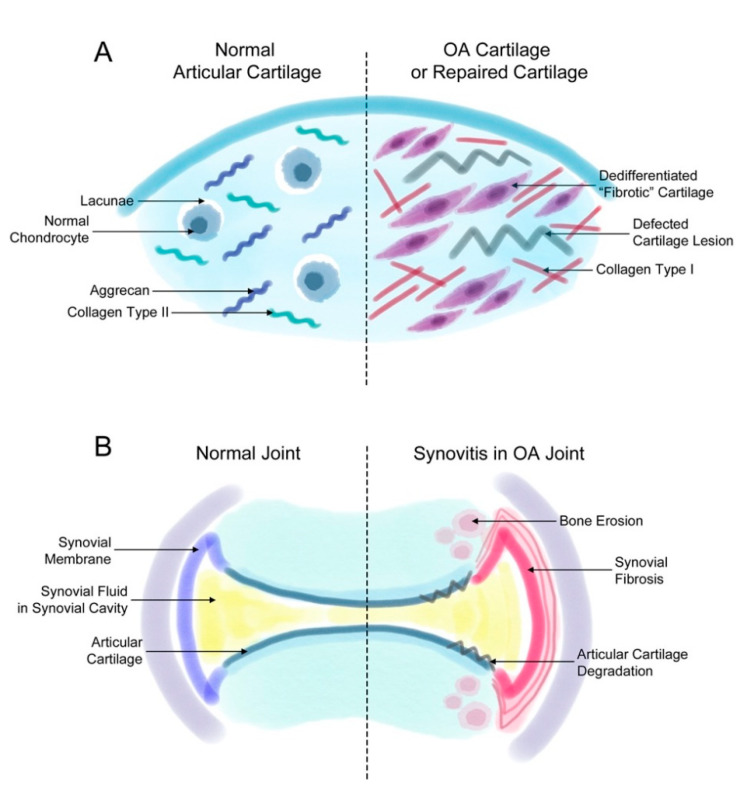
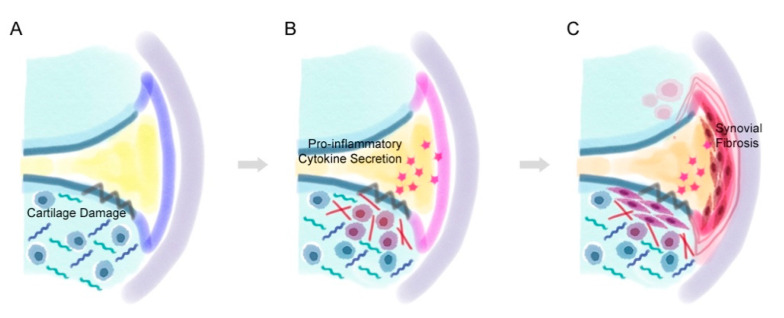
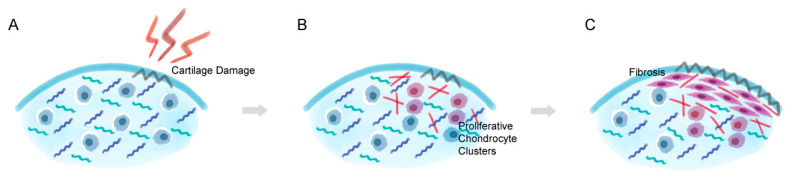
Osteoarthritis (OA) is a chronic degenerative joint disease where the main characteristics include cartilage degeneration and synovial membrane inflammation. These changes in the knee joint eventually dampen the function of the joint and restrict joint movement, which eventually leads to a stage where total joint replacement is the only treatment option. While much is still unknown about the pathogenesis and progression mechanism of OA, joint fibrosis can be a critical issue for better understanding this disease. Synovial fibrosis and the generation of fibrocartilage are the two main fibrosis-related characteristics that can be found in OA. However, these two processes remain mostly misunderstood. In this review, we focus on the fibrosis process in OA, especially in the cartilage and the synovium tissue, which are the main tissues involved in OA.
骨关节炎(OA)是一种慢性退行性关节疾病,其主要特征包括软骨退变和滑膜炎症。膝关节的这些变化最终会削弱关节功能并限制关节活动,最终导致进入全关节置换成为唯一治疗选择的阶段。虽然关于OA的发病机制和进展机制仍有很多未知之处,但关节纤维化可能是更好理解这种疾病的关键问题。滑膜纤维化和纤维软骨的形成是OA中可发现的两个主要的纤维化相关特征。然而,这两个过程大多仍未被充分理解。在本综述中,我们聚焦于OA中的纤维化过程,尤其是在软骨和滑膜组织中,它们是OA涉及的主要组织。