Wideman Cassidy E, Nguyen James, Jeffries Sean D, Winters Boyer D
Department of Psychology and Collaborative Neuroscience Program, University of Guelph, Guelph, ON N1G 2W1, Canada.
Int J Mol Sci. 2020 Dec 23;22(1):67. doi: 10.3390/ijms22010067.
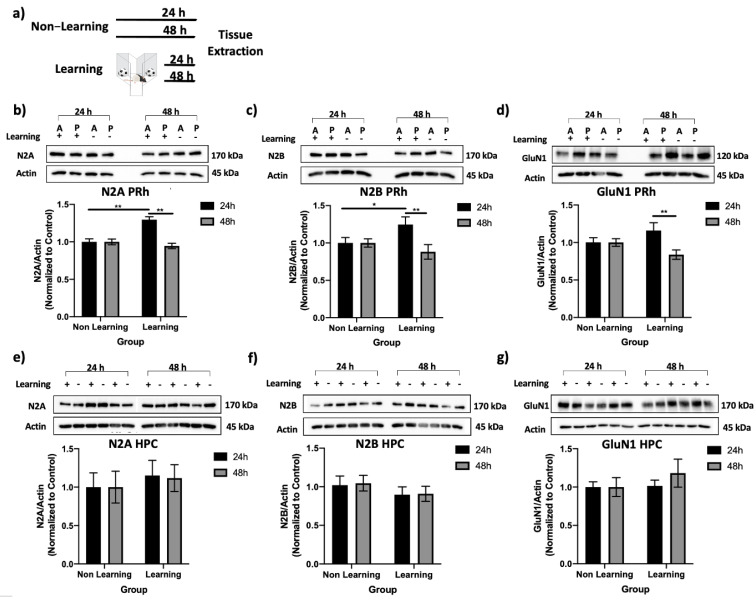
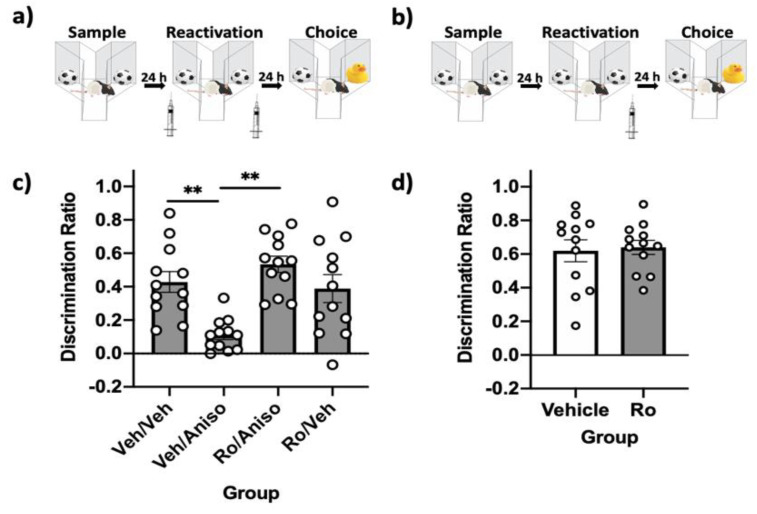
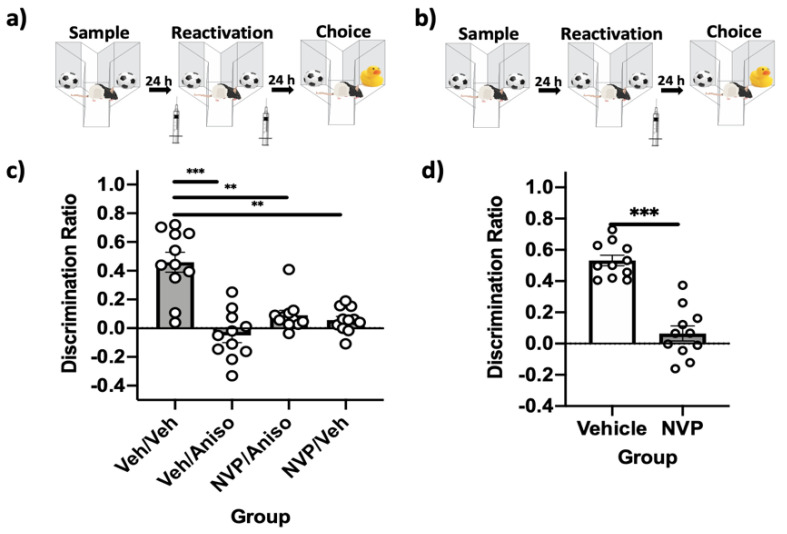
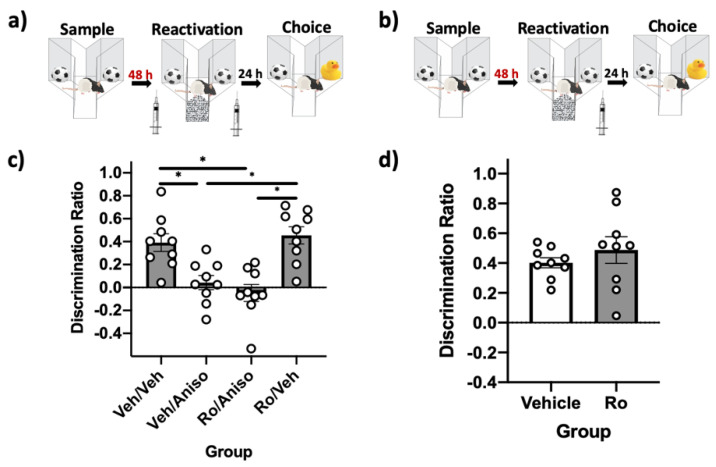
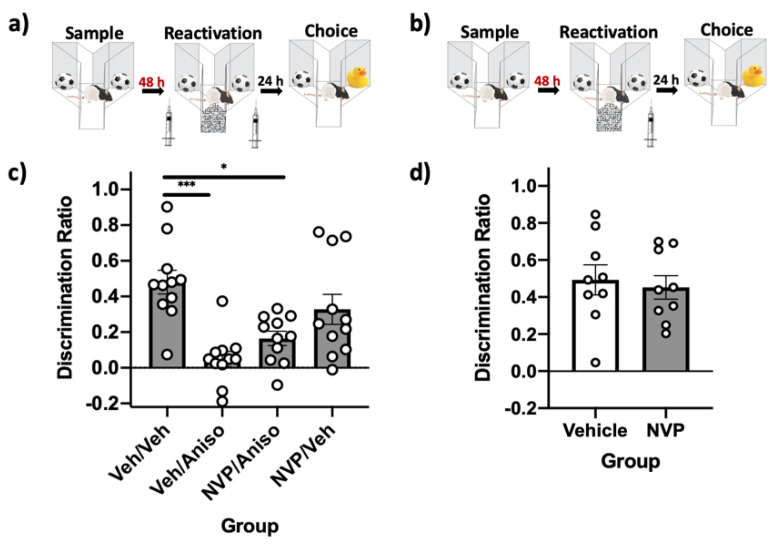
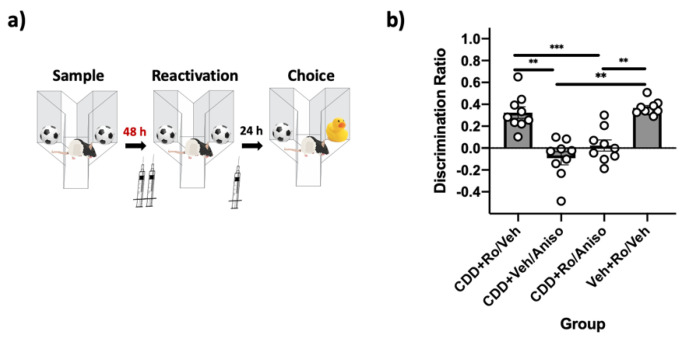
Reminder cues can destabilize consolidated memories, rendering them modifiable before they return to a stable state through the process of reconsolidation. Older and stronger memories resist this process and require the presentation of reminders along with salient novel information in order to destabilize. Previously, we demonstrated in rats that novelty-induced object memory destabilization requires acetylcholine (ACh) activity at M muscarinic receptors. Other research predominantly has focused on glutamate, which modulates fear memory destabilization and reconsolidation through GluN2B- and GluN2A-containing NMDARs, respectively. In the current study, we demonstrate the same dissociable roles of GluN2B- and N2A-containing NMDARs in perirhinal cortex (PRh) for object memory destabilization and reconsolidation when boundary conditions are absent. However, neither GluN2 receptor subtype was required for novelty-induced destabilization of remote, resistant memories. Furthermore, GluN2B and GluN2A subunit proteins were upregulated selectively in PRh 24 h after learning, but returned to baseline by 48 h, suggesting that NMDARs, unlike muscarinic receptors, have only a temporary role in object memory destabilization. Indeed, activation of M receptors in PRh at the time of reactivation effectively destabilized remote memories despite inhibition of GluN2B-containing NMDARs. These findings suggest that cholinergic activity at M receptors overrides boundary conditions to destabilize resistant memories when other established mechanisms are insufficient.
提示线索可使巩固的记忆变得不稳定,使其在通过重新巩固过程恢复到稳定状态之前可被修改。较旧且较强的记忆会抵抗这一过程,需要呈现提示线索并伴有显著的新信息才能使其不稳定。此前,我们在大鼠中证明,新奇诱导的物体记忆不稳定需要M型毒蕈碱受体处的乙酰胆碱(ACh)活性。其他研究主要集中在谷氨酸上,它分别通过含GluN2B和GluN2A的NMDAR调节恐惧记忆的不稳定和重新巩固。在当前研究中,我们证明,当不存在边界条件时,含GluN2B和N2A的NMDAR在鼻周皮质(PRh)对物体记忆不稳定和重新巩固具有相同的可分离作用。然而,对于新奇诱导的远期、抗性记忆的不稳定,两种GluN2受体亚型均非必需。此外,GluN2B和GluN2A亚基蛋白在学习后24小时在PRh中选择性上调,但在48小时时恢复到基线水平,这表明与毒蕈碱受体不同,NMDAR在物体记忆不稳定中仅起暂时作用。事实上,尽管抑制了含GluN2B的NMDAR,但在重新激活时PRh中M受体的激活有效地使远期记忆不稳定。这些发现表明,当其他既定机制不足时,M受体处的胆碱能活性会超越边界条件,使抗性记忆不稳定。