Department of Chemical Engineering, Arizona State University, Tempe, Arizona, USA.
Department of Chemical Engineering, Arizona State University, Tempe, Arizona, USA.
J Biol Chem. 2021 Jan-Jun;296:100241. doi: 10.1074/jbc.RA120.015327. Epub 2021 Jan 9.
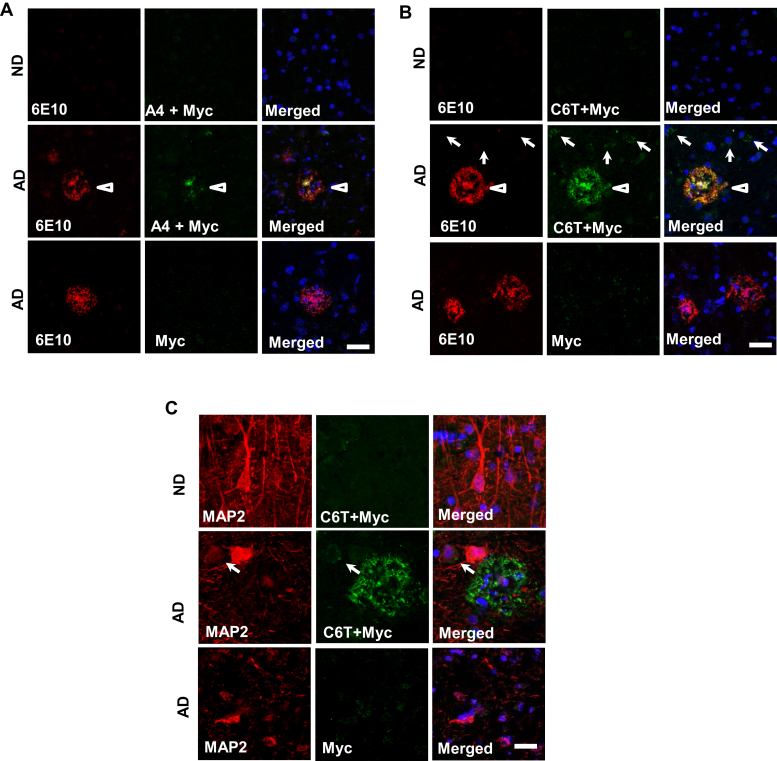
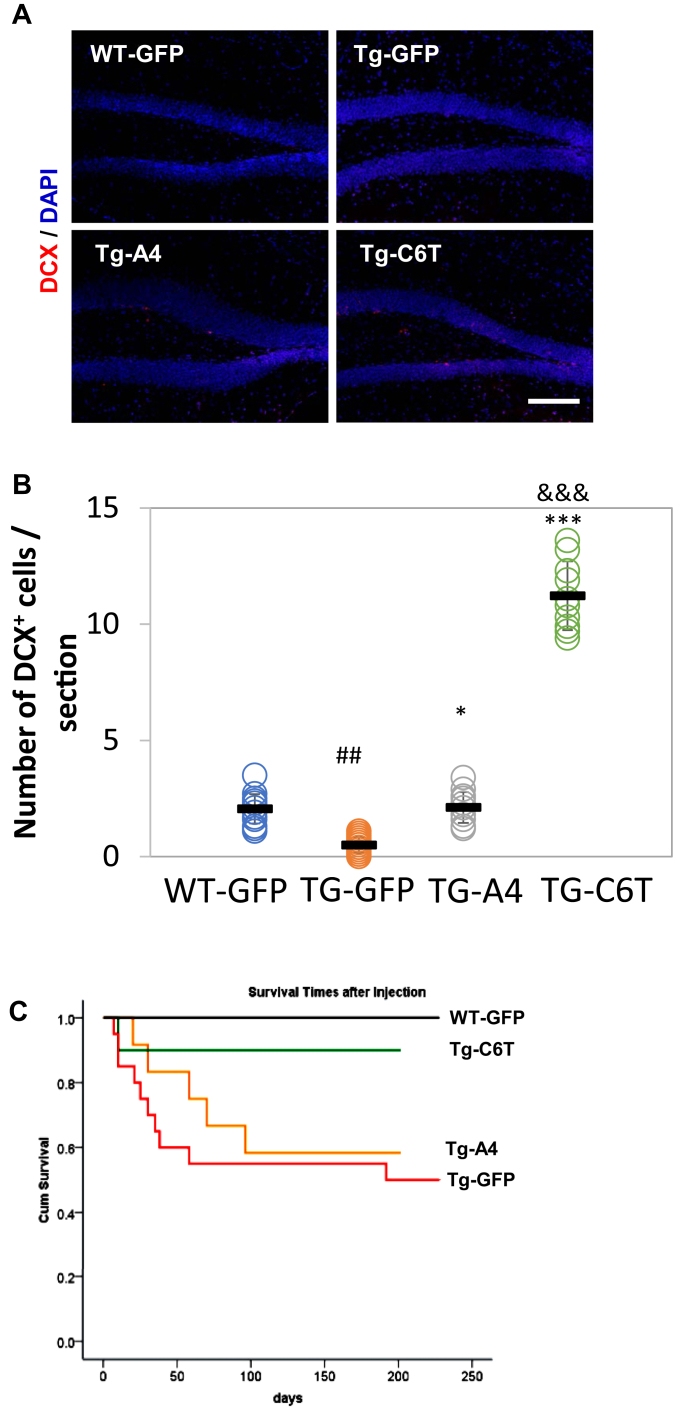
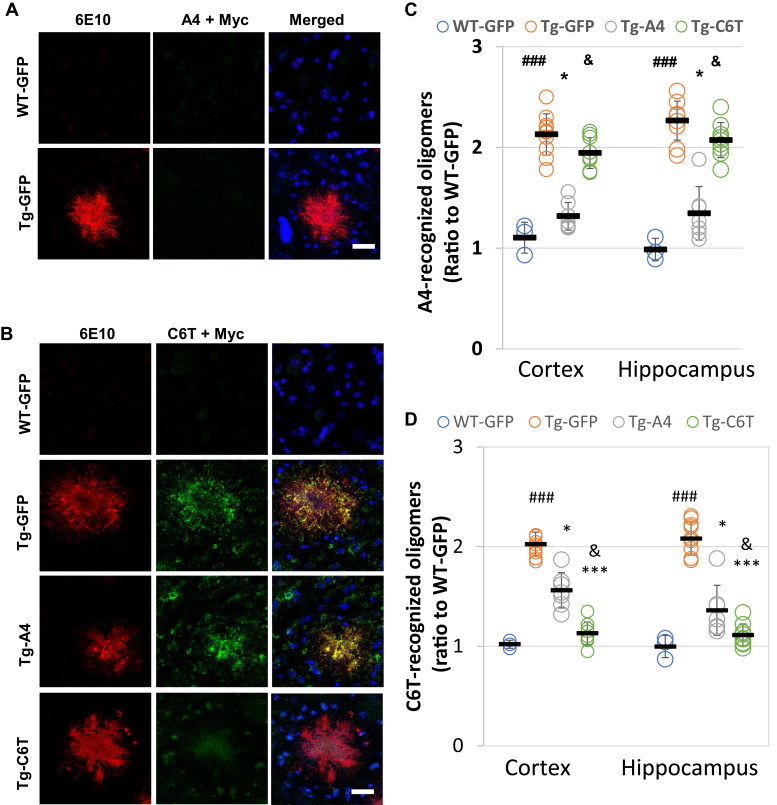
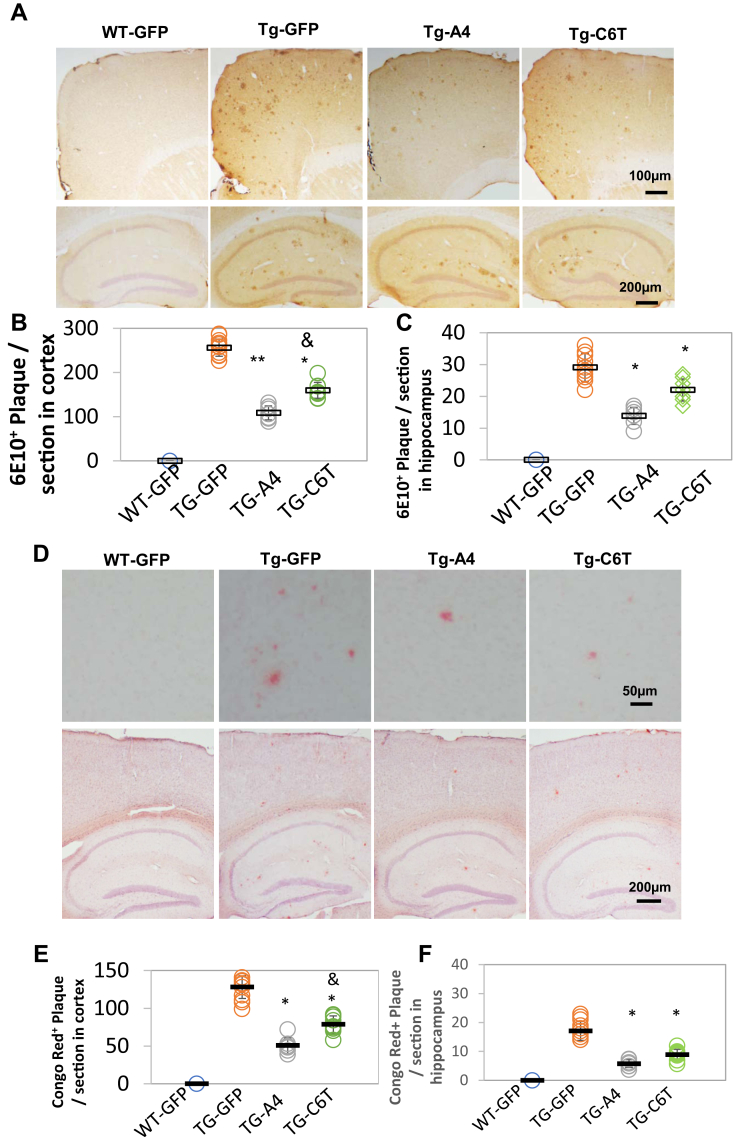
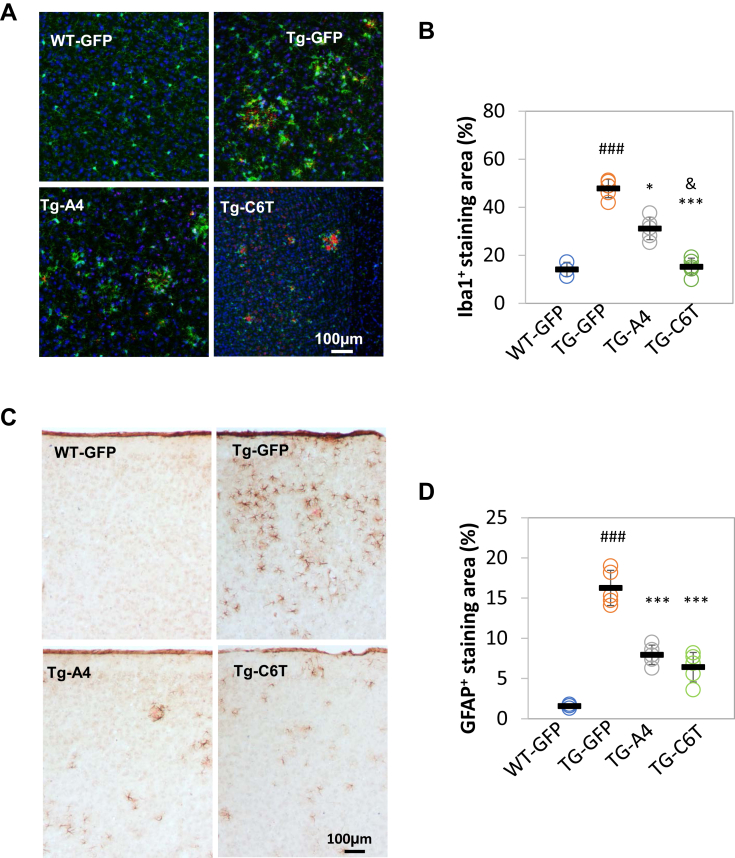
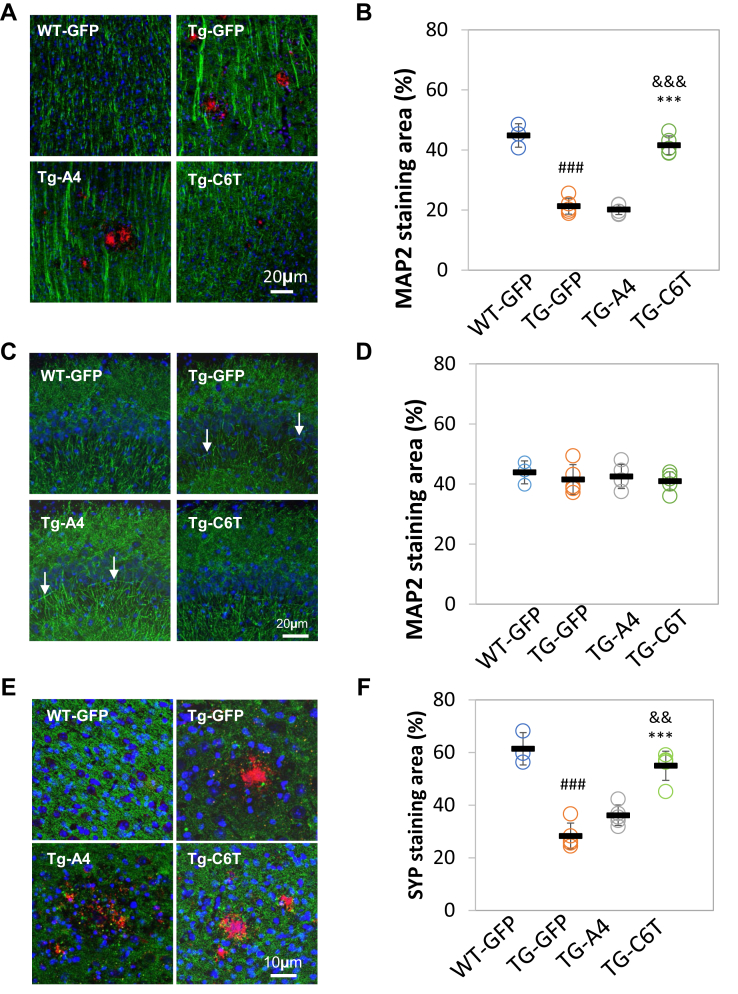
Conformationally distinct aggregates of the amyloid β (Aβ) peptide accumulate in brains of patients with Alzheimer's disease (AD), but the roles of the different aggregates in disease progression are not clear. We previously isolated two single-chain variable domain antibody fragments (scFvs), C6T and A4, that selectively bind different toxic conformational variants of oligomeric Aβ. Here, we utilize these scFvs to localize the presence of these Aβ variants in human AD brain and to demonstrate their potential as therapeutic agents for treating AD. Both A4 and C6T label oligomeric Aβ in extracellular amyloid plaques, whereas C6T also labels intracellular oligomeric Aβ in human AD brain tissue and in an AD mouse model. For therapeutic studies, the A4 and C6T scFvs were expressed in the AD mice by viral infection of liver cells. The scFvs were administered at 2 months of age, and mice sacrificed at 9 months. The scFvs contained a peptide tag to facilitate transport across the blood brain barrier. While treatment with C6T only slightly decreased Aβ deposits and plaque-associated inflammation, it restored neuronal integrity to WT levels, significantly promoted growth of new neurons, and impressively rescued survival rates to WT levels. Treatment with A4 on the other hand significantly decreased Aβ deposits but did not significantly decrease neuroinflammation or promote neuronal integrity, neurogenesis, or survival rate. These results suggest that the specific Aβ conformation targeted in therapeutic applications greatly affects the outcome, and the location of the targeted Aβ variants may also play a critical factor.
淀粉样蛋白 β (Aβ) 肽的构象不同的聚集物在阿尔茨海默病 (AD) 患者的大脑中积累,但不同聚集物在疾病进展中的作用尚不清楚。我们之前分离了两种单链可变结构域抗体片段 (scFv),C6T 和 A4,它们选择性地结合寡聚 Aβ 的不同毒性构象变异体。在这里,我们利用这些 scFv 来定位人 AD 脑中这些 Aβ 变体的存在,并证明它们作为治疗 AD 的治疗剂的潜力。A4 和 C6T 均标记细胞外淀粉样斑块中的寡聚 Aβ,而 C6T 还标记人 AD 脑组织和 AD 小鼠模型中的细胞内寡聚 Aβ。在治疗研究中,通过肝细胞的病毒感染将 A4 和 C6T scFv 在 AD 小鼠中表达。scFv 在 2 个月大时给药,9 个月时处死小鼠。scFv 含有一个肽标签,以促进其穿过血脑屏障。虽然用 C6T 治疗仅略微减少 Aβ 沉积和斑块相关炎症,但它将神经元完整性恢复到 WT 水平,显著促进新神经元的生长,并令人印象深刻地将存活率提高到 WT 水平。另一方面,用 A4 治疗显著减少 Aβ 沉积,但对神经炎症或促进神经元完整性、神经发生或存活率没有显著影响。这些结果表明,治疗应用中针对的特定 Aβ 构象极大地影响了结果,而靶向 Aβ 变体的位置也可能是一个关键因素。