Bowen Jennifer L, Giblin Anne E, Murphy Anna E, Bulseco Ashley N, Deegan Linda A, Johnson David S, Nelson James A, Mozdzer Thomas J, Sullivan Hillary L
Northeastern University's Marine Science Center, Nahant, Massachusetts, and a senior scientist at INSPIRE Environmental, Newport, Rhode Island.
Marine Biological Laboratory, Woods Hole, Massachusetts, and is now an assistant professor of Marine Science at Eckerd College, St. Petersburg, Florida.
Bioscience. 2020 Dec 9;70(12):1108-1119. doi: 10.1093/biosci/biaa140. eCollection 2020 Dec.
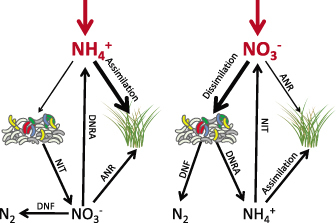
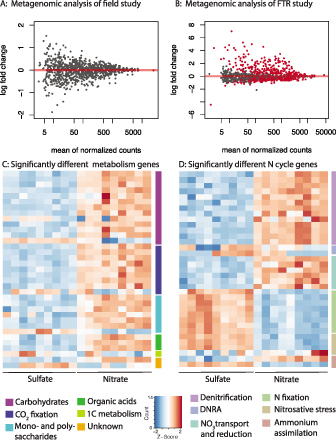
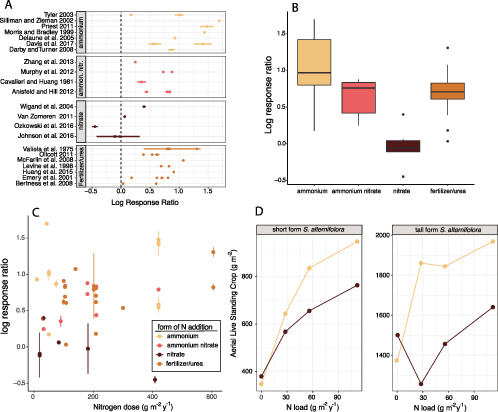
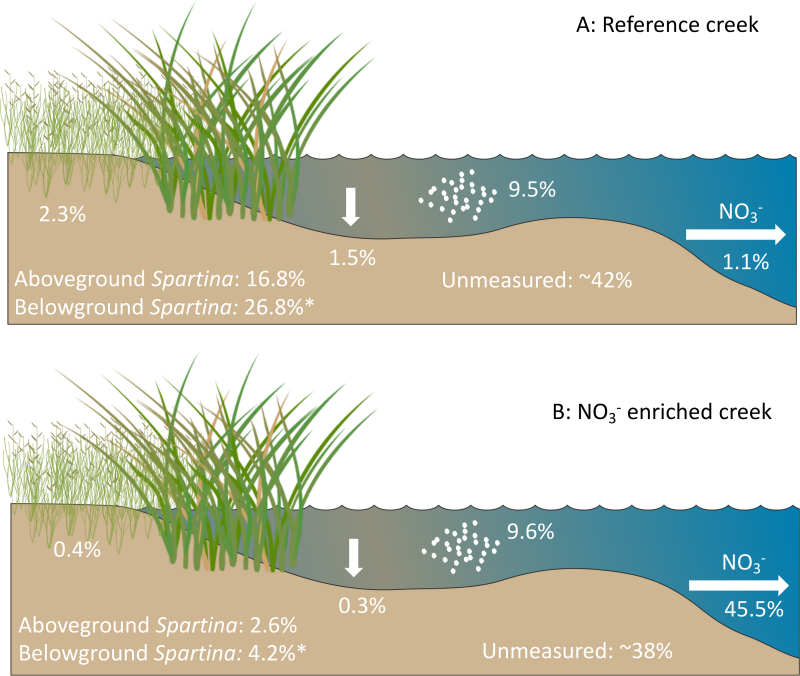
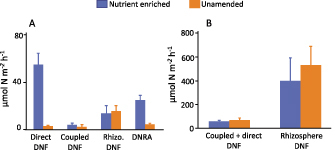
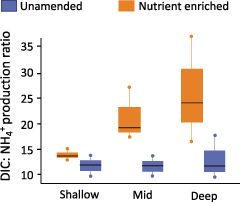
Excess reactive nitrogen (N) flows from agricultural, suburban, and urban systems to coasts, where it causes eutrophication. Coastal wetlands take up some of this N, thereby ameliorating the impacts on nearshore waters. Although the consequences of N on coastal wetlands have been extensively studied, the effect of the specific form of N is not often considered. Both oxidized N forms (nitrate, NO3-) and reduced forms (ammonium, NH4) can relieve nutrient limitation and increase primary production. However, unlike NH4, NO3- can also be used as an electron acceptor for microbial respiration. We present results demonstrating that, in salt marshes, microbes use NO3- to support organic matter decomposition and primary production is less stimulated than when enriched with reduced N. Understanding how different forms of N mediate the balance between primary production and decomposition is essential for managing coastal wetlands as N enrichment and sea level rise continue to assail our coasts.
过量的活性氮从农业、郊区和城市系统流入沿海地区,导致水体富营养化。沿海湿地吸收了部分这种氮,从而减轻了对近岸水域的影响。尽管氮对沿海湿地的影响已得到广泛研究,但通常未考虑氮的具体形态的影响。氧化态氮(硝酸盐,NO3-)和还原态氮(铵,NH4)都可以缓解养分限制并增加初级生产力。然而,与NH4不同,NO3-还可以用作微生物呼吸的电子受体。我们展示的结果表明,在盐沼中,微生物利用NO3-来支持有机物分解,与添加还原态氮时相比,初级生产力受到的刺激较小。随着氮富集和海平面上升继续冲击我们的海岸,了解不同形态的氮如何调节初级生产与分解之间的平衡对于管理沿海湿地至关重要。