Department of Microbiology, Immunology, and Molecular Genetics, David Geffen School of Medicine at UCLA, 615 Charles E. Young Drive South, BSRB 245F, Los Angeles, CA 90095, USA.
Molecular Biology Institute, University of California, Los Angeles, Los Angeles, CA 90095, USA.
STAR Protoc. 2020 Sep 15;1(3):100113. doi: 10.1016/j.xpro.2020.100113. eCollection 2020 Dec 18.
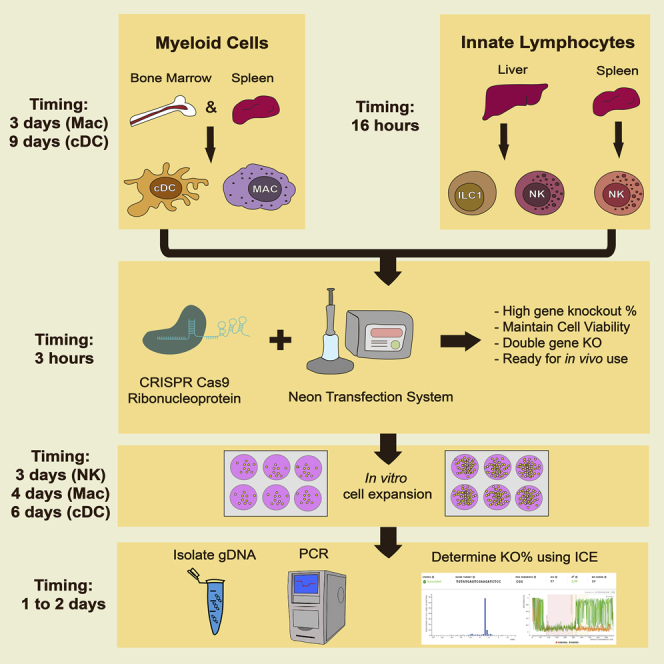
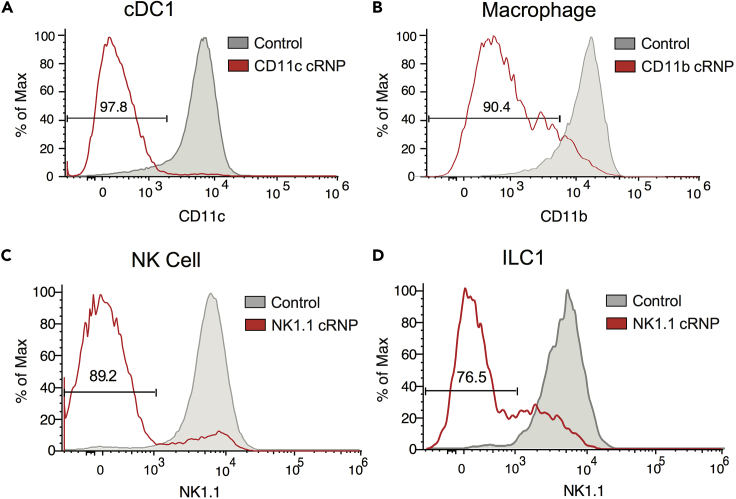
CRISPR-Cas9 genome engineering can be used to functionally investigate the complex mechanisms of immune system regulation. Decades of work have aimed to genetically reprogram innate immunity, but current approaches are inefficient or nonspecific, limiting their use. Here, we detail an optimized strategy for non-viral CRISPR-Cas9 ribonucleoprotein (cRNP) genomic editing of primary innate lymphocytes (ILCs) and myeloid lineage cells, resulting in high-efficiency editing of target gene expression from a single electroporation. For complete details on the use and execution of this protocol, please refer to Riggan et al. (2020).
CRISPR-Cas9 基因组工程可用于功能研究免疫系统调控的复杂机制。几十年来,人们一直致力于对先天免疫进行基因重编程,但目前的方法效率低下或特异性差,限制了它们的应用。在此,我们详细介绍了一种优化的非病毒 CRISPR-Cas9 核糖核蛋白(cRNP)对原代先天淋巴细胞(ILCs)和髓系细胞基因组编辑的策略,通过单次电穿孔即可实现靶基因表达的高效编辑。有关该方案使用和实施的完整详细信息,请参考 Riggan 等人(2020 年)。