Guo Hongchang, Ma Ke, Hao Wenjing, Jiao Yao, Li Ping, Chen Jing, Xu Chen, Xu Fu-Jian, Lau Wayne Bond, Du Jie, Ma Xin-Liang, Li Yulin
Beijing Anzhen Hospital of Capital Medical University and Beijing Institute of Heart Lung and Blood Vessel Diseases, Beijing, China.
State Key Laboratory of Chemical Resource Engineering, and Beijing Laboratory of Biomedical Materials, Beijing University of Chemical Technology, Beijing, China.
Clin Transl Med. 2020 Dec;10(8):e242. doi: 10.1002/ctm2.242.
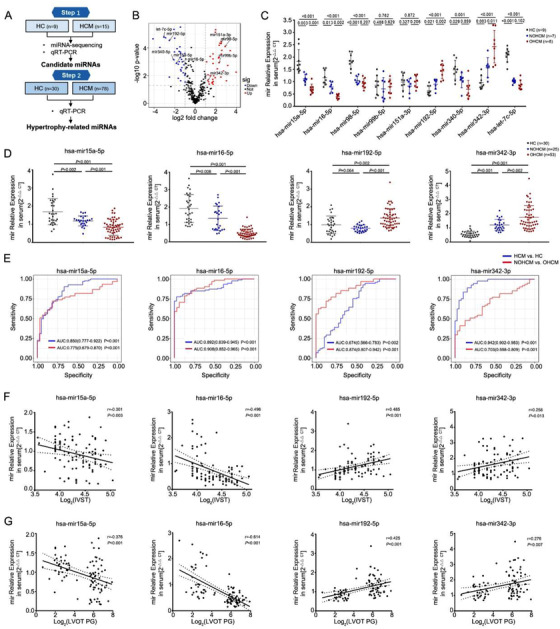
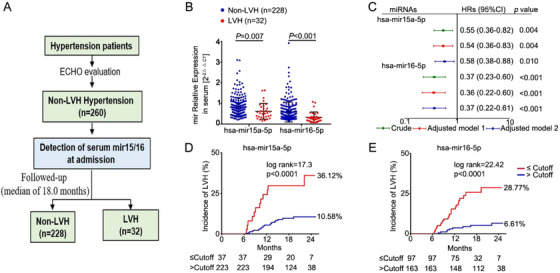
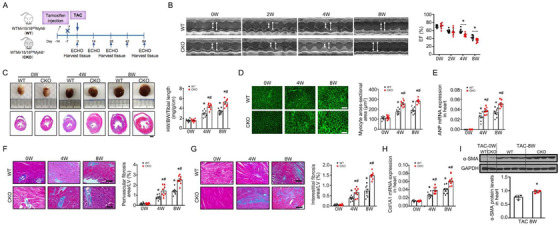
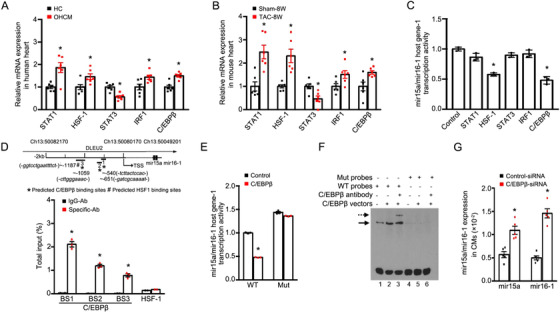
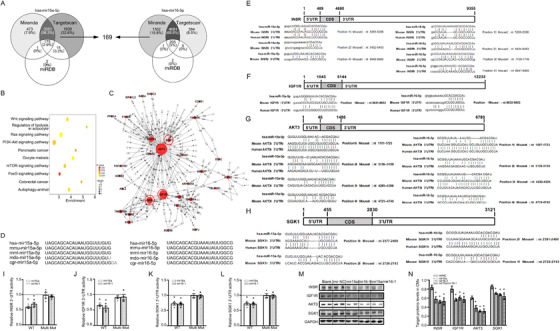
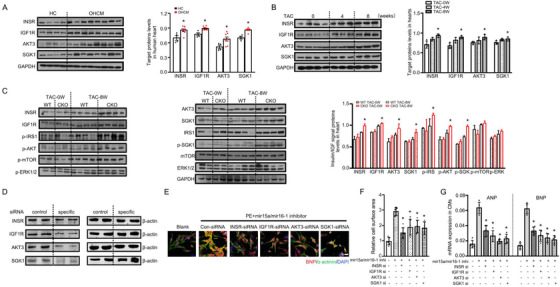
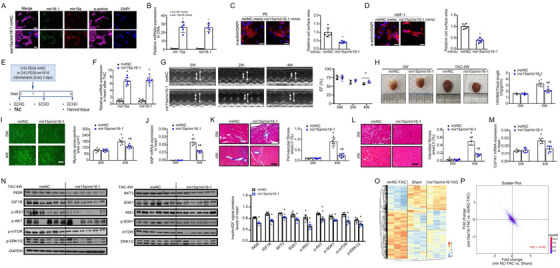
In response to pathological stimuli, the heart develops ventricular hypertrophy that progressively decompensates and leads to heart failure. miRNAs are increasingly recognized as pathogenic factors, clinically relevant biomarkers, and potential therapeutic targets. We identified that mir15a/mir16-1 cluster was negatively correlated with hypertrophic severity in patients with hypertrophic cardiomyopathy. The mir15a/mir16-1 expression was enriched in cardiomyocytes (CMs), decreased in hypertrophic human hearts, and decreased in mouse hearts after transverse aortic constriction (TAC). CM-specific mir15a/mir16-1 knockout promoted cardiac hypertrophy and dysfunction after TAC. CCAAT/enhancer binding protein (C/EBP)β was responsible for the downregulation of mir15a/mir16-1 cluster transcription. Mechanistically, mir15a/mir16-1 cluster attenuated the insulin/IGF1 signal transduction cascade by inhibiting multiple targets, including INSR, IGF-1R, AKT3, and serum/glucocorticoid regulated kinase 1 (SGK1). Pro-hypertrophic response induced by mir15a/mir16-1 inhibition was abolished by knockdown of insulin receptor (INSR), insulin like growth factor 1 receptor (IGF1R), AKT3, or SGK1. In vivo systemic delivery of mir15a/mir16-1 by nanoparticles inhibited the hypertrophic phenotype induced by TAC. Importantly, decreased serum mir15a/mir16-1 levels predicted the occurrence of left ventricular hypertrophy in a cohort of patients with hypertension. Therefore, mir15a/mir16-1 cluster is a promising therapeutic target and biomarker for cardiac hypertrophy.
在病理刺激下,心脏会发生心室肥厚,进而逐渐失代偿并导致心力衰竭。微小RNA(miRNAs)越来越被认为是致病因素、临床相关生物标志物和潜在的治疗靶点。我们发现,mir15a/mir16-1簇与肥厚型心肌病患者的肥厚严重程度呈负相关。mir15a/mir16-1在心肌细胞(CMs)中表达丰富,在肥厚的人类心脏中降低,在经主动脉缩窄(TAC)后的小鼠心脏中也降低。CM特异性敲除mir15a/mir16-1会促进TAC后的心脏肥大和功能障碍。CCAAT/增强子结合蛋白(C/EBP)β负责mir15a/mir16-1簇转录的下调。机制上,mir15a/mir16-1簇通过抑制多个靶点,包括胰岛素受体(INSR)、胰岛素样生长因子1受体(IGF-1R)、AKT3和血清/糖皮质激素调节激酶1(SGK1),减弱胰岛素/IGF1信号转导级联反应。敲低胰岛素受体(INSR)、胰岛素样生长因子1受体(IGF1R)、AKT3或SGK1可消除mir15a/mir16-1抑制诱导的促肥大反应。通过纳米颗粒在体内全身递送mir15a/mir16-1可抑制TAC诱导的肥大表型。重要的是,血清mir15a/mir16-1水平降低可预测一组高血压患者左心室肥厚的发生。因此,mir15a/mir16-1簇是心脏肥大有前景的治疗靶点和生物标志物。