Kabłak-Ziembicka Anna, Badacz Rafał, Okarski Michał, Wawak Magdalena, Przewłocki Tadeusz, Podolec Jakub
Department of Interventional Cardiology, Institute of Cardiology, Jagiellonian University Medical College, Krakow, Poland.
Noninvasive Cardiovascular Laboratory, the John Paul II Hospital, Krakow, Poland.
Arch Med Sci. 2023 Aug 25;19(5):1360-1381. doi: 10.5114/aoms/169775. eCollection 2023.
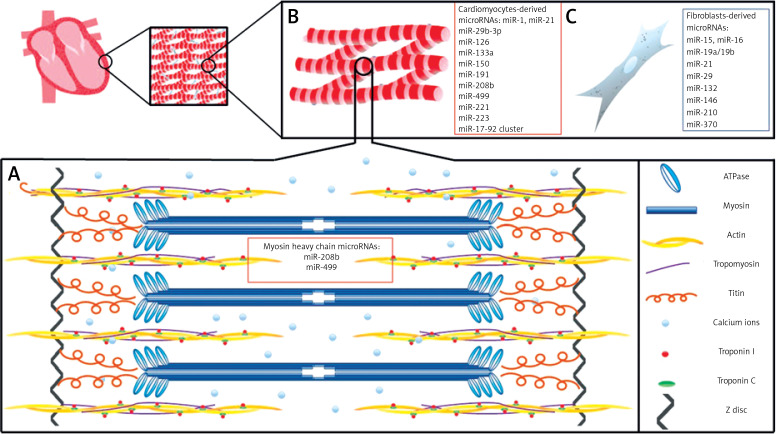
MicroRNAs are small non-coding post-translational biomolecules which, when expressed, modify their target genes. It is estimated that microRNAs regulate production of approximately 60% of all human proteins and enzymes that are responsible for major physiological processes. In cardiovascular disease pathophysiology, there are several cells that produce microRNAs, including endothelial cells, vascular smooth muscle cells, macrophages, platelets, and cardiomyocytes. There is a constant crosstalk between microRNAs derived from various cell sources. Atherosclerosis initiation and progression are driven by many pro-inflammatory and pro-thrombotic microRNAs. Atherosclerotic plaque rupture is the leading cause of cardiovascular death resulting from acute coronary syndrome (ACS) and leads to cardiac remodeling and fibrosis following ACS. MicroRNAs are powerful modulators of plaque progression and transformation into a vulnerable state, which can eventually lead to plaque rupture. There is a growing body of evidence which demonstrates that following ACS, microRNAs might inhibit fibroblast proliferation and scarring, as well as harmful apoptosis of cardiomyocytes, and stimulate fibroblast reprogramming into induced cardiac progenitor cells. In this review, we focus on the role of cardiomyocyte-derived and cardiac fibroblast-derived microRNAs that are involved in the regulation of genes associated with cardiomyocyte and fibroblast function and in atherosclerosis-related cardiac ischemia. Understanding their mechanisms may lead to the development of microRNA cocktails that can potentially be used in regenerative cardiology.
微小RNA是一类小的非编码翻译后生物分子,表达时会修饰其靶基因。据估计,微小RNA调节着约60%负责主要生理过程的人类蛋白质和酶的产生。在心血管疾病病理生理学中,有几种细胞会产生微小RNA,包括内皮细胞、血管平滑肌细胞、巨噬细胞、血小板和心肌细胞。源自各种细胞来源的微小RNA之间存在持续的相互作用。动脉粥样硬化的起始和进展由许多促炎和促血栓形成的微小RNA驱动。动脉粥样硬化斑块破裂是急性冠状动脉综合征(ACS)导致心血管死亡的主要原因,并导致ACS后的心脏重塑和纤维化。微小RNA是斑块进展和转变为易损状态的强大调节因子,最终可导致斑块破裂。越来越多的证据表明,在ACS后,微小RNA可能抑制成纤维细胞增殖和瘢痕形成,以及心肌细胞的有害凋亡,并刺激成纤维细胞重编程为诱导性心脏祖细胞。在本综述中,我们重点关注心肌细胞衍生和心脏成纤维细胞衍生的微小RNA在调节与心肌细胞和成纤维细胞功能相关的基因以及动脉粥样硬化相关的心脏缺血中的作用。了解它们的机制可能会导致开发可用于再生心脏病学的微小RNA组合。