Nutritional Genomics and Epigenomics Group, IMDEA Food, CEI UAM + CSIC, 28049 Madrid, Spain.
Department of Nutritional Sciences, School of Life Course Sciences, Faculty of Life Sciences and Medicine, King's College London, London WC2R 2LS, UK.
Nutrients. 2020 Dec 28;13(1):69. doi: 10.3390/nu13010069.
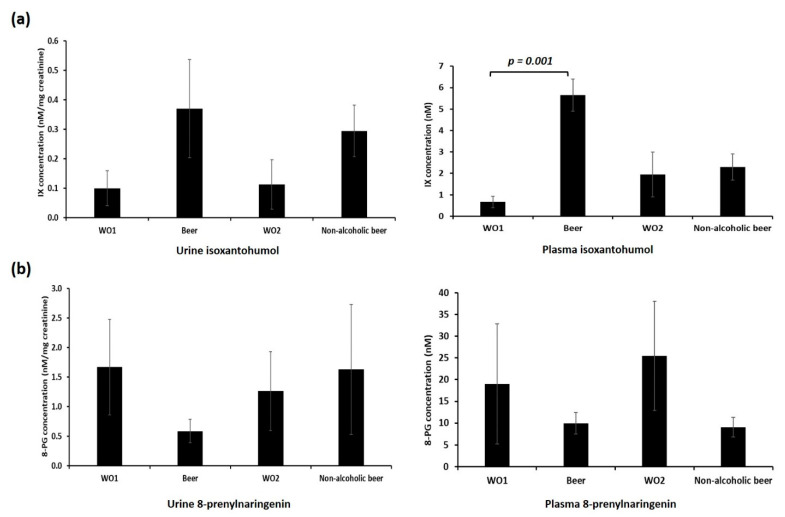
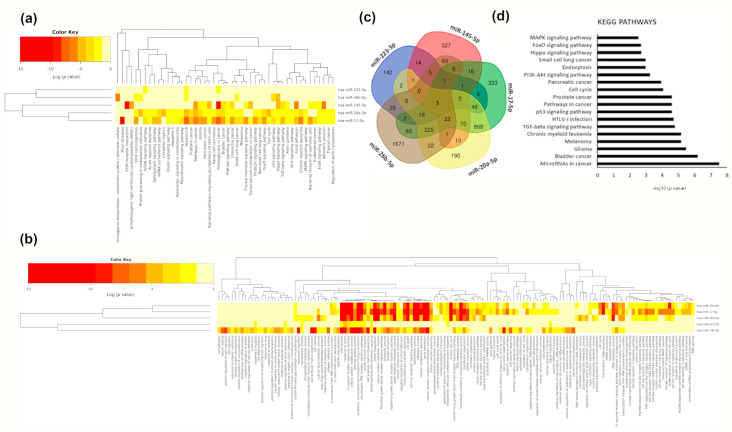
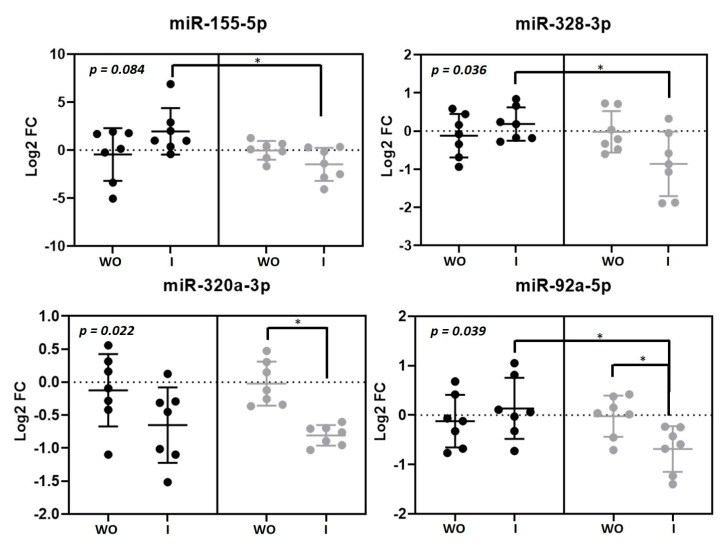
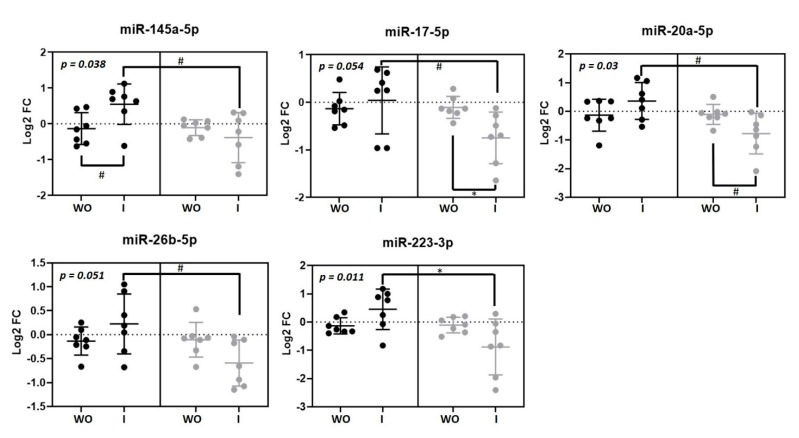
Beer is a popular beverage and some beneficial effects have been attributed to its moderate consumption. We carried out a pilot study to test if beer and non-alcoholic beer consumption modify the levels of a panel of 53 cardiometabolic microRNAs in plasma and macrophages. Seven non-smoker men aged 30-65 with high cardiovascular risk were recruited for a non-randomised cross-over intervention consisting of the ingestion of 500 mL/day of beer or non-alcoholic beer for 14 days with a 7-day washout period between interventions. Plasma and urine isoxanthohumol were measured to assess compliance with interventions. Monocytes were isolated and differentiated into macrophages, and plasma and macrophage microRNAs were analysed by quantitative real-time PCR. Anthropometric, biochemistry and dietary parameters were also measured. We found an increase in plasma miR-155-5p, miR-328-3p, and miR-92a-3p after beer and a decrease after non-alcoholic beer consumption. Plasma miR-320a-3p levels decreased with both beers. Circulating miR-320a-3p levels correlated with LDL-cholesterol. We found that miR-17-5p, miR-20a-5p, miR-145-5p, miR-26b-5p, and miR-223-3p macrophage levels increased after beer and decreased after non-alcoholic beer consumption. Functional analyses suggested that modulated microRNAs were involved in catabolism, nutrient sensing, Toll-like receptors signalling and inflammation. We concluded that beer and non-alcoholic beer intake modulated differentially plasma and macrophage microRNAs. Specifically, microRNAs related to inflammation increased after beer consumption and decreased after non-alcoholic beer consumption.
啤酒是一种受欢迎的饮料,其适度饮用被认为具有一些有益的作用。我们进行了一项初步研究,以测试啤酒和无酒精啤酒的摄入是否会改变血浆和巨噬细胞中 53 种代谢相关 microRNA 的水平。我们招募了 7 名年龄在 30-65 岁之间、心血管风险较高的不吸烟男性,进行一项非随机交叉干预研究,这些男性连续 14 天每天摄入 500 毫升啤酒或无酒精啤酒,两次干预之间有 7 天的洗脱期。测量血浆和尿液中的异黄腐醇来评估干预措施的依从性。分离单核细胞并分化为巨噬细胞,通过定量实时 PCR 分析血浆和巨噬细胞 microRNA。还测量了人体测量学、生物化学和饮食参数。我们发现,啤酒摄入后血浆 miR-155-5p、miR-328-3p 和 miR-92a-3p 增加,而无酒精啤酒摄入后则减少。两种啤酒摄入后血浆 miR-320a-3p 水平降低。循环 miR-320a-3p 水平与 LDL-胆固醇相关。我们发现,miR-17-5p、miR-20a-5p、miR-145-5p、miR-26b-5p 和 miR-223-3p 巨噬细胞水平在啤酒摄入后增加,而在无酒精啤酒摄入后降低。功能分析表明,调节后的 microRNAs 参与了代谢、营养感应、Toll 样受体信号和炎症。我们得出结论,啤酒和无酒精啤酒的摄入以不同的方式调节了血浆和巨噬细胞 microRNAs。具体来说,与炎症相关的 microRNAs 在啤酒摄入后增加,在无酒精啤酒摄入后减少。