Division of Pharmaceutical Sciences, University of Wisconsin-Madison, Madison, WI 53705-2222, USA.
Dis Model Mech. 2021 Jan 1;14(1). doi: 10.1242/dmm.046417. Epub 2021 Jan 22.
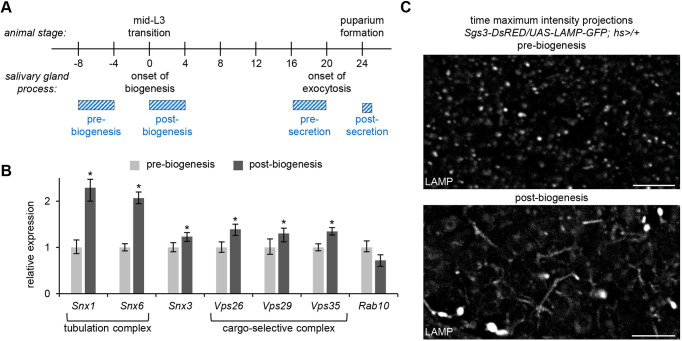
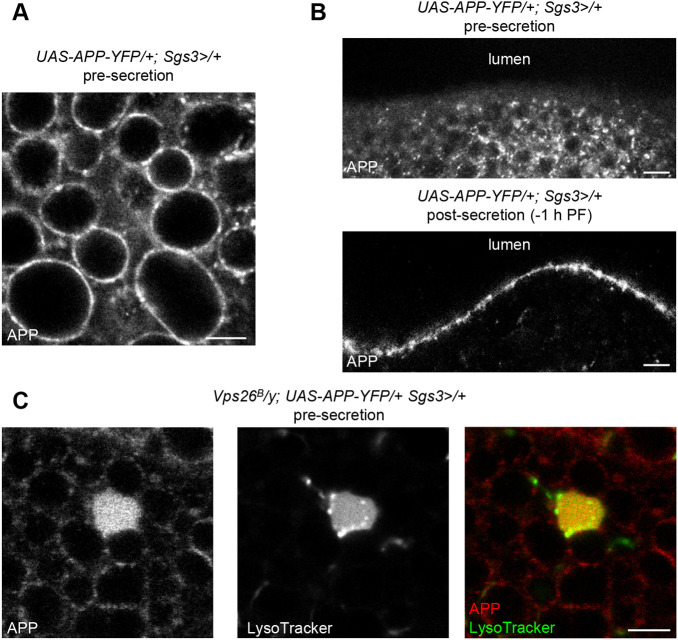
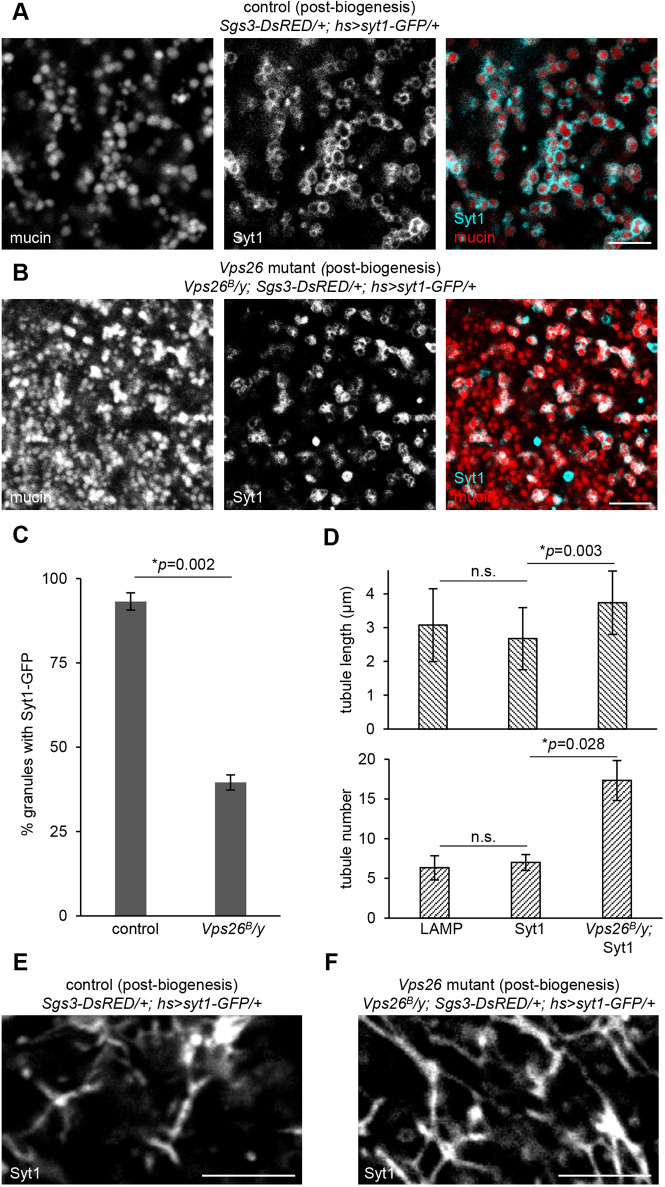
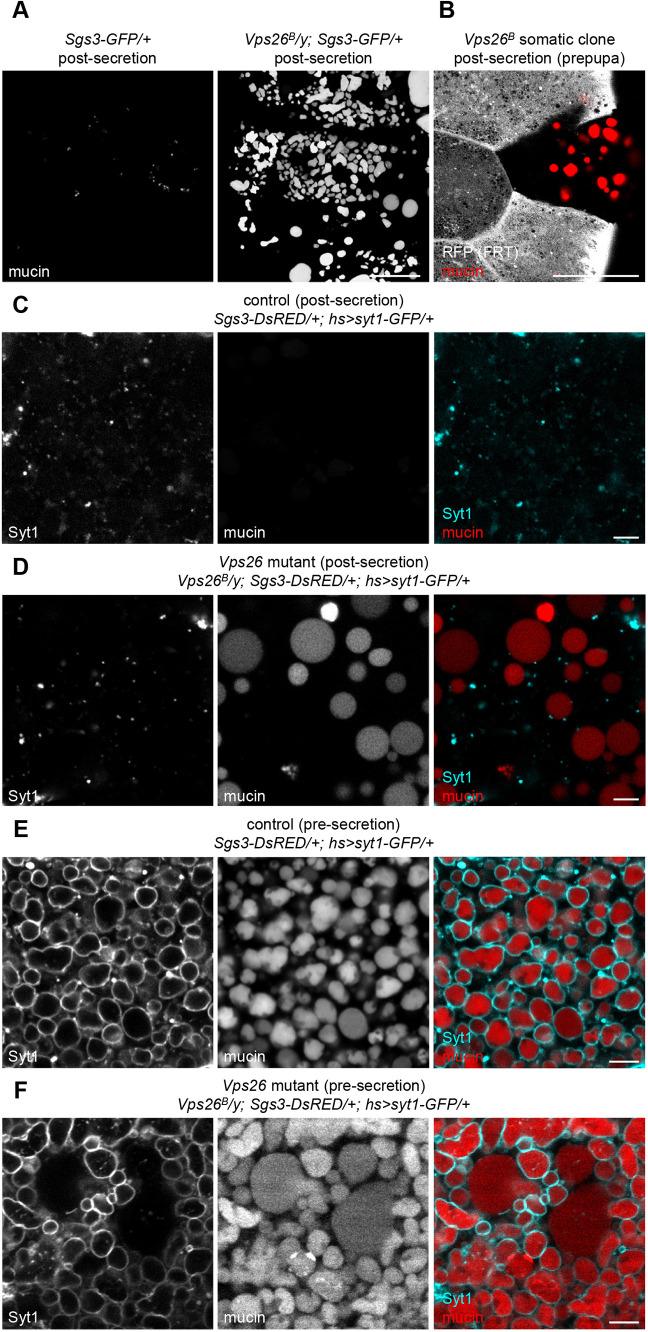
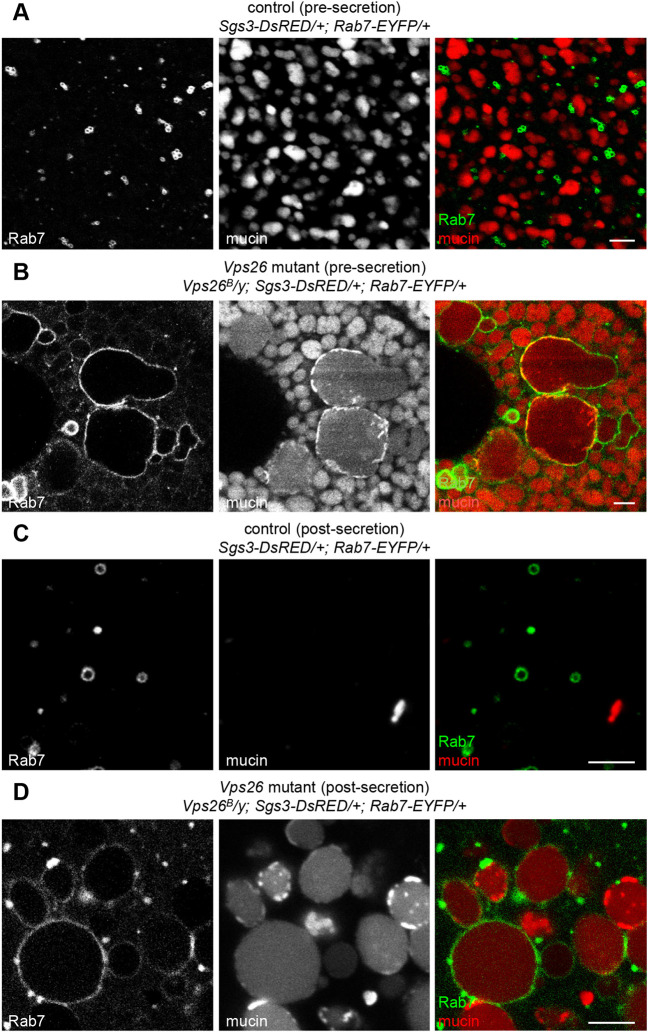
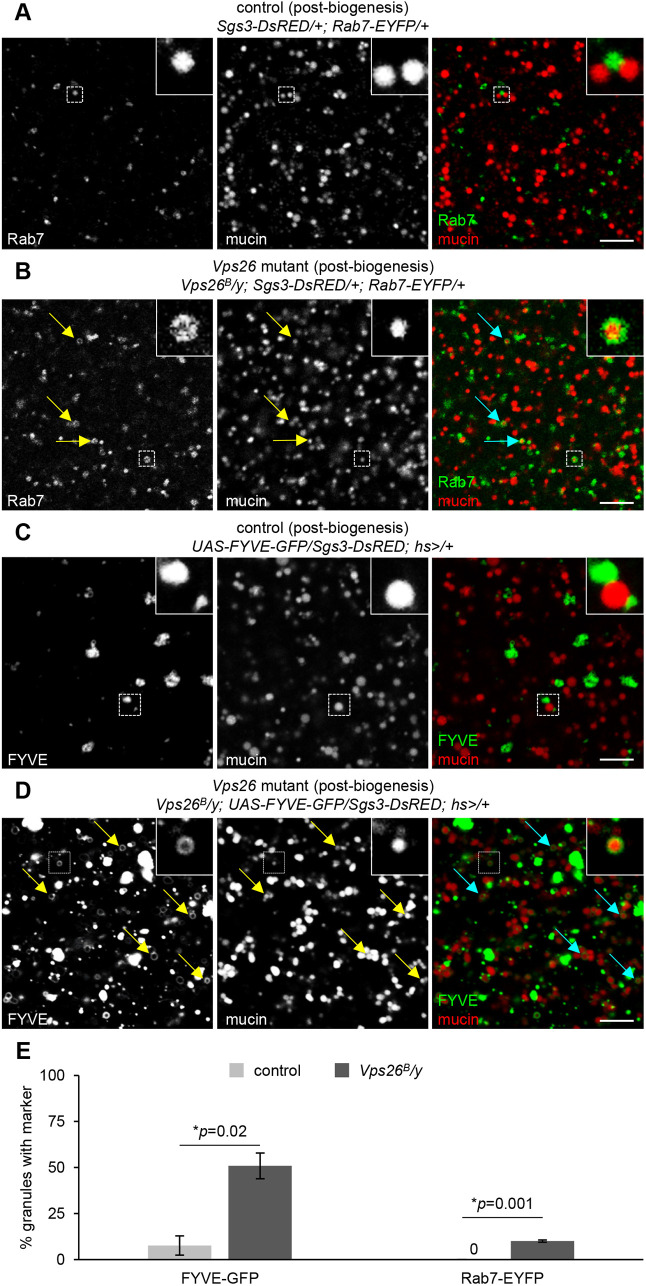
Intracellular trafficking is a basic and essential cellular function required for delivery of proteins to the appropriate subcellular destination; this process is especially demanding in professional secretory cells, which synthesize and secrete massive quantities of cargo proteins via regulated exocytosis. The Drosophila larval salivary glands are composed of professional secretory cells that synthesize and secrete mucin proteins at the onset of metamorphosis. Using the larval salivary glands as a model system, we have identified a role for the highly conserved retromer complex in trafficking of secretory granule membrane proteins. We demonstrate that retromer-dependent trafficking via endosomal tubules is induced at the onset of secretory granule biogenesis, and that recycling via endosomal tubules is required for delivery of essential secretory granule membrane proteins to nascent granules. Without retromer function, nascent granules do not contain the proper membrane proteins; as a result, cargo from these defective granules is mistargeted to Rab7-positive endosomes, where it progressively accumulates to generate dramatically enlarged endosomes. Retromer complex dysfunction is strongly associated with neurodegenerative diseases, including Alzheimer's disease, characterized by accumulation of amyloid β (Aβ). We show that ectopically expressed amyloid precursor protein (APP) undergoes regulated exocytosis in salivary glands and accumulates within enlarged endosomes in retromer-deficient cells. These results highlight recycling of secretory granule membrane proteins as a critical step during secretory granule maturation and provide new insights into our understanding of retromer complex function in secretory cells. These findings also suggest that missorting of secretory cargo, including APP, may contribute to the progressive nature of neurodegenerative disease.
细胞内运输是将蛋白质递送到适当亚细胞靶位所必需的基本和关键的细胞功能;在专业分泌细胞中,这个过程要求特别高,因为这些细胞通过调节性胞吐作用合成和分泌大量的货物蛋白。果蝇幼虫唾液腺由专业分泌细胞组成,这些细胞在变态开始时合成和分泌粘蛋白蛋白。我们使用幼虫唾液腺作为模型系统,鉴定了高度保守的逆行体复合物在分泌颗粒膜蛋白运输中的作用。我们证明,在分泌颗粒发生生物发生时,通过内体小管的逆行体依赖性运输被诱导,并且通过内体小管的再循环对于将必需的分泌颗粒膜蛋白递送到新生颗粒是必需的。没有逆行体功能,新生颗粒就不会含有适当的膜蛋白;因此,这些有缺陷的颗粒中的货物被错误靶向到 Rab7 阳性内体,在那里它逐渐积累,产生显著增大的内体。逆行体复合物功能障碍与神经退行性疾病密切相关,包括阿尔茨海默病,其特征是淀粉样β(Aβ)的积累。我们表明,异位表达的淀粉样前体蛋白(APP)在唾液腺中经历调节性胞吐作用,并在逆行体缺陷细胞中的扩大的内体中积累。这些结果强调了分泌颗粒膜蛋白的再循环是分泌颗粒成熟过程中的关键步骤,并为我们理解逆行体复合物在分泌细胞中的功能提供了新的见解。这些发现还表明,包括 APP 在内的分泌货物的错误分拣可能导致神经退行性疾病的进行性。