Italian Institute for Genomic Medicine, c/o IRCCS, Str. Prov.le 142, km 3.95, 10060 Candiolo, Italy.
Candiolo Cancer Institute, FPO-IRCCS, Str. Prov.le 142, km 3.95, 10060 Candiolo, Italy.
Int J Mol Sci. 2021 Oct 29;22(21):11773. doi: 10.3390/ijms222111773.
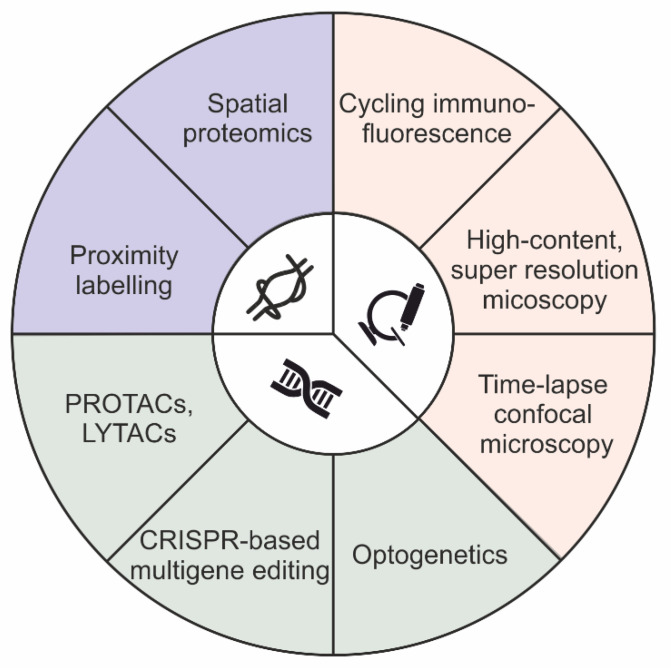
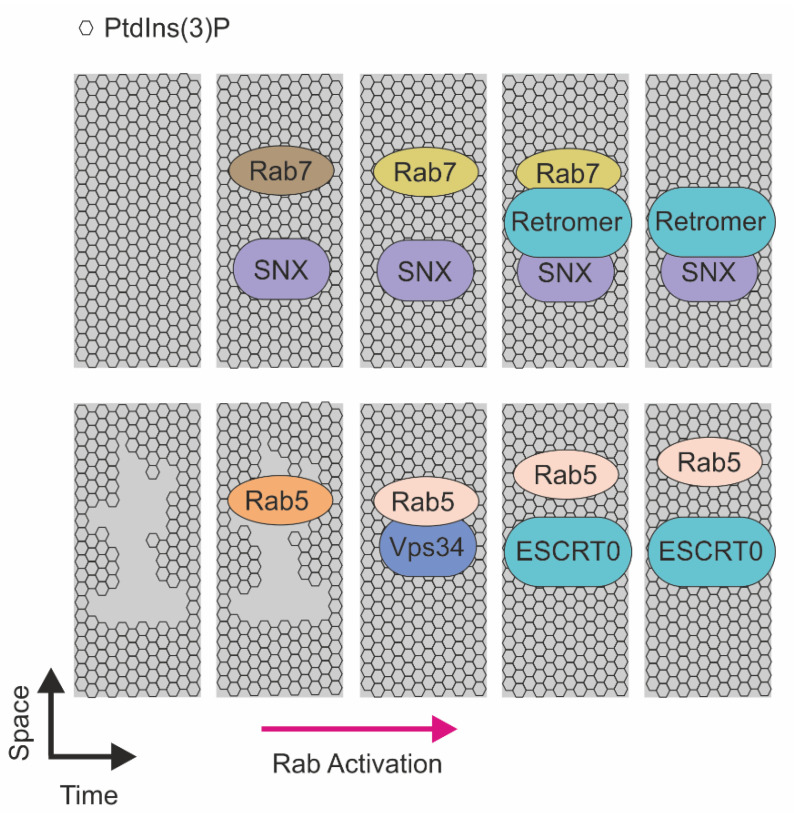
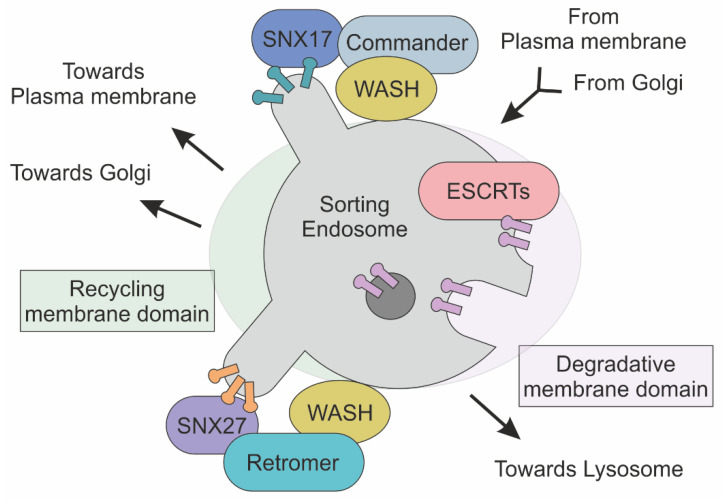
Membrane trafficking is all about time. Automation in such a biological process is crucial to ensure management and delivery of cellular cargoes with spatiotemporal precision. Shared molecular regulators and differential engagement of trafficking components improve robustness of molecular sorting. Sequential recruitment of low affinity protein complexes ensures directionality of the process and, concomitantly, serves as a kinetic proofreading mechanism to discriminate cargoes from the whole endocytosed material. This strategy helps cells to minimize losses and operating errors in membrane trafficking, thereby matching the appealed deadline. Here, we summarize the molecular pathways of molecular sorting, focusing on their timing and efficacy. We also highlight experimental procedures and genetic approaches to robustly probe these pathways, in order to guide mechanistic studies at the interface between biochemistry and quantitative biology.
膜运输与时间息息相关。在这样一个生物学过程中实现自动化对于确保细胞货物的时空精度管理和传递至关重要。共享的分子调节剂和运输成分的差异化参与提高了分子分拣的鲁棒性。低亲和力蛋白复合物的顺序募集确保了过程的方向性,同时作为一种动力学校验机制,将货物与整个内吞的物质区分开来。这种策略有助于细胞在膜运输过程中最小化损失和操作错误,从而匹配所呼吁的截止日期。在这里,我们总结了分子分拣的分子途径,重点关注它们的时间和效率。我们还强调了用于稳健探测这些途径的实验程序和遗传方法,以便在生物化学和定量生物学之间的界面指导机制研究。