• 文献检索
  • 文档翻译
  • 深度研究
  • 学术资讯
  • Suppr Zotero 插件Zotero 插件
  • 邀请有礼
  • 套餐&价格
  • 历史记录
应用&插件
Suppr Zotero 插件Zotero 插件浏览器插件Mac 客户端Windows 客户端微信小程序
定价
高级版会员购买积分包购买API积分包
服务
文献检索文档翻译深度研究API 文档MCP 服务
关于我们
关于 Suppr公司介绍联系我们用户协议隐私条款
关注我们

Suppr 超能文献

核心技术专利:CN118964589B侵权必究
粤ICP备2023148730 号-1Suppr @ 2026

文献检索

告别复杂PubMed语法,用中文像聊天一样搜索,搜遍4000万医学文献。AI智能推荐,让科研检索更轻松。

立即免费搜索

文件翻译

保留排版,准确专业,支持PDF/Word/PPT等文件格式,支持 12+语言互译。

免费翻译文档

深度研究

AI帮你快速写综述,25分钟生成高质量综述,智能提取关键信息,辅助科研写作。

立即免费体验

描述使用肝微生理系统测定药物毒性、代谢和积累的可重复性。

Characterizing the reproducibility in using a liver microphysiological system for assaying drug toxicity, metabolism, and accumulation.

机构信息

Center for Drug Evaluation and Research, Office of Translational Sciences, Office of Clinical Pharmacology, Division of Applied Regulatory Science, US Food and Drug Administration, Silver Spring, Maryland, USA.

CN Bio Innovations Limited, Cambridge, UK.

出版信息

Clin Transl Sci. 2021 May;14(3):1049-1061. doi: 10.1111/cts.12969. Epub 2021 Apr 3.

DOI:10.1111/cts.12969
PMID:33382907
原文链接:https://pmc.ncbi.nlm.nih.gov/articles/PMC8212739/
Abstract

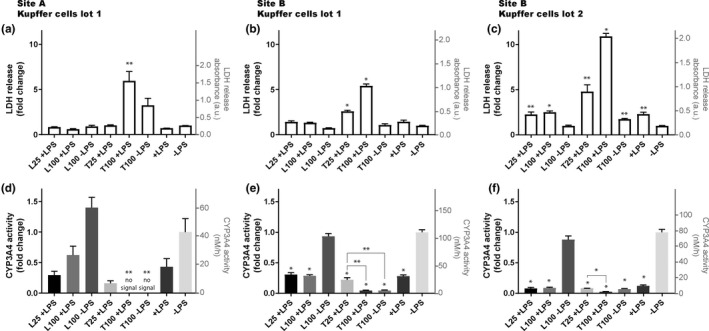
Liver microphysiological systems (MPSs) are promising models for predicting hepatic drug effects. Yet, after a decade since their introduction, MPSs are not routinely used in drug development due to lack of criteria for ensuring reproducibility of results. We characterized the feasibility of a liver MPS to yield reproducible outcomes of experiments assaying drug toxicity, metabolism, and intracellular accumulation. The ability of the liver MPS to reproduce hepatotoxic effects was assessed using trovafloxacin, which increased lactate dehydrogenase (LDH) release and reduced cytochrome P450 3A4 (CYP3A4) activity. These observations were made in two test sites and with different batches of Kupffer cells. Upon culturing equivalent hepatocytes in the MPS, spheroids, and sandwich cultures, differences between culture formats were detected in CYP3A4 activity and albumin production. Cells in all culture formats exhibited different sensitivities to hepatotoxicant exposure. Hepatocytes in the MPS were more functionally stable than those of other culture platforms, as CYP3A4 activity and albumin secretion remained prominent for greater than 18 days in culture, whereas functional decline occurred earlier in spheroids (12 days) and sandwich cultures (7 days). The MPS was also demonstrated to be suitable for metabolism studies, where CYP3A4 activity, troglitazone metabolites, diclofenac clearance, and intracellular accumulation of chloroquine were quantified. To ensure reproducibility between studies with the MPS, the combined use of LDH and CYP3A4 assays were implemented as quality control metrics. Overall results indicated that the liver MPS can be used reproducibly in general drug evaluation applications. Study outcomes led to general considerations and recommendations for using liver MPSs. Study Highlights WHAT IS THE CURRENT KNOWLEDGE ON THE TOPIC? Microphysiological systems (MPSs) have been designed to recreate organ- or tissue-specific characteristics of extracellular microenvironments that enhance the physiological relevance of cells in culture. Liver MPSs enable long-lasting and stable culture of hepatic cells by culturing them in three-dimensions and exposing them to fluid flow. WHAT QUESTION DID THIS STUDY ADDRESS? What is the functional performance relative to other cell culture platforms and the reproducibility of a liver MPS for assessing drug development and evaluation questions, such as toxicity, metabolism, and pharmacokinetics? WHAT DOES THIS STUDY ADD TO OUR KNOWLEDGE? The liver MPS systematically detected the toxicity of trovafloxacin. When compared with spheroids and sandwich cultures, this system had a more stable function and different sensitivity to troglitazone, tamoxifen, and digoxin. Quantifying phase II metabolism of troglitazone and intracellular accumulation of chloroquine demonstrated the potential use of the liver MPS for studying drug metabolism and pharmacokinetics. Quality control criteria for assessing chip function were key for reliably using the liver MPS. HOW MIGHT THIS CHANGE CLINICAL PHARMACOLOGY OR TRANSLATIONAL SCIENCE? Due to its functional robustness and physiological relevance (3D culture, cells expose to fluid flow and co-culture of different cell types), the liver MPS can, in a reproducible manner: (i) detect inflammatory-induced drug toxicity, as demonstrated with trovafloxacin, (ii) detect the toxicity of other drugs, such as troglitazone, tamoxifen, and digoxin, with different effects than those detected in spheroids and sandwich cultures, (iii) enable studies of hepatic function that rely on prolonged cellular activity, and (iv) detect phase II metabolites and drug accumulation to potentially support the interpretation of clinical data. The integration of MPSs in drug development will be facilitated by careful evaluation of performance and reproducibility as performed in this study.

摘要

肝脏微生理系统(MPS)是预测肝药物效应的有前途的模型。然而,自引入以来已经过去了十年,由于缺乏确保结果重现性的标准,MPS 并未在药物开发中常规使用。我们描述了肝脏 MPS 产生可重现的药物毒性、代谢和细胞内积累实验结果的可行性。使用 trovafloxacin 评估了肝脏 MPS 重现肝毒性作用的能力,trovafloxacin 增加了乳酸脱氢酶(LDH)的释放并降低了细胞色素 P450 3A4(CYP3A4)的活性。这些观察结果是在两个测试站点和不同批次的库普弗细胞中进行的。当在 MPS、球体和三明治培养物中培养等量的肝细胞时,在 CYP3A4 活性和白蛋白产生方面检测到培养物格式之间的差异。所有培养物格式中的细胞对肝毒性暴露的敏感性不同。与其他培养平台相比,MPS 中的肝细胞具有更高的功能稳定性,因为 CYP3A4 活性和白蛋白分泌在培养 18 天以上时仍然显著,而球体(12 天)和三明治培养物(7 天)中的功能下降更早发生。还证明 MPS 适用于代谢研究,其中定量了 CYP3A4 活性、曲格列酮代谢物、双氯芬酸清除率和氯喹的细胞内积累。为了确保 MPS 之间研究的重现性,实施了 LDH 和 CYP3A4 测定的联合使用作为质量控制指标。总体结果表明,肝脏 MPS 可在一般药物评估应用中重复使用。研究结果导致了对使用肝脏 MPS 的一般考虑和建议。研究重点目前在该主题上的知识是什么?微生理系统(MPS)旨在重现细胞外微环境的器官或组织特异性特征,从而增强培养细胞的生理相关性。肝脏 MPS 通过在三维空间中培养它们并使它们暴露于流体流动来实现对肝细胞的长期稳定培养。本研究解决了哪些问题?肝脏 MPS 相对于其他细胞培养平台的功能性能以及用于评估药物开发和评估问题(如毒性、代谢和药代动力学)的肝脏 MPS 的重现性如何?本研究为我们的知识增加了什么?肝脏 MPS 系统地检测了 trovafloxacin 的毒性。与球体和三明治培养物相比,该系统具有更稳定的功能,并且对 troglitazone、他莫昔芬和地高辛的敏感性不同。定量 troglitazone 的 II 期代谢和氯喹的细胞内积累表明,肝脏 MPS 具有用于研究药物代谢和药代动力学的潜力。用于评估芯片功能的质量控制标准是可靠使用肝脏 MPS 的关键。这将如何改变临床药理学或转化科学?由于其功能稳健性和生理相关性(3D 培养、细胞暴露于流体流动和不同细胞类型的共培养),肝脏 MPS 可以以可重复的方式:(i)检测炎症诱导的药物毒性,如 trovafloxacin 所示,(ii)检测其他药物的毒性,如 troglitazone、他莫昔芬和地高辛,与球体和三明治培养物中检测到的毒性不同,(iii)能够进行依赖于细胞长期活性的肝功能研究,以及(iv)检测 II 期代谢物和药物积累,可能有助于解释临床数据。通过仔细评估性能和重现性,如本研究中所进行的评估,将促进 MPS 在药物开发中的整合。
https://cdn.ncbi.nlm.nih.gov/pmc/blobs/abdd/8212739/efc82095332c/CTS-14-1049-g003.jpg
https://cdn.ncbi.nlm.nih.gov/pmc/blobs/abdd/8212739/298a8c492708/CTS-14-1049-g002.jpg
https://cdn.ncbi.nlm.nih.gov/pmc/blobs/abdd/8212739/2a647b8916f2/CTS-14-1049-g001.jpg
https://cdn.ncbi.nlm.nih.gov/pmc/blobs/abdd/8212739/140596931af5/CTS-14-1049-g005.jpg
https://cdn.ncbi.nlm.nih.gov/pmc/blobs/abdd/8212739/b348b7bcf268/CTS-14-1049-g004.jpg
https://cdn.ncbi.nlm.nih.gov/pmc/blobs/abdd/8212739/efc82095332c/CTS-14-1049-g003.jpg
https://cdn.ncbi.nlm.nih.gov/pmc/blobs/abdd/8212739/298a8c492708/CTS-14-1049-g002.jpg
https://cdn.ncbi.nlm.nih.gov/pmc/blobs/abdd/8212739/2a647b8916f2/CTS-14-1049-g001.jpg
https://cdn.ncbi.nlm.nih.gov/pmc/blobs/abdd/8212739/140596931af5/CTS-14-1049-g005.jpg
https://cdn.ncbi.nlm.nih.gov/pmc/blobs/abdd/8212739/b348b7bcf268/CTS-14-1049-g004.jpg
https://cdn.ncbi.nlm.nih.gov/pmc/blobs/abdd/8212739/efc82095332c/CTS-14-1049-g003.jpg

相似文献

1
Characterizing the reproducibility in using a liver microphysiological system for assaying drug toxicity, metabolism, and accumulation.描述使用肝微生理系统测定药物毒性、代谢和积累的可重复性。
Clin Transl Sci. 2021 May;14(3):1049-1061. doi: 10.1111/cts.12969. Epub 2021 Apr 3.
2
Characterization of rat or human hepatocytes cultured in microphysiological systems (MPS) to identify hepatotoxicity.在微生理系统(MPS)中培养大鼠或人肝细胞以鉴定肝毒性的特征。
Toxicol In Vitro. 2017 Apr;40:170-183. doi: 10.1016/j.tiv.2017.01.007. Epub 2017 Jan 13.
3
A thermoplastic microfluidic microphysiological system to recapitulate hepatic function and multicellular interactions.一种热塑性微流控微生理系统,用于重现肝脏功能和细胞间相互作用。
Biotechnol Bioeng. 2019 Dec;116(12):3409-3420. doi: 10.1002/bit.26986. Epub 2019 Oct 15.
4
Comparison of Hepatic 2D Sandwich Cultures and 3D Spheroids for Long-term Toxicity Applications: A Multicenter Study.用于长期毒性应用的肝 2D 三明治培养物和 3D 球体的比较:一项多中心研究。
Toxicol Sci. 2018 Apr 1;162(2):655-666. doi: 10.1093/toxsci/kfx289.
5
In vitro evaluation of hepatotoxic drugs in human hepatocytes from multiple donors: Identification of P450 activity as a potential risk factor for drug-induced liver injuries.在来自多个供体的人肝细胞中对肝毒性药物进行体外评估:鉴定 P450 活性作为药物性肝损伤的潜在风险因素。
Chem Biol Interact. 2016 Aug 5;255:12-22. doi: 10.1016/j.cbi.2015.12.013. Epub 2015 Dec 21.
6
Liver Microphysiological Systems for Predicting and Evaluating Drug Effects.用于预测和评估药物作用的肝脏微生理系统。
Clin Pharmacol Ther. 2019 Jul;106(1):139-147. doi: 10.1002/cpt.1458. Epub 2019 Jun 4.
7
Interconnected Microphysiological Systems for Quantitative Biology and Pharmacology Studies.用于定量生物学和药理学研究的互联微生理系统。
Sci Rep. 2018 Mar 14;8(1):4530. doi: 10.1038/s41598-018-22749-0.
8
Multi-cellular 3D human primary liver cell culture elevates metabolic activity under fluidic flow.多细胞3D人原代肝细胞培养在流体流动下提高代谢活性。
Lab Chip. 2015 May 21;15(10):2269-77. doi: 10.1039/c5lc00237k.
9
Prediction of Drug-Induced Hepatotoxicity Using Long-Term Stable Primary Hepatic 3D Spheroid Cultures in Chemically Defined Conditions.在化学定义条件下使用长期稳定的原发性肝 3D 球体培养物预测药物性肝毒性。
Toxicol Sci. 2018 Jun 1;163(2):655-665. doi: 10.1093/toxsci/kfy058.
10
Analysis of reproducibility and robustness of OrganoPlate® 2-lane 96, a liver microphysiological system for studies of pharmacokinetics and toxicological assessment of drugs.分析 OrganoPlate® 2 道 96 孔板,一种用于研究药物药代动力学和毒理学评估的肝脏微生理系统的重现性和稳健性。
Toxicol In Vitro. 2022 Dec;85:105464. doi: 10.1016/j.tiv.2022.105464. Epub 2022 Aug 31.

引用本文的文献

1
Hepatotoxicity evaluation of cannabidiol, cannabinol, cannabichromene and cannabigerol using a human quad culture liver chip.使用人源四细胞共培养肝脏芯片对大麻二酚、大麻酚、大麻色烯和大麻萜酚进行肝毒性评估。
Sci Rep. 2025 Aug 1;15(1):28132. doi: 10.1038/s41598-025-12846-2.
2
Assessment of drug permeability using a small airway microphysiological system.使用小气道微生理系统评估药物渗透性。
Front Pharmacol. 2025 Jul 17;16:1621775. doi: 10.3389/fphar.2025.1621775. eCollection 2025.
3
A Microphysiological Model of Progressive Human Hepatic Insulin Resistance.

本文引用的文献

1
The evolution of strategies to minimise the risk of human drug-induced liver injury (DILI) in drug discovery and development.在药物发现和开发中,降低人类药物诱导肝损伤(DILI)风险策略的演变。
Arch Toxicol. 2020 Aug;94(8):2559-2585. doi: 10.1007/s00204-020-02763-w. Epub 2020 May 6.
2
An FDA/CDER perspective on nonclinical testing strategies: Classical toxicology approaches and new approach methodologies (NAMs).FDA/CDER 视角下的非临床测试策略:经典毒理学方法和新方法学(NAMs)。
Regul Toxicol Pharmacol. 2020 Jul;114:104662. doi: 10.1016/j.yrtph.2020.104662. Epub 2020 Apr 20.
3
Microphysiological systems for ADME-related applications: current status and recommendations for system development and characterization.
人类进行性肝胰岛素抵抗的微生理模型
bioRxiv. 2025 Jan 8:2025.01.08.631261. doi: 10.1101/2025.01.08.631261.
4
Advances in drug-induced liver injury research: in vitro models, mechanisms, omics and gene modulation techniques.药物性肝损伤研究进展:体外模型、机制、组学及基因调控技术
Cell Biosci. 2024 Nov 2;14(1):134. doi: 10.1186/s13578-024-01317-2.
5
Multimodal imaging of a liver-on-a-chip model using labelled and label-free optical microscopy techniques.使用标记和非标记的光学显微镜技术对肝芯片模型进行多模态成像。
Lab Chip. 2024 Sep 24;24(19):4594-4608. doi: 10.1039/d4lc00504j.
6
Liver-on-chips for drug discovery and development.用于药物发现与开发的芯片肝脏模型
Mater Today Bio. 2024 Jul 2;27:101143. doi: 10.1016/j.mtbio.2024.101143. eCollection 2024 Aug.
7
Complex or not too complex? One size does not fit all in next generation microphysiological systems.复杂还是不太复杂?下一代微生理系统并非一刀切。
iScience. 2024 Feb 12;27(3):109199. doi: 10.1016/j.isci.2024.109199. eCollection 2024 Mar 15.
8
Microphysiological systems as reliable drug discovery and evaluation tools: Evolution from innovation to maturity.微生理系统作为可靠的药物发现和评估工具:从创新到成熟的演进
Biomicrofluidics. 2023 Dec 28;17(6):061504. doi: 10.1063/5.0179444. eCollection 2023 Dec.
9
3D human tissue models and microphysiological systems for HIV and related comorbidities.用于研究HIV及相关合并症的3D人体组织模型和微生理系统。
Trends Biotechnol. 2024 May;42(5):526-543. doi: 10.1016/j.tibtech.2023.10.008. Epub 2023 Dec 8.
10
Reproducibility and Robustness of a Liver Microphysiological System PhysioMimix LC12 under Varying Culture Conditions and Cell Type Combinations.肝脏微生理系统PhysioMimix LC12在不同培养条件和细胞类型组合下的可重复性和稳健性
Bioengineering (Basel). 2023 Oct 14;10(10):1195. doi: 10.3390/bioengineering10101195.
用于 ADME 相关应用的微生理系统:系统开发和表征的现状和建议。
Lab Chip. 2020 Feb 7;20(3):446-467. doi: 10.1039/c9lc00857h. Epub 2020 Jan 14.
4
Liver microphysiological systems development guidelines for safety risk assessment in the pharmaceutical industry.肝脏微生理系统开发指南,用于药物行业的安全性风险评估。
Lab Chip. 2020 Jan 21;20(2):215-225. doi: 10.1039/c9lc00768g. Epub 2019 Dec 4.
5
Managing the challenge of drug-induced liver injury: a roadmap for the development and deployment of preclinical predictive models.管理药物性肝损伤的挑战:开发和应用临床前预测模型的路线图。
Nat Rev Drug Discov. 2020 Feb;19(2):131-148. doi: 10.1038/s41573-019-0048-x. Epub 2019 Nov 20.
6
Reproducing human and cross-species drug toxicities using a Liver-Chip.利用肝芯片重现人体和跨物种的药物毒性。
Sci Transl Med. 2019 Nov 6;11(517). doi: 10.1126/scitranslmed.aax5516.
7
A Brief Guide to Performing Pharmacological Studies : Reflections from the EORTC-PAMM Course "Preclinical and Early-phase Clinical Pharmacology".执行药理学研究的简要指南:来自 EORTC-PAMM 课程“临床前和早期临床药理学”的反思。
Anticancer Res. 2019 Jul;39(7):3413-3418. doi: 10.21873/anticanres.13485.
8
Applications of MALDI mass spectrometry imaging for pharmacokinetic studies during drug development.基质辅助激光解吸电离质谱成像在药物开发过程中药代动力学研究中的应用。
Drug Metab Pharmacokinet. 2019 Aug;34(4):209-216. doi: 10.1016/j.dmpk.2019.04.006. Epub 2019 Apr 24.
9
Liver Microphysiological Systems for Predicting and Evaluating Drug Effects.用于预测和评估药物作用的肝脏微生理系统。
Clin Pharmacol Ther. 2019 Jul;106(1):139-147. doi: 10.1002/cpt.1458. Epub 2019 Jun 4.
10
Monitoring of Microphysiological Systems: Integrating Sensors and Real-Time Data Analysis toward Autonomous Decision-Making.微生理系统监测:传感器集成与实时数据分析,实现自主决策。
ACS Sens. 2019 Jun 28;4(6):1454-1464. doi: 10.1021/acssensors.8b01549. Epub 2019 Apr 19.