Department of Medicine, Division of Infectious Diseases, San Francisco Veteran Affairs Medical Center, and the Department of Medicine, University of California, San Francisco, California, USA.
Department of Molecular and Cellular Biology, University of Guelph, Guelph, Ontario, Canada.
J Biol Chem. 2021 Jan-Jun;296:100249. doi: 10.1074/jbc.RA120.016116. Epub 2021 Jan 9.
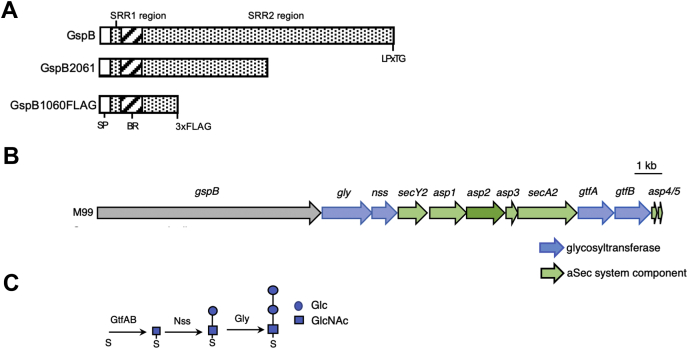
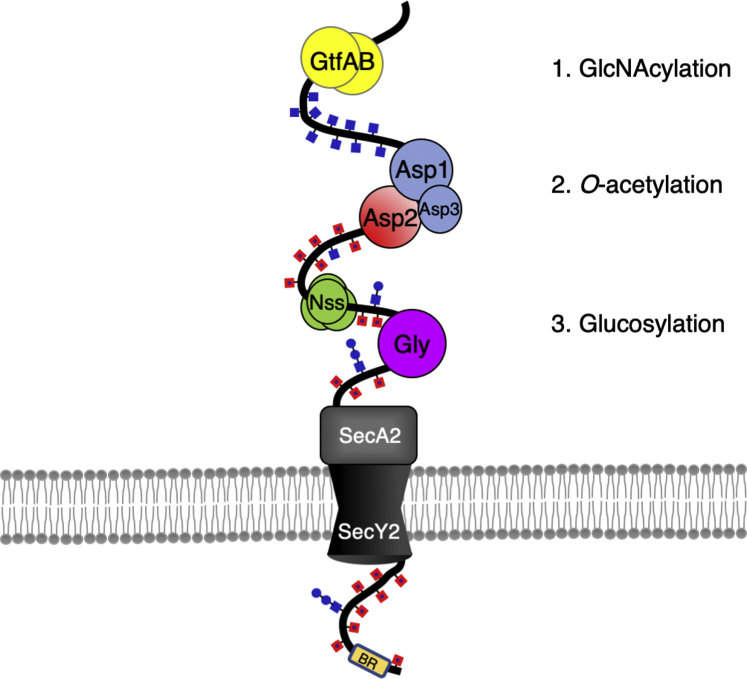
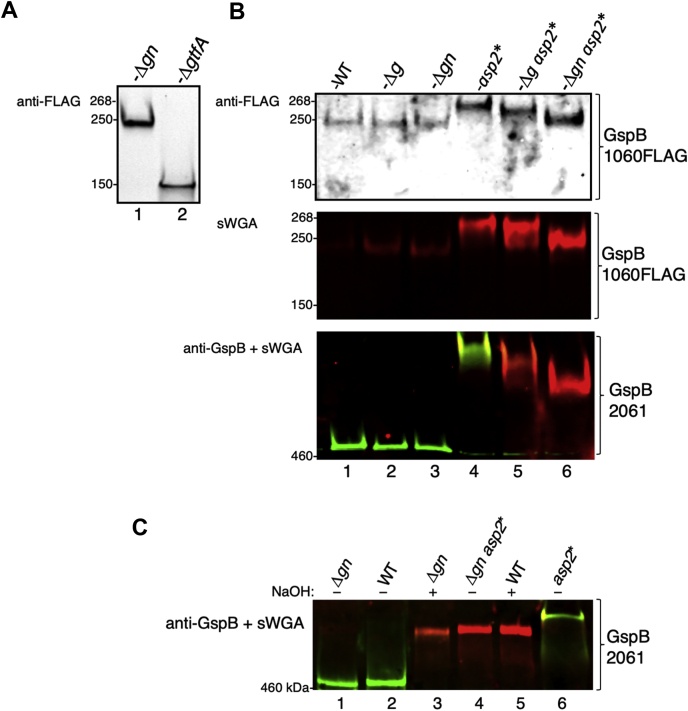
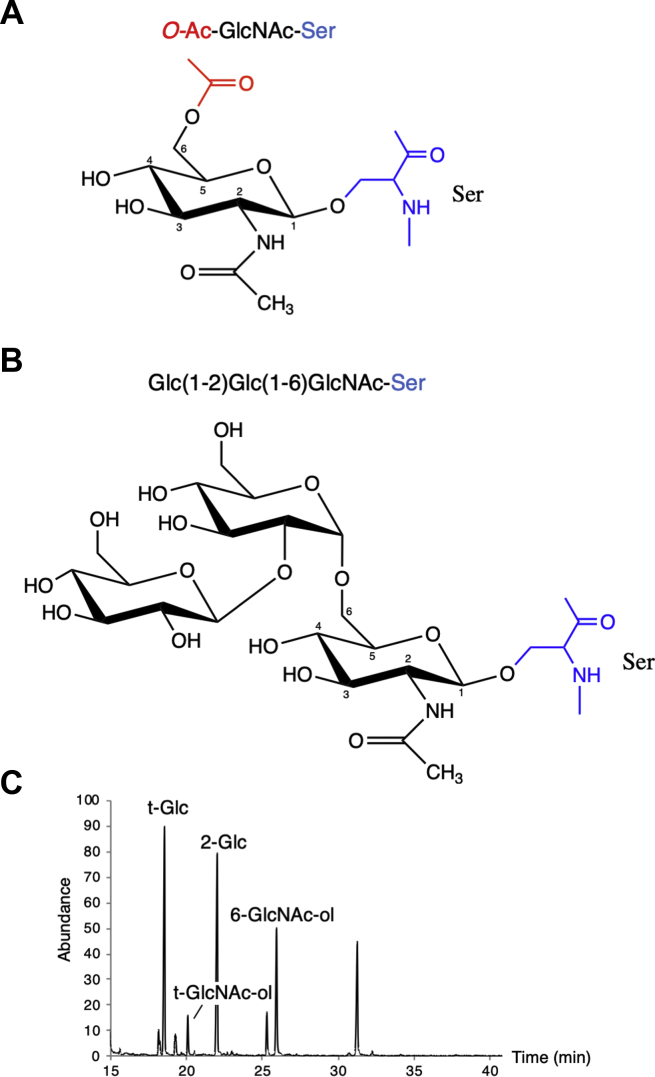
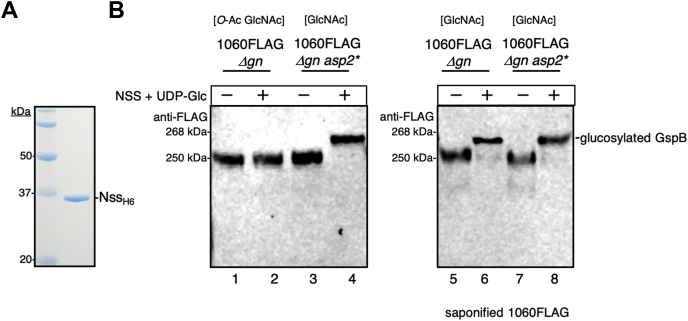
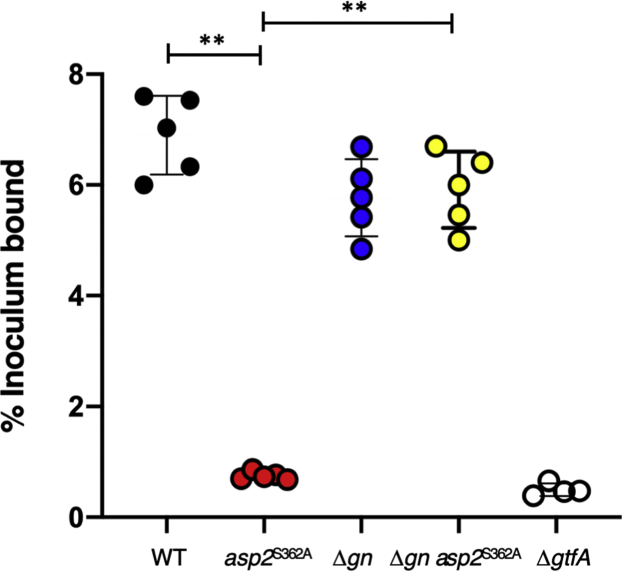
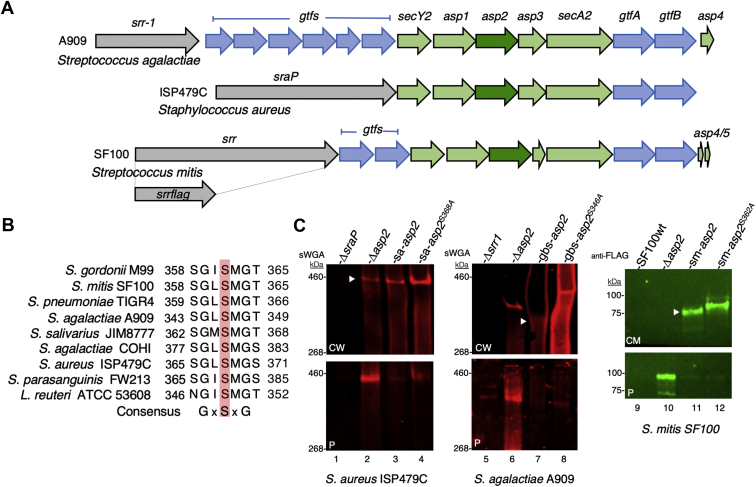
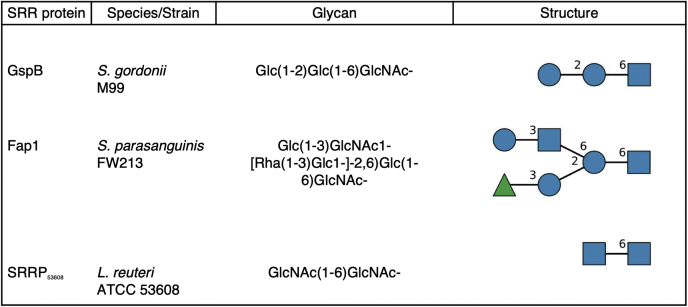
The serine-rich repeat (SRR) glycoproteins of gram-positive bacteria are a family of adhesins that bind to a wide range of host ligands, and expression of SRR glycoproteins is linked with enhanced bacterial virulence. The biogenesis of these surface glycoproteins involves their intracellular glycosylation and export via the accessory Sec system. Although all accessory Sec components are required for SRR glycoprotein export, Asp2 of Streptococcus gordonii also functions as an O-acetyltransferase that modifies GlcNAc residues on the SRR adhesin gordonii surface protein B (GspB). Because these GlcNAc residues can also be modified by the glycosyltransferases Nss and Gly, it has been unclear whether the post-translational modification of GspB is coordinated. We now report that acetylation modulates the glycosylation of exported GspB. Loss of O-acetylation due to aps2 mutagenesis led to the export of GspB glycoforms with increased glucosylation of the GlcNAc moieties. Linkage analysis of the GspB glycan revealed that both O-acetylation and glucosylation occurred at the same C6 position on GlcNAc residues and that O-acetylation prevented Glc deposition. Whereas streptococci expressing nonacetylated GspB with increased glucosylation were significantly reduced in their ability to bind human platelets in vitro, deletion of the glycosyltransferases nss and gly in the asp2 mutant restored platelet binding to WT levels. These findings demonstrate that GlcNAc O-acetylation controls GspB glycosylation, such that binding via this adhesin is optimized. Moreover, because O-acetylation has comparable effects on the glycosylation of other SRR adhesins, acetylation may represent a conserved regulatory mechanism for the post-translational modification of the SRR glycoprotein family.
革兰氏阳性菌的丝氨酸丰富重复 (SRR) 糖蛋白是一类黏附素,能与多种宿主配体结合,而 SRR 糖蛋白的表达与增强的细菌毒力有关。这些表面糖蛋白的生物发生涉及它们的细胞内糖基化和通过辅助 Sec 系统的输出。尽管所有辅助 Sec 成分都需要 SRR 糖蛋白的输出,但链球菌的 Asp2 还作为一种 O-乙酰转移酶起作用,修饰 SRR 黏附素戈登表面蛋白 B (GspB) 上的 GlcNAc 残基。由于这些 GlcNAc 残基也可以被糖基转移酶 Nss 和 Gly 修饰,因此尚不清楚 GspB 的翻译后修饰是否协调。我们现在报告说,乙酰化调节了输出的 GspB 的糖基化。由于 aps2 突变导致 O-乙酰化的丧失,导致 GspB 糖型的输出增加了 GlcNAc 部分的葡糖基化。GspB 聚糖的连接分析表明,O-乙酰化和葡糖基化都发生在 GlcNAc 残基的相同 C6 位置,并且 O-乙酰化阻止了 Glc 的沉积。尽管在体外表达具有增加葡糖基化的非乙酰化 GspB 的链球菌的结合人血小板的能力显著降低,但在 asp2 突变体中缺失糖苷转移酶 nss 和 gly 恢复了血小板结合至 WT 水平。这些发现表明,GlcNAc 的 O-乙酰化控制 GspB 的糖基化,使得通过这种黏附素的结合得到优化。此外,由于 O-乙酰化对其他 SRR 黏附素的糖基化具有类似的影响,因此乙酰化可能代表 SRR 糖蛋白家族翻译后修饰的保守调节机制。