Bruns Danielle R, Yusifova Musharraf, Marcello Nicholas A, Green Carly J, Walker Whitney J, Schmitt Emily E
College of Health Sciences, University of Wyoming, Laramie, WY, US.
J Circadian Rhythms. 2020 Dec 16;18:7. doi: 10.5334/jcr.201.
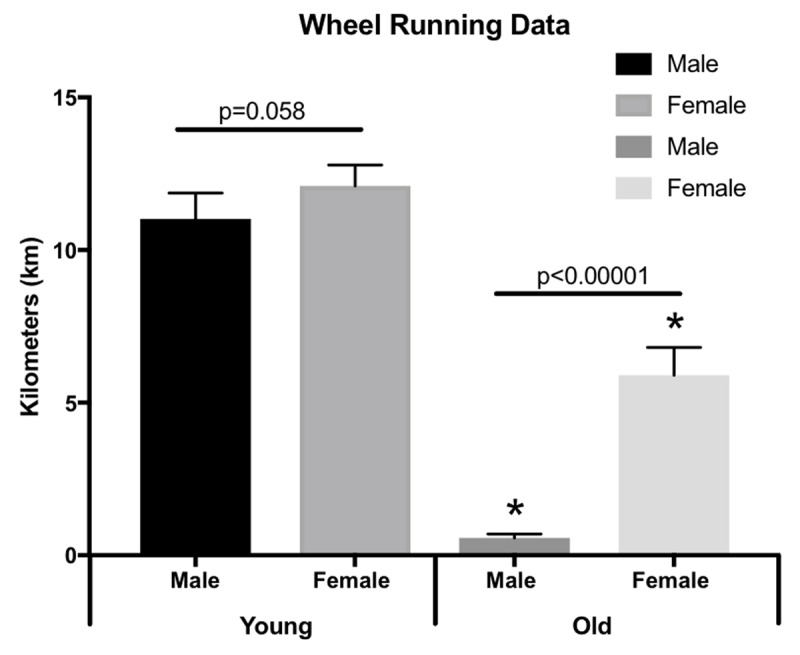
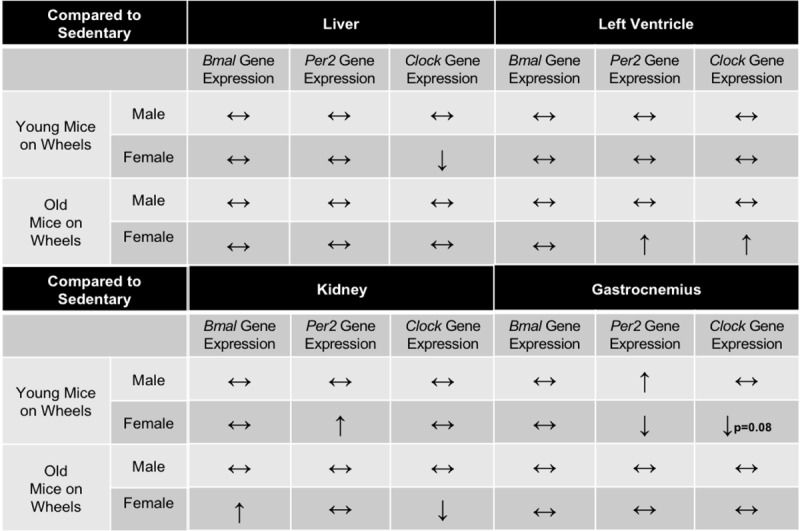
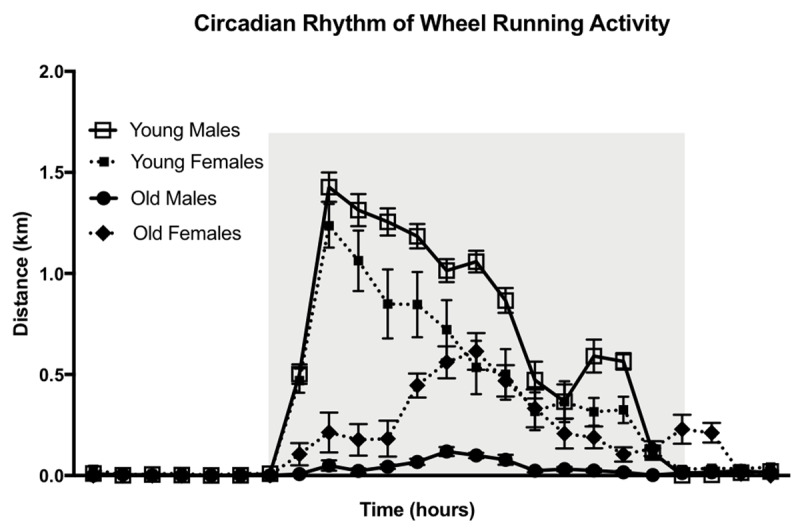
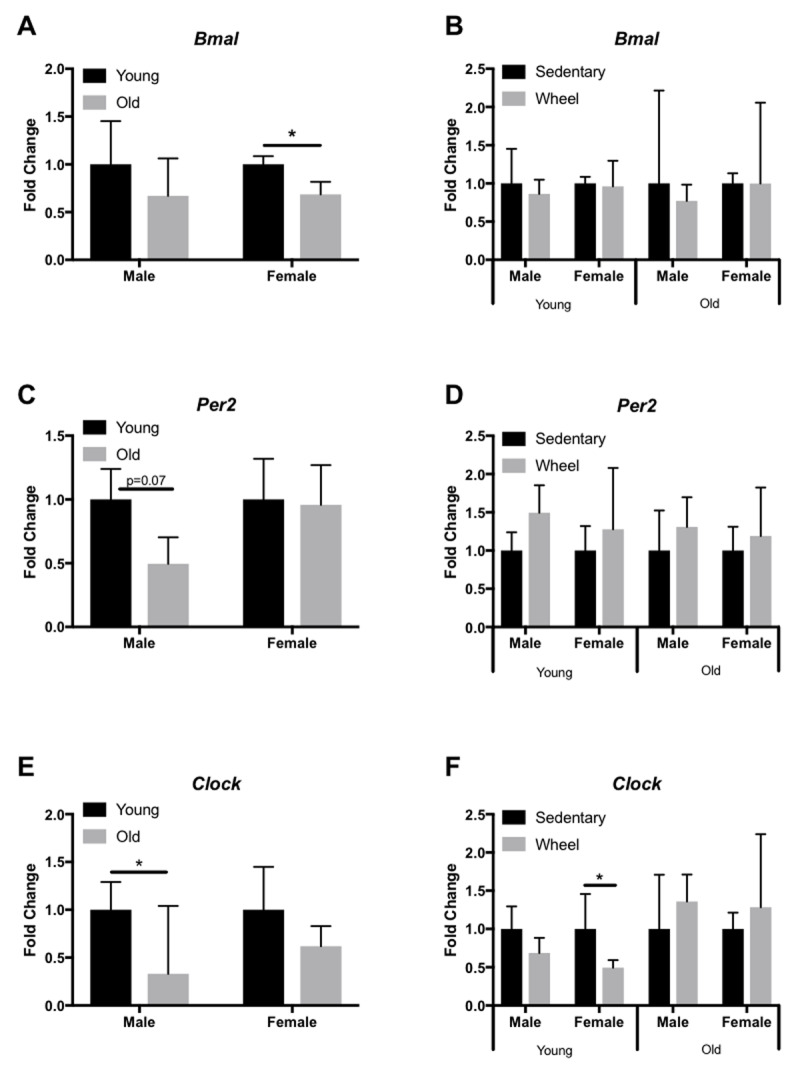
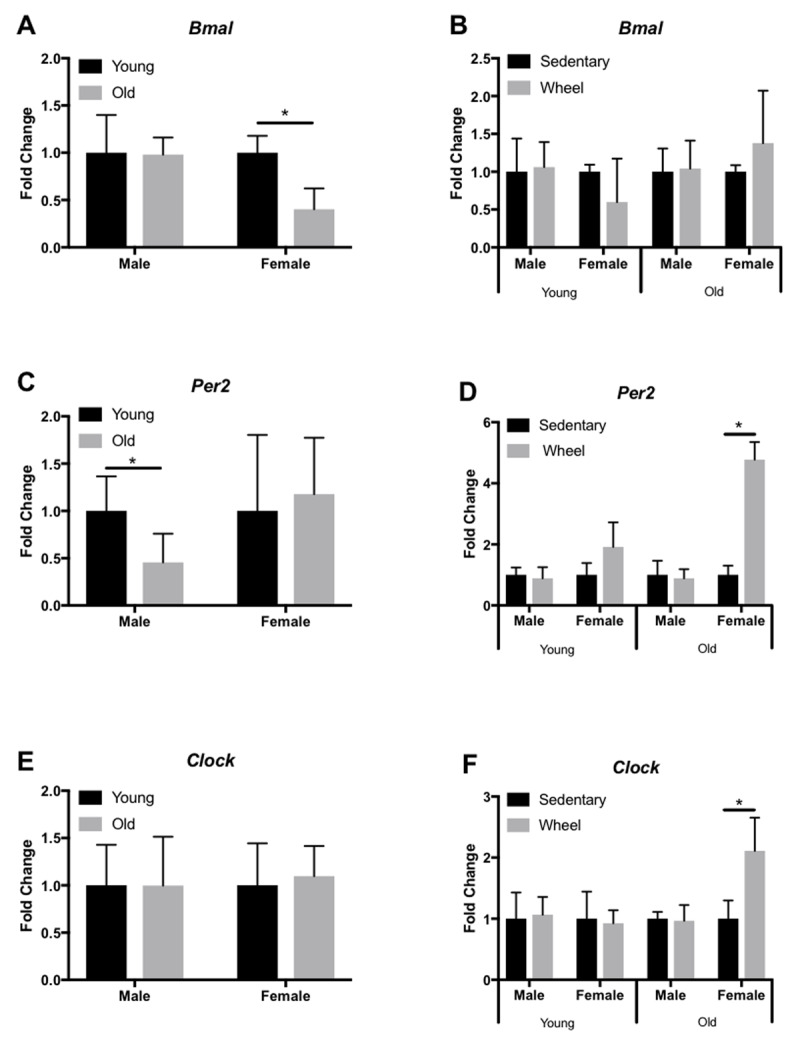
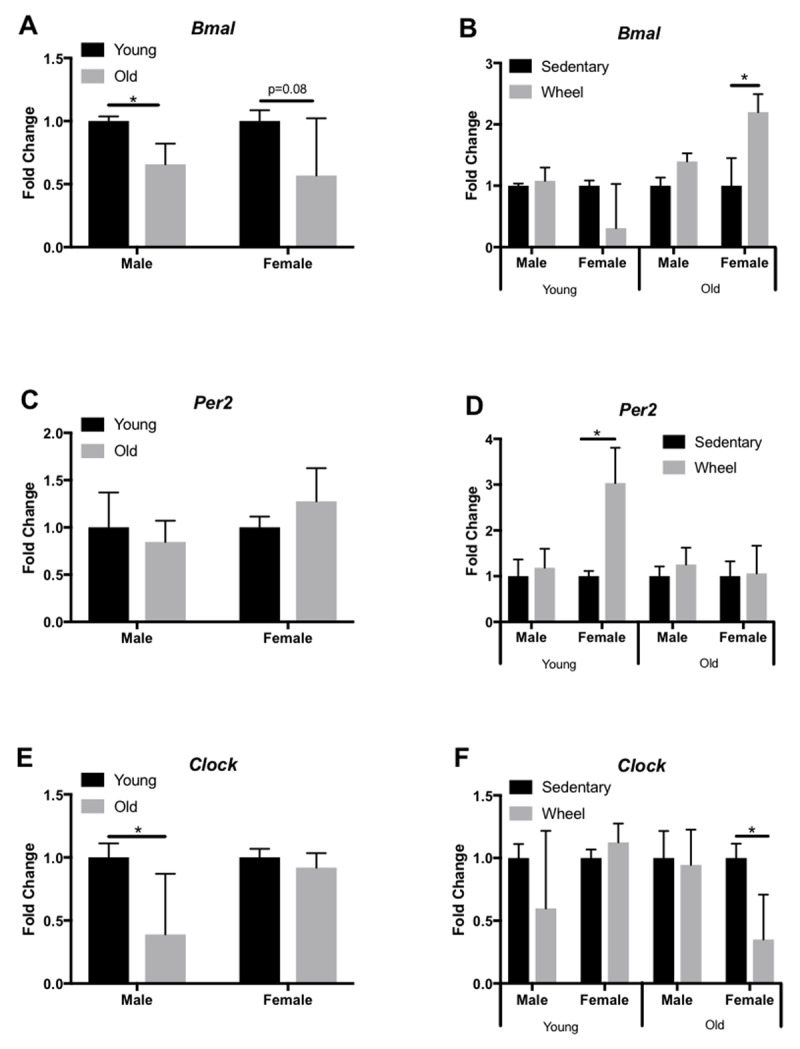
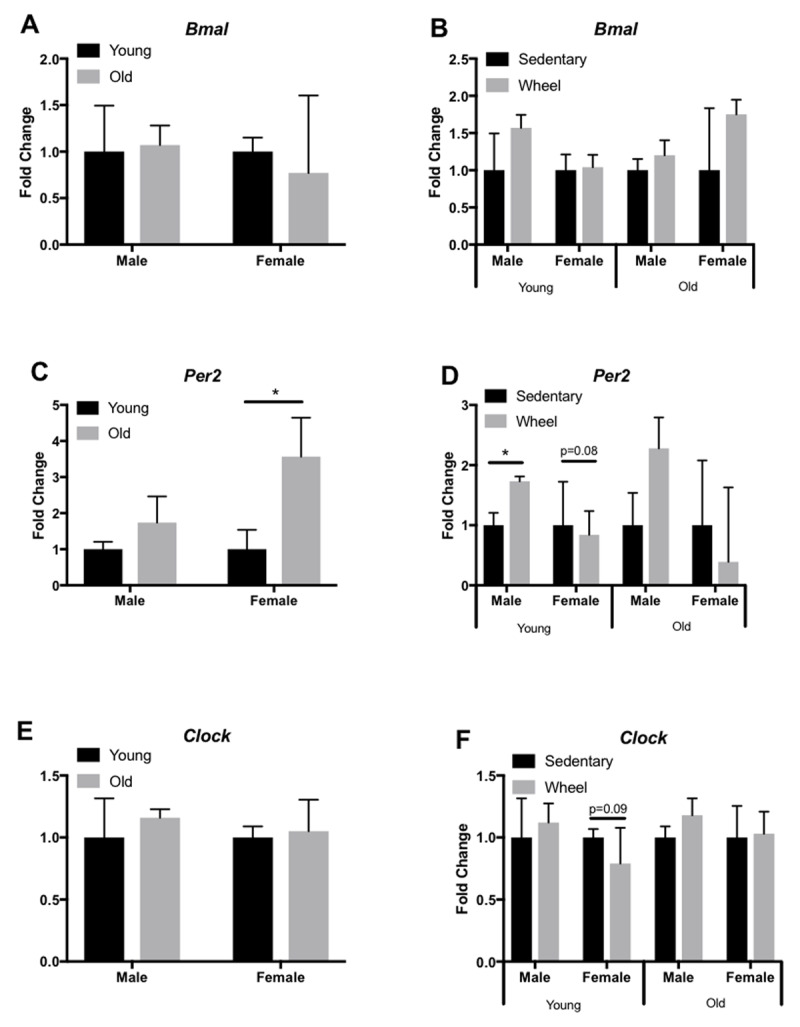
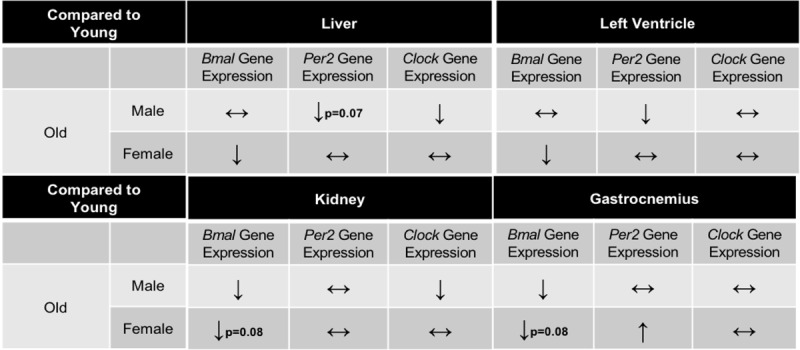
Critical biological processes are under control of the circadian clock. Disruption of this clock, e.g. during aging, results in increased risk for development of chronic disease. Exercise is a protective intervention that elicits changes in both age and circadian pathologies, yet its role in regulating circadian gene expression in peripheral tissues is unknown. We hypothesized that voluntary wheel running would restore disrupted circadian rhythm in aged mice. We analyzed wheel running patterns and expression of circadian regulators in male and female C57Bl/6J mice in adult (4 months) and old (18 months) ages. As expected, young female mice ran further than male mice, and old mice ran significantly less than young mice. Older mice of both sexes had a delayed start time in activity which likely points to a disrupted diurnal running pattern and circadian disruption. Voluntary wheel running rescued some circadian dysfunction in older females. This effect was not present in older males, and whether this was due to low wheel running distance or circadian output is not clear and warrants a future study. Overall, we show that voluntary wheel running can rescue some circadian dysfunction in older female but not male mice; and these changes are tissue dependent. While voluntary running was not sufficient to fully rescue age-related changes in circadian rhythm, ongoing studies will determine if forced exercise (e.g. treadmill) and/or chrono-timed exercise can improve age-related cardiovascular, skeletal muscle, and circadian dysfunction.
关键的生物学过程受生物钟控制。生物钟的紊乱,例如在衰老过程中,会导致患慢性病风险增加。运动是一种具有保护作用的干预措施,可引发衰老和生物钟相关病变的改变,但其在外周组织中调节生物钟基因表达的作用尚不清楚。我们假设自愿性转轮运动能恢复老年小鼠紊乱的昼夜节律。我们分析了成年(约4个月)和老年(约18个月)的雄性和雌性C57Bl/6J小鼠的转轮运动模式以及生物钟调节因子的表达。正如预期的那样,年轻雌性小鼠比雄性小鼠跑得更远,老年小鼠的跑步距离明显少于年轻小鼠。两性老年小鼠的活动开始时间延迟,这可能表明昼夜跑步模式紊乱和生物钟失调。自愿性转轮运动挽救了老年雌性小鼠的一些生物钟功能障碍。老年雄性小鼠未出现这种效应,这是由于转轮运动距离短还是生物钟输出原因尚不清楚,值得未来开展研究。总体而言,我们表明自愿性转轮运动可挽救老年雌性而非雄性小鼠的一些生物钟功能障碍;而且这些变化具有组织依赖性。虽然自愿运动不足以完全挽救与年龄相关的昼夜节律变化,但正在进行的研究将确定强迫运动(如跑步机运动)和/或定时运动是否能改善与年龄相关的心血管、骨骼肌和生物钟功能障碍。