Yan Peng, Pang Pengfei, Hu Xiaojun, Wang Ani, Zhang Huitao, Ma Yingdong, Zhang Ke, Ye Yaochao, Zhou Bin, Mao Junjie
Center for Interventional Medicine, the Fifth Affiliated Hospital, Sun Yat-sen University, Zhuhai, Guangdong 519000.
Guangdong Provincial Key Laboratory of Biomedical Imaging, the Fifth Affiliated Hospital, Sun Yat-sen University, Zhuhai, Guangdong 519000.
J Cancer. 2021 Jan 1;12(1):1-9. doi: 10.7150/jca.49594. eCollection 2021.
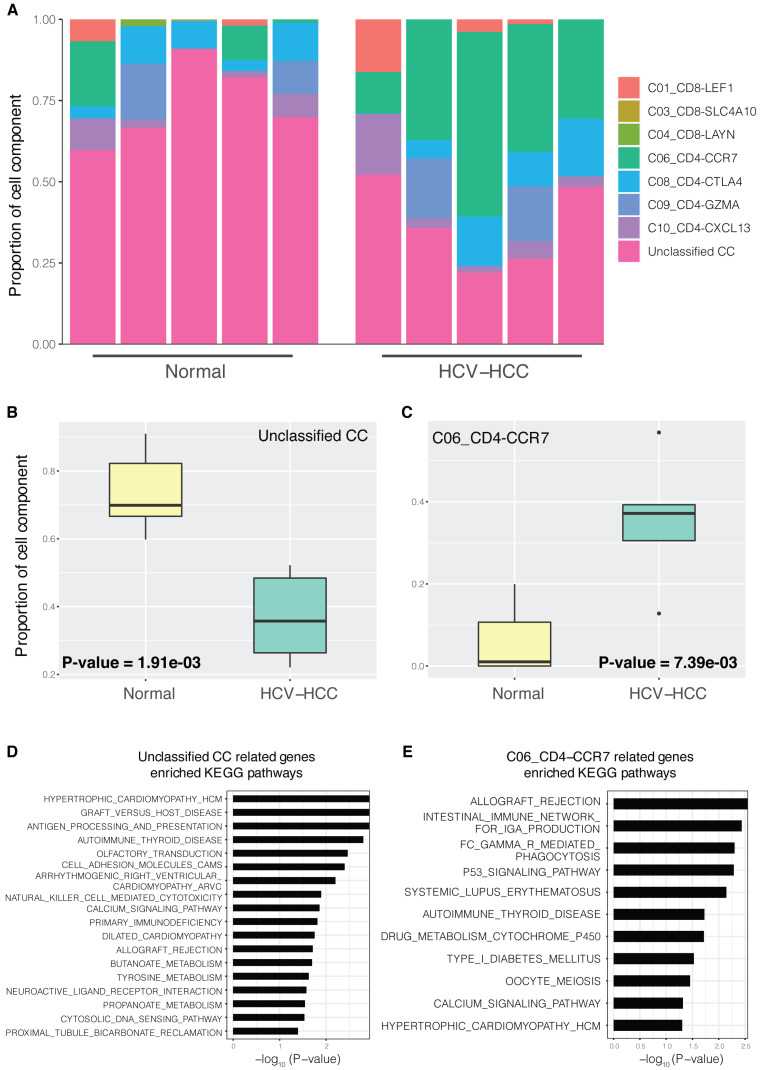
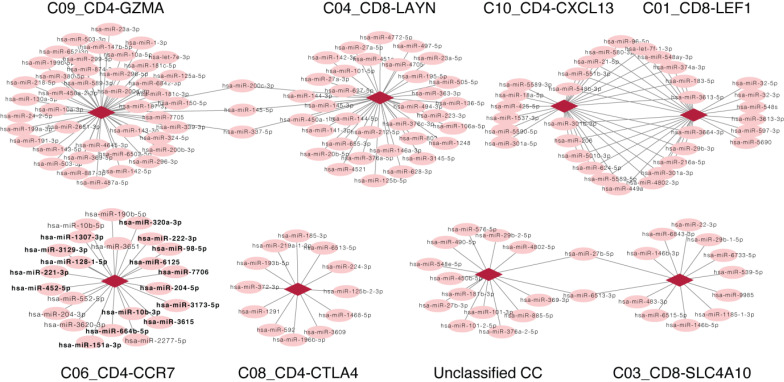
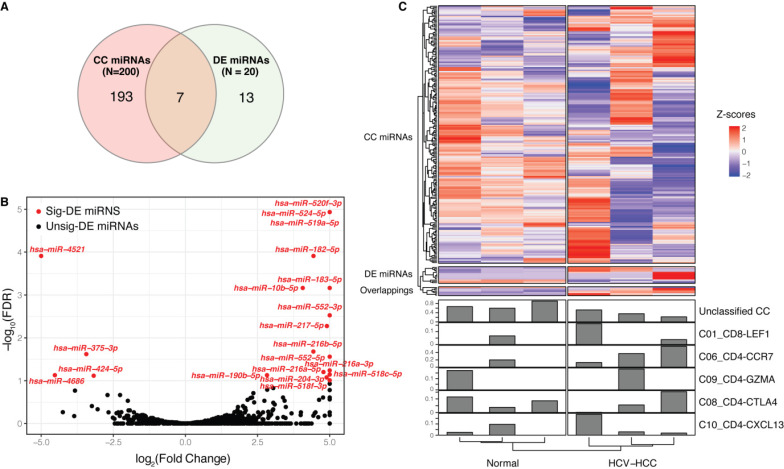
Hepatocellular carcinoma (HCC) is the fifth most common type of cancer and the second leading cause of cancer-associated mortality worldwide. Hepatitis C virus (HCV) infection is the primary cause of hepatic fibrosis and cirrhosis, which in turn, notably increase the risk of developing HCC. The systematic immune response plays a vital role in protecting eukaryotic cells from exogenous antigens. In the present study, to determine the association between T cells and miRNAs in HCV-induced HCC (HCV-HCC), bulk mRNA and miRNA sequencing data from HCV-HCC tissues were combined, along with single-cell RNA sequencing (RNA-seq) data from T cells. Deconvoluted bulk RNA-seq data and miRNA profiles enabled the identification of naive CD4+ T cell-associated miRNAs, which may help to elucidate the underlying mechanism of the anti-HCV immune response. Using bulk RNA-seq data, the current analysis presents a feasible method for assessing the relationship between miRNAs and cell components, providing valuable insights into the effects of T cell-associated miRNAs in HCV-HCC.
肝细胞癌(HCC)是全球第五大常见癌症类型,也是癌症相关死亡的第二大主要原因。丙型肝炎病毒(HCV)感染是肝纤维化和肝硬化的主要原因,而肝纤维化和肝硬化又显著增加了患HCC的风险。系统性免疫反应在保护真核细胞免受外源抗原侵害方面起着至关重要的作用。在本研究中,为了确定T细胞与miRNA在HCV诱导的HCC(HCV-HCC)中的关联,将来自HCV-HCC组织的大量mRNA和miRNA测序数据与来自T细胞的单细胞RNA测序(RNA-seq)数据相结合。解卷积的大量RNA-seq数据和miRNA谱能够鉴定出与初始CD4+ T细胞相关的miRNA,这可能有助于阐明抗HCV免疫反应的潜在机制。利用大量RNA-seq数据,当前分析提出了一种评估miRNA与细胞成分之间关系的可行方法,为T细胞相关miRNA在HCV-HCC中的作用提供了有价值的见解。