Gupta Ashutosh, Kumar Ramesh, Ganguly Risha, Singh Amit Kumar, Rana Harvesh Kumar, Pandey Abhay Kumar
Department of Biochemistry, University of Allahabad, Allahabad, 211002, India.
Toxicol Rep. 2020 Dec 24;8:44-52. doi: 10.1016/j.toxrep.2020.12.010. eCollection 2021.
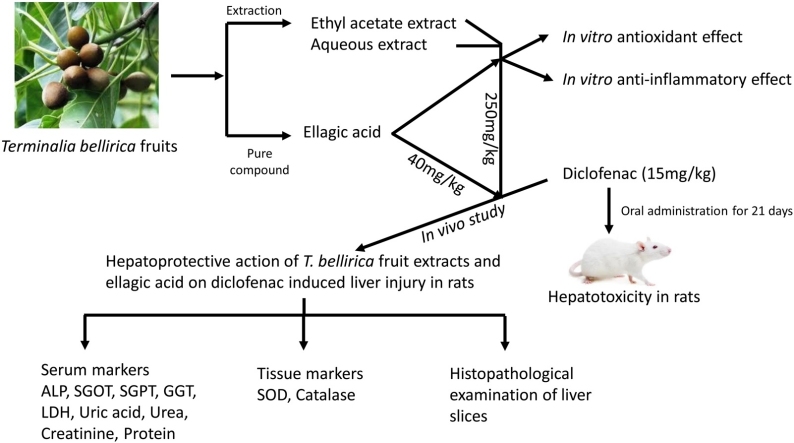
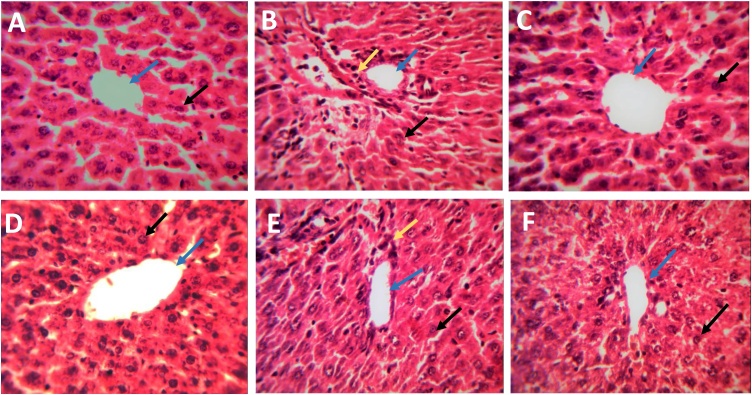
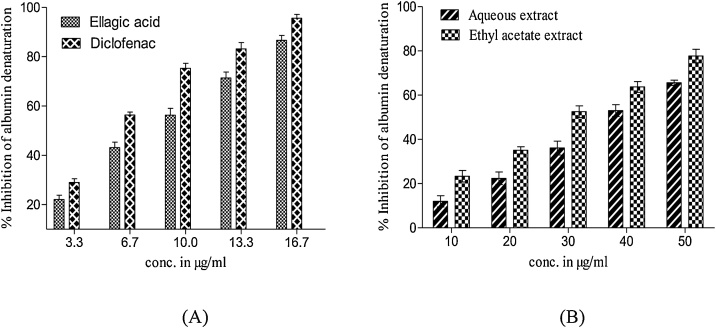
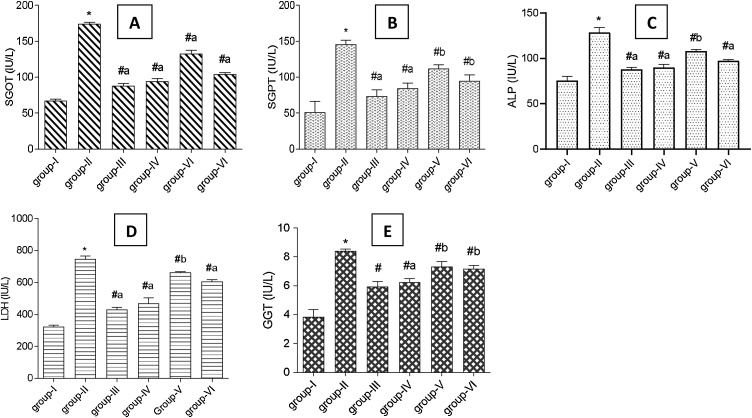
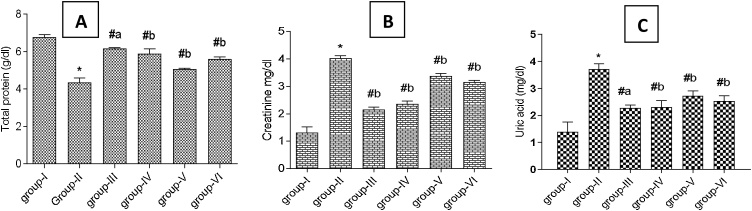
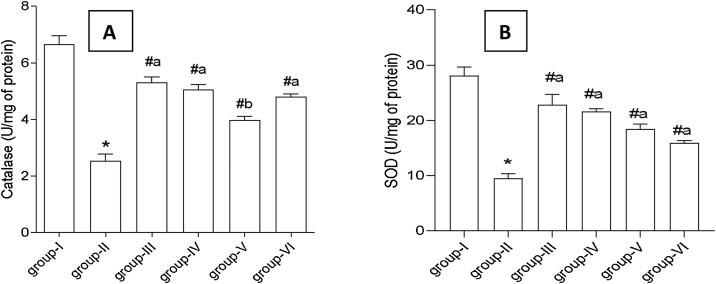
Long term usage and overdose of diclofenac (DCF), an anti-inflammatory drug is known to cause oxidative stress and liver injury. The present study reports the antioxidant, anti-inflammatory and hepatoprotective activities of (Tb) fruit aqueous and ethyl acetate extracts and its bioactive compound ellagic acid (EA) against DCF-induced toxicity. antioxidant activities were measured by ABTS and FRAP assays while anti-inflammatory activity was assessed by the albumin denaturation method. The adverse effects of DCF and hepatoprotective potential of Tb extracts and EA were assessed in serum and liver tissue of rats after oral administration for 21 days. Silymarin was used as standard hepatoprptective agent for comparison. Hepatic markers analyzed in serum included ALP, GPT, GOT, LDH, γ-glutamyl transferase, total protein, creatinine, and uric acid while superoxide dismutase (SOD) and catalase (CAT) were analyzed in liver tissue. The EA exhibited superior ABTS radical scavenging, FRAP, and anti-inflammatory activities as compared to fruit extracts. DCF treatment led to rise in the levels of most of the serum hepatic markers with decline in total serum protein as well as SOD and CAT in liver tissue. The supplementation of extracts, EA and silymarin in DCF treated rats significantly reduced the adverse effects of DCF on serum and tissue markers. Histopathology of the liver indicated that extracts and EA significantly decreased the degree of liver fibrosis. The hepatoprotective ability of EA was comparable to the silymarin but activity of Tb fruit extracts was little lower. Among fruit extracts ethyl acetate extract exhibited better activity than aqueous extract. The results revealed that ellagic acid and fruit extracts have potential to mitigate oxidative stress and hepatotoxicity produced by long term use of diclofenac.
已知长期使用和过量服用抗炎药双氯芬酸(DCF)会导致氧化应激和肝损伤。本研究报告了[某种植物(文中未明确写出植物名称,用Tb代替)]果实水提取物和乙酸乙酯提取物及其生物活性化合物鞣花酸(EA)对DCF诱导的毒性的抗氧化、抗炎和肝保护活性。通过ABTS和FRAP测定法测量抗氧化活性,同时通过白蛋白变性法评估抗炎活性。在大鼠口服给药21天后,评估DCF的不良反应以及Tb提取物和EA在血清和肝组织中的肝保护潜力。水飞蓟素用作标准肝保护剂进行比较。血清中分析的肝脏标志物包括碱性磷酸酶(ALP)、谷丙转氨酶(GPT)、谷草转氨酶(GOT)、乳酸脱氢酶(LDH)、γ-谷氨酰转移酶、总蛋白、肌酐和尿酸,而肝组织中分析超氧化物歧化酶(SOD)和过氧化氢酶(CAT)。与果实提取物相比,EA表现出更强的ABTS自由基清除、FRAP和抗炎活性。DCF处理导致大多数血清肝脏标志物水平升高,同时血清总蛋白以及肝组织中的SOD和CAT下降。在DCF处理的大鼠中补充提取物、EA和水飞蓟素可显著降低DCF对血清和组织标志物的不良反应。肝脏组织病理学表明,提取物和EA显著降低了肝纤维化程度。EA的肝保护能力与水飞蓟素相当,但Tb果实提取物的活性略低。在果实提取物中,乙酸乙酯提取物的活性优于水提取物。结果表明,鞣花酸和[某种植物(文中未明确写出植物名称,用Tb代替)]果实提取物有潜力减轻长期使用双氯芬酸产生的氧化应激和肝毒性。